The quality of an extra virgin olive oil doesn’t begin in the oil mill – it originates in the olive grove. Olive cultivation, through a multitude of factors, determines whether a mediocre or an outstanding product ends up in the bottle. Soil, climate, variety, care, and harvest time interlock like gears, together forming the foundation for first-class olive oil. Those who understand the connections between cultivation and quality quickly realize why not all olive oils taste the same – and why conscious olive cultivation makes such a big difference.
Every high-quality olive oil tells the story of its origin. The journey from the olive in the grove to the finished oil passes through numerous stages where quality is influenced. Olive cultivation lays the groundwork: healthy trees in suitable soil, the right choice of variety, and careful tending create the conditions for aromatic, polyphenol-rich fruits. If these fundamentals are neglected, even the most modern processing technology cannot compensate for the missing basis. Conversely, excellent cultivation combined with gentle processing yields an oil that convinces in aroma, taste, and health benefits.
For millennia, olive cultivation has been concentrated in the Mediterranean region. Spain leads the ranking as the world’s largest producer, followed by Italy, Greece, Turkey, and Tunisia. However, olive culture is also gaining increasing importance in Argentina, Chile, Australia, and California. The climatic requirements are clearly defined: olive trees need hot, dry summers and mild winters with temperatures rarely falling below minus five degrees Celsius. Sufficient hours of sunshine, moderate winter rainfall, and a long growing season form the cornerstones for successful cultivation.
In Europe, three countries dominate olive cultivation: Spain, with the province of Jaén as its center; Italy, with Apulia, Calabria, Sicily, and Liguria; and Greece, with the Peloponnese and Crete. Each of these regions produces unique flavor profiles due to its specific terroir. While Spanish oils from the Picual olive often taste strong and slightly bitter, Ligurian oils from the Taggiasca olive are characterized by mild, almond-like notes. The diversity of growing regions is directly reflected in the wide range of flavors found in high-quality olive oils.
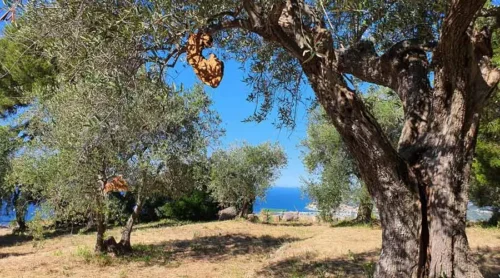
Climate influences olive cultivation on several levels. Altitude determines the ripening process of the fruits: at higher altitudes, olives ripen more slowly, but develop more complex aromas and a higher polyphenol content. The slope ensures natural drainage and prevents waterlogging at the roots. The orientation to the sun determines light supply and thus the tree’s photosynthesis performance. The microclimate also plays a crucial role: proximity to the sea acts as a natural temperature buffer, protecting the trees from extreme temperature fluctuations. Controlled drought stress can even promote the formation of polyphenols, resulting in a more intense flavor and higher health value of the finished oil.
In modern olive cultivation, three basic cultivation systems are distinguished, differing significantly in tree density, degree of mechanization, and yield. Each system has its own strengths and affects the quality of the olive oil produced differently.
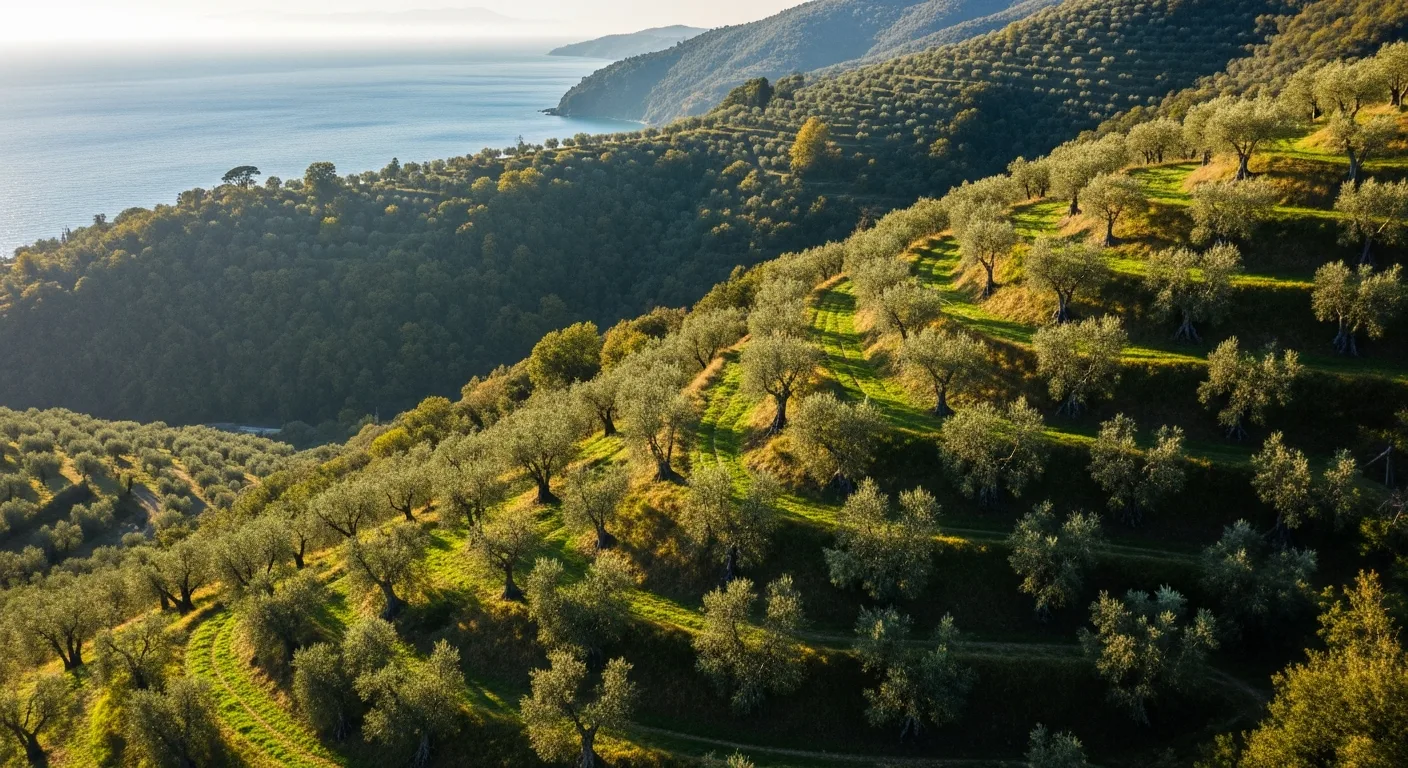
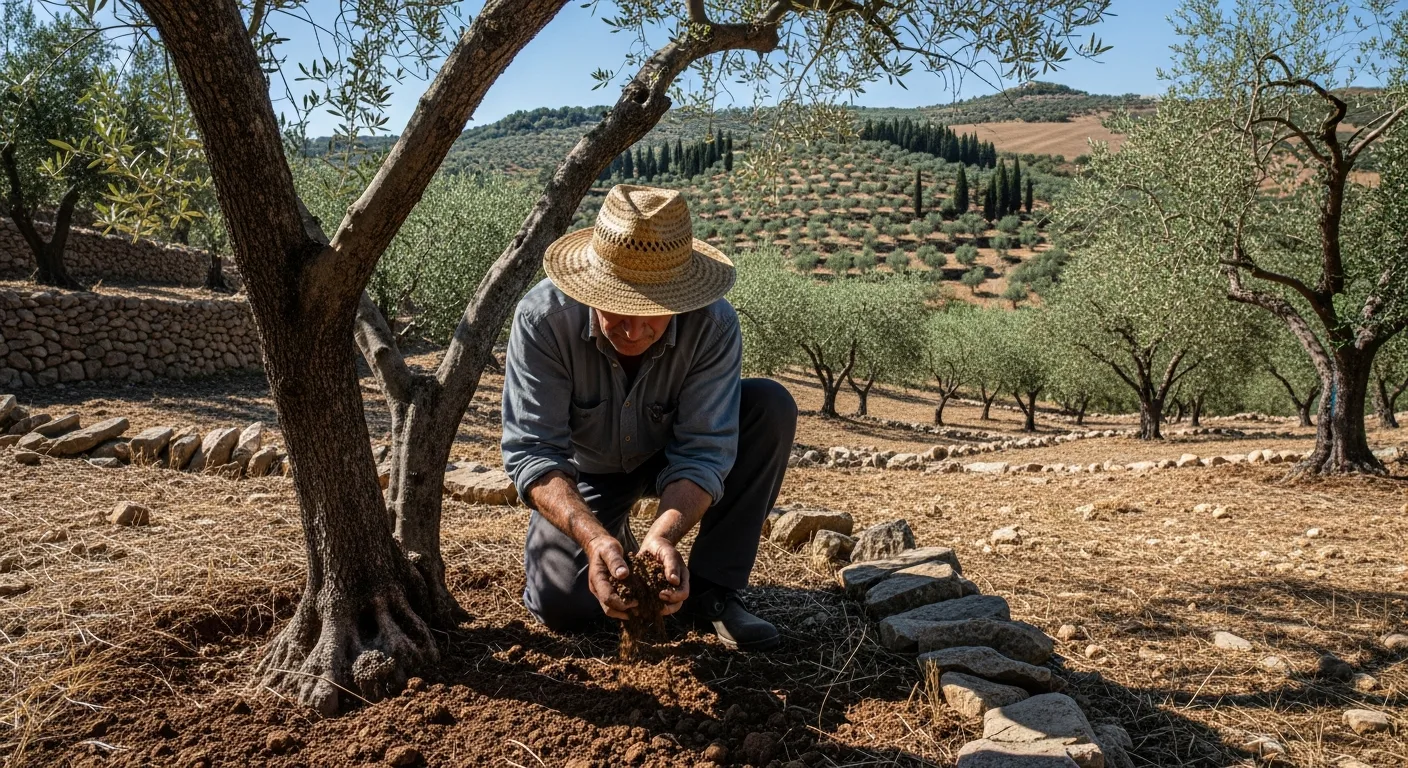
Traditional olive cultivation operates with fewer than 200 trees per hectare. The trees are widely spaced, often on terraced slopes. Harvesting is predominantly done by hand or with simple tools like rakes and nets. This system preserves biodiversity in the grove: studies show that traditionally managed olive groves host up to 40 percent more plant species than intensively used areas. In addition, the extensive groves bind significantly more CO₂ – about 5.5 kilograms per kilogram of oil produced. The yield per hectare is lower, but careful hand-picking allows for a targeted selection of only healthy, optimally ripe fruits. The result is oils with a distinct terroir character and complex flavor profiles.
In intensive cultivation, 200 to 500 trees per hectare are planted in regular rows with spacing of about 7 by 5 meters. Drip irrigation and targeted fertilization are standard. Harvesting is done mechanically with shakers and vibrating combs. Controlled irrigation increases oil yield by 30 to 50 percent compared to rainfed farming. The quality of the olive oil does not necessarily suffer: well-planned intensive systems with optimal sun exposure and precise irrigation control deliver oils that regularly achieve top ratings in tastings. It is crucial that irrigation is stopped in good time before harvesting, so that the moisture content of the fruits is around 50 percent.
The super-intensive variant operates with 600 to 2,000 trees per hectare in dense hedge rows. Fully automatic harvesting machines drive over the rows and pick the fruits in the shortest possible time. This system is only suitable for certain varieties like Arbequina, Arbosana, and Koroneiki, which exhibit compact growth. The biggest quality advantage lies in speed: the olives go from tree to oil mill within a few hours, which minimizes oxidation and maximizes the freshness of the oil. Critics, however, lament the high resource consumption and the limited variety selection in super-intensive olive cultivation.
In addition to the chosen cultivation system, three other factors significantly determine the quality of olive oil: the nature of the soil, the olive variety grown, and the daily care of the trees. These three pillars form the backbone of quality-oriented olive cultivation.
The soil is far more than just a location for the roots. Volcanic soils, such as those found in Sicily, are rich in minerals and produce particularly intense, spicy oils. Clay-limestone soils in Tuscany promote complex flavor profiles with fruity and herbaceous notes. Good permeability is crucial: waterlogging leads to root rot and significantly reduces fruit quality. The ideal pH value for olive cultivation is between 6 and 8.5. An adequate supply of potassium, phosphorus, and nitrogen supports fruit formation and the oil content of the olives. Organically managed soils, cared for with compost and natural fertilizers, often show better soil structure and higher microbial activity, which positively affects the nutrient uptake of the trees.
In the Mediterranean region, an estimated 860 different olive varieties exist; in Italy alone, over 538 cultivars are documented. Each variety brings its own flavor profile: the Ligurian Taggiasca yields mild, almond-like oils; the Southern Italian Coratina produces intensely spicy results; and the Greek Koroneiki is considered one of the highest quality varieties overall. In olive cultivation, a distinction is made between single-variety oils, known as monocultivar oils, and carefully composed blends (cuvées) from several varieties. Both approaches can produce outstanding quality. The choice of the right variety for the respective location is one of the most important decisions – it determines yield, resilience, and the aromatic potential of the oil.
Regular pruning is one of the most important care measures. It ensures an open canopy that allows sufficient light and air to all fruit sets. This allows the olives to ripen more evenly and makes them less susceptible to fungal infections. Combating the olive fruit fly, the most significant pest, requires special attention. In organic olive cultivation, pheromone traps and natural enemies are used. In addition, a balanced nutrient supply strengthens the trees’ natural resistance. Healthy, well-maintained olive trees produce fruits with higher polyphenol content and lower acidity – both crucial characteristics of a first-class extra virgin olive oil.
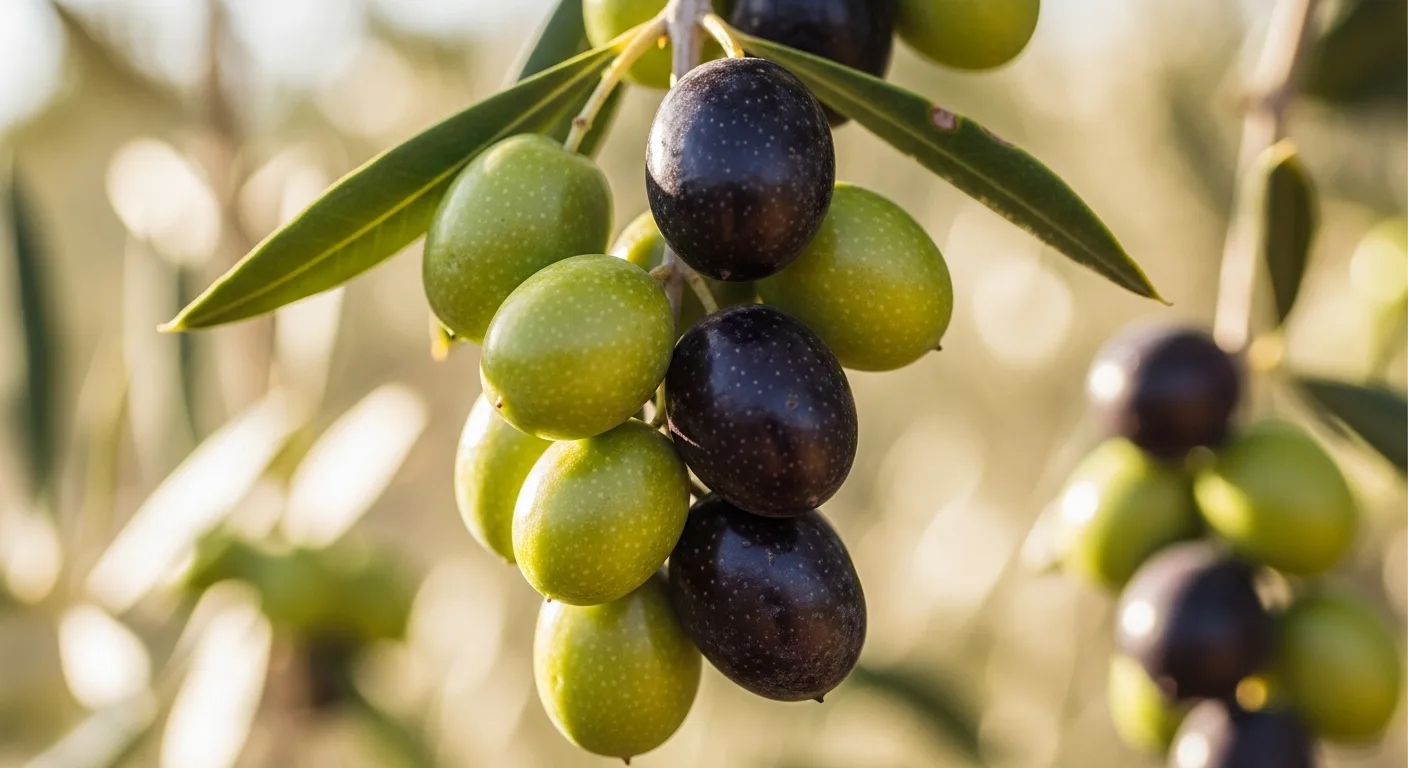
The harvest time marks the transition from cultivation to oil extraction and is one of the most influential factors for quality. An early harvest in September or October, when the olives are still green or just beginning to change color, yields more intense, pungent oils with a particularly high polyphenol content. These oils are characterized by their longevity and distinct flavor. A later harvest, extending into January, produces milder, softer oils with a higher oil yield per kilogram of fruit.
Experienced olive growers determine the optimal harvest time based on the degree of ripeness according to the so-called IOOC index. This evaluates the color change of the fruit skin and pulp. For a high-quality extra virgin olive oil, harvesting typically occurs at a ripeness index of 2 to 4 – when the olives are just beginning to change from green to purple. This moment combines the highest polyphenol content with an already sufficient oil content and represents the ideal compromise between quality and yield.
After harvesting, a race against time begins. Olives are delicate fruits that quickly oxidize and ferment if damaged or stored for too long. In professional olive cultivation, 24 hours is considered the absolute upper limit between harvest and processing – for top quality, it should be less than four to six hours. Mechanical cold extraction at temperatures below 27 degrees Celsius preserves the delicate aromas and ingredients. Modern centrifuge systems operate under exclusion of oxygen, thus preventing unwanted oxidation of the freshly extracted oil.
The effects of olive cultivation on quality can be demonstrated by measurable values. The acidity of an extra virgin olive oil must not exceed 0.8 percent – outstanding oils from careful cultivation achieve values below 0.3 percent. The peroxide value indicates the degree of oxidation and should be below 10, ideally between 5 and 6. The polyphenol content reflects the health value: values above 250 milligrams per kilogram are considered high and are an expression of thoughtful cultivation with early harvesting and rapid processing. In taste, a high-quality olive oil is characterized by three features: fruitiness, bitterness, and pungency – all positive attributes directly related to cultivation.
High-quality olive oil is not created by chance, but through years of experience, careful olive cultivation, and respect for nature. From the location and choice of variety to care and harvesting, numerous factors interlock. Traditional cultivation on terraced slopes with organic farming creates the best conditions for oils with true character. Those who pay attention to the origin and cultivation methods when buying olive oil will find products that are not only delicious but also produced in an ecologically sustainable way. Because ultimately: outstanding olive oil begins with outstanding olive cultivation.
Would you like to experience traditional olive cultivation in Liguria firsthand? With an olive tree adoption, you support sustainable organic farming and receive your own olive oil directly from the producer. Visit us on Facebook to learn more about our olive cultivation and life in the Ligurian olive grove.
What influence does the soil have on quality in olive cultivation?
The soil influences the subsequent olive oil quality in various ways. Volcanic soils provide mineral-rich oils with an intense, spicy aroma, while calcareous clay soils promote complex flavor profiles with fruity notes. Good drainage is indispensable, as waterlogging causes root rot and reduces fruit quality. The ideal pH value is between 6 and 8.5. Organically managed soils with natural fertilizers show higher microbial activity, which positively affects the nutrient uptake of the trees and thus the taste of the oil.
How do the cultivation systems differ in olive growing?
There are three main systems. Traditional cultivation uses fewer than 200 trees per hectare and relies on hand-picking, resulting in oils with a distinct terroir. Intensive cultivation uses 200 to 500 trees per hectare with drip irrigation and mechanical harvesting, where quality can be excellent with good planning. Super-intensive cultivation with up to 2,000 trees per hectare allows for extremely fast harvesting, which minimizes oxidation and maximizes the freshness of the oil. Each system has advantages and disadvantages regarding yield, environmental impact, and oil character.
Why is the harvest time so crucial in olive cultivation?
The harvest time is one of the most important quality factors. An early harvest in September or October, when the olives are still green, yields oils with high polyphenol content, intense flavor, and long shelf life. A later harvest results in milder oils with a higher oil yield. Experienced olive growers use the IOOC ripeness index and harvest at a value of 2 to 4, when the fruits are just beginning to change from green to purple. This moment represents the optimal compromise between quality and yield.
What role does the olive variety play for the oil?
The choice of variety is one of the most important decisions, as each variety brings its own flavor profile. In the Mediterranean region, there are around 860 different olive varieties. The Ligurian Taggiasca yields mild, almond-like oils, the Coratina from Southern Italy produces intensely spicy results, and the Greek Koroneiki is considered particularly high-quality. A distinction is made between single-variety monocultivar oils and blends (cuvées). The right variety for the respective location determines yield, resilience, and the aromatic potential of the extracted olive oil.
How quickly must olives be processed after harvesting?
Rapid processing is essential for oil quality. Olives begin to oxidize and ferment quickly after harvesting, which is why 24 hours is considered the absolute upper limit. For top quality, processing should take place within four to six hours. Mechanical cold extraction at temperatures below 27 degrees Celsius preserves the delicate aromas and valuable ingredients such as polyphenols. Modern oil mills use centrifuge systems under oxygen exclusion to prevent the oxidation of the freshly extracted olive oil.
What measurable quality characteristics does good olive cultivation show?
Quality can be proven by concrete laboratory values. The acidity of an outstanding extra virgin olive oil is below 0.3 percent – the legal upper limit is 0.8 percent. The peroxide value measures the degree of oxidation and should ideally be between 5 and 6. The polyphenol content indicates the health value: values above 250 milligrams per kilogram are considered high. Sensorially, an oil from careful cultivation is characterized by fruitiness, a pleasant bitterness, and a slight pungency in the finish – all positive quality characteristics.
How does organic olive cultivation affect the environment?
Organic cultivation has significant positive effects on the environment. Traditionally managed olive groves host up to 40 percent more plant species than intensively used areas, thus making an important contribution to biodiversity. The CO₂ balance is also positive: extensive groves with old trees bind about 5.5 kilograms of CO₂ per kilogram of oil produced. Instead of chemical pesticides, natural methods are used for pest control, such as pheromone traps against the olive fruit fly. Compost and natural fertilizers sustainably improve soil structure and promote microbial activity in the soil.
The answers are based exclusively on the content of this article.