Olive oil in hot cuisine means much more than just salads and cold appetizers. Olive oil is excellent for frying, braising, and even deep-frying. If you follow a few simple basic rules, you can use olive oil versatilely in hot cuisine and benefit from its distinctive taste and health advantages.
When using olive oil in hot cooking for frying, there are a few things to keep in mind to ensure good results. Before frying, meat, fish, poultry and vegetables should be patted dry with kitchen paper—this prevents the oil from splattering. Exception: breaded foods.
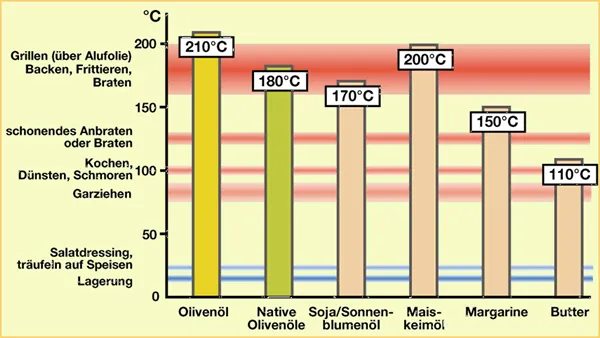
Meat should generally be salted only after frying. Salt draws moisture out of the meat and makes it dry. For olive oil in hot cooking, the rule is: the oil should already be hot before adding the food—at a temperature between 130 and 180°C. This quickly seals the surface, keeps the food juicy and prevents it from sticking to the bottom of the pan.
A common mistake: adding cold oil during frying. This abruptly lowers the temperature, interrupts the frying process, and causes the food to lose its juices.
When braising, meat is also first seared vigorously in hot olive oil. The resulting roasted flavors form the base for a delicious brown sauce. Afterwards, vegetables, a little wine, water, or broth are added, and the dish continues to cook in a covered pot at around 100 degrees Celsius.
The great advantage of braising with olive oil in hot cuisine: all nutrients – with the exception of water-soluble vitamins – are largely preserved. This cooking process combines the benefits of olive oil, liquid, and steam. Braising is particularly well-suited for inexpensive cuts of meat, goulash, or roulades.
Small pieces of meat or fish, breaded vegetables, French fries, or dough are deep-fried in olive oil at 170 to 200 degrees Celsius. A simple trick for temperature control: dip the handle of a wooden spoon into the oil – if bubbles form, the correct temperature has been reached.
When deep-frying with olive oil in hot cooking, the rule is: dry the food thoroughly beforehand. It must be fried floating in the oil and in small batches so it turns evenly golden brown. The olive oil should always have reached the temperature specified in the recipe.
When sautéing, thinly sliced mushrooms, liver, meat, or fish fillets are gently cooked in medium-hot olive oil. This method is particularly suitable for delicate ingredients that would become tough or dry if exposed to too high heat. Sautéed dishes are seasoned only after cooking to preserve their natural flavor.
For all these preparation methods, the quality grade “olive oil” (a mixture of refined and virgin olive oil) can also be used – especially if extra virgin olive oil is not at hand or its strong aroma seems too intense for the particular application.
Contrary to a widespread belief, olive oil is excellent for heating in hot cooking. The reason lies in its special fatty-acid composition: olive oil consists of almost 80% monounsaturated fatty acids. This structure makes it extremely stable because the chain of fat molecules is interrupted at only one point.
In contrast, purely vegetable, polyunsaturated fatty acids are sensitive to oxygen, light, heat, and traces of metal – they oxidize and decompose significantly faster. The higher the proportion of polyunsaturated fatty acids, the more unstable an oil is when heated.
Cold-pressed extra virgin olive oil also contains more natural accompanying fats than refined olive oil – including tocopherols (Vitamin E) and flavonoids. Natural Vitamin E, in particular, is not only valuable for health but also protects the oil from decomposing oxidation processes and ensures a longer shelf life.
Not every quality of olive oil for hot cooking can handle the same heat. Extra virgin olive oil and virgin olive oil can be heated up to 180°C—ideal for steaming, braising and gentle frying. The “olive oil” grade, a blend of refined and virgin olive oil, can even handle temperatures up to 210°C, making it ideal for deep-frying too—without any loss of quality.
In summary, this topic on olive oil in hot cuisine offers many fascinating insights. Those who delve deeper into olive oil in hot dishes will discover the diversity and quality that distinguishes high-quality olive oil.
You can adopt your own olive tree and experience firsthand everything involved in growing olives: Discover olive tree adoption
Follow our community on Facebook and learn more about sustainable olive farming in Liguria: Organic Farming Italy on Facebook
Can you fry with olive oil in warm cooking?
Yes, olive oil is excellent for frying. Extra virgin olive oil and virgin olive oil can be heated up to 180 degrees Celsius. It is important to bring the oil to the correct temperature before adding the food so that the pores close quickly. This keeps the food juicy and prevents it from sticking to the pan. Meat, fish, and vegetables should be patted dry beforehand to prevent the oil from splattering.
Why does olive oil tolerate high temperatures?
Olive oil consists of almost 80 percent monounsaturated fatty acids, which makes it particularly heat-stable. The chain of fat molecules is interrupted at only one point, making the oil significantly less susceptible to oxidation than polyunsaturated oils. Additionally, cold-pressed extra virgin olive oil contains natural accompanying fats like Vitamin E and flavonoids, which protect the oil from decomposition processes and extend its shelf life.
Which olive oil is suitable for deep-frying?
For deep-frying, the quality grade “olive oil,” a mixture of refined and virgin olive oil, is particularly suitable. This can tolerate temperatures up to 210 degrees Celsius without loss of quality. Extra virgin olive oil and virgin olive oil are suitable up to 180 degrees Celsius, making them ideal for steaming, braising, and gentle frying. When deep-frying, the food should be fully submerged and fried in small portions.
What should you pay attention to when braising with olive oil?
When braising, the meat is first vigorously seared in hot olive oil to form roasted flavors that create a delicious brown sauce. Afterwards, vegetables, wine, water, or broth are added, and the dish continues to cook in a covered pot at around 100 degrees Celsius. The advantage: all nutrients of the olive oil, except for water-soluble vitamins, are largely preserved. This method is particularly well-suited for inexpensive cuts of meat, goulash, or roulades.
Should you salt meat before or after frying?
Meat should always be salted only after frying. Salt draws moisture from the meat and makes it dry if applied beforehand. Furthermore, it is important never to replenish olive oil in warm cooking with cold oil during frying. This would abruptly lower the temperature, interrupt the frying process, and cause the food to lose its juices.
What does sautéing with olive oil mean?
When sautéing, thinly sliced ingredients such as mushrooms, liver, meat, or fish fillets are gently cooked in medium-hot olive oil. This method is particularly gentle and suitable for delicate ingredients that would become tough or dry if exposed to too high heat. Seasoning is done only after cooking to preserve the natural flavor. Both extra virgin olive oil and the milder quality grade “olive oil” can be used for sautéing.
What role does Vitamin E play in heating olive oil?
Vitamin E is a natural accompanying fat, particularly abundant in cold-pressed extra virgin olive oil. It serves a dual function: on one hand, it is valuable for health, and on the other, it actively protects the oil from decomposing oxidation processes during heating. Together with other accompanying substances like flavonoids and tocopherols, Vitamin E ensures that olive oil remains more stable in warm cooking than many other vegetable oils.
Note: The answers are based solely on the content of this article.