Olive Oil History – From Ancient Crete to Modern Times
The history of olive oil dates back over 8,000 years – from ancient Crete through the Roman Empire to today’s gourmet cuisine. Discover the fascinating history of olive oil and its cultural significance in the Mediterranean region.
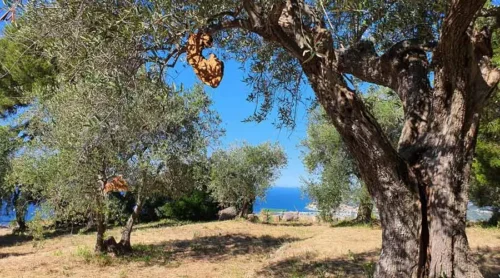
The history of olive oil reaches back thousands of years and is inseparably linked to the cultural history of the Mediterranean region. Wherever olive trees thrive, cultural landscapes have emerged—a connection that endures to this day. From ancient Crete through the Roman Empire to modern times, olive oil has shaped human nutrition, medicine, cosmetics, and art.
The earliest evidence of olive use as food comes from Crete: as early as 6000 BC, it served the Cretans as a food source, as shown in historical bas-reliefs. From there, the olive tree reached mainland Greece, where it took on a central role in culture and mythology.
In Greek mythology, the olive tree played a special role—for example, in the legendary contest between Athena and Poseidon for supremacy in the founding of Attica. Athena gave the people the olive tree and thus won the contest, underscoring the significance of this tree for Greek civilization.
The history of olive oil is also a history of poetry and sport. In ancient literature, the olive tree was celebrated in many works. Heracles is said to have founded the Olympic Games, and the olive branch served victorious athletes as a crown—a sign of the highest honor and recognition.
As Homer reports, Olympic athletes received a special diet in preparation for the competitions, consisting mainly of foods prepared with olive oil. The connection between olive oil and peak athletic performance was thus already firmly established in antiquity.
From the writings of Aristophanes, we learn that in ancient Greek cuisine, practically everything was prepared with olive oil—whether vegetable and meat dishes, pastries, or desserts. The Greek philosopher Democritus was convinced that one would live to be a hundred years old if one applied “honey internally and oil externally.”
The Roman naturalist Pliny put it this way: “There are two liquids that are agreeable to the human body: wine internally and olive oil externally, both of which come from trees, but oil is the more necessary.” The oil served as soap, for body care after bathing, and as a base for fragrant cosmetics. At the same time, it was a daily food for rich and poor alike.
In the Roman Empire, the demand for olive oil far exceeded domestic production. Large quantities had to be imported from the provinces, especially from North Africa and Spain. The scale of this trade is demonstrated by Monte Testaccio near Ostia: it consists entirely of shards of broken clay vessels in which the precious oil was transported by ship to Rome.
In modern times, the history of olive oil gained further chapters. At both the French and Bavarian royal courts, olive oil was preferred over all other fats and was considered a sign of refined culinary art. The liquid gold of the South had definitively established itself as a luxury trade good in the North.
The olive tree has also left a deep mark on art and literature. Great poets, from Goethe and George Sand to Erich Kästner and Rainer Kunze, dedicated lines to it. The painters of early Expressionism, most notably Vincent van Gogh, repeatedly depicted the olive tree as a motif, immortalizing its timeless beauty on canvas.
The traditional cultivation areas of the olive tree have always been in the countries of the Mediterranean region. But in 1560, Spanish conquistadors brought the olive tree to Central and South America, where it also became established. Wherever olive trees grow, cultural landscapes have emerged—a pattern that repeats itself across continents and demonstrates the universal significance of this tree for human civilization.
An old saying aptly sums up this appreciation: “Take salt like a miser, vinegar like a wise man, olive oil like a spendthrift.”
In summary, the history of olive oil offers many fascinating insights. Anyone who explores the history of olive oil in more detail will discover the diversity and quality that characterize high-quality olive oil.
You can adopt your own olive tree and experience firsthand everything involved in growing olives: Discover olive tree adoption
Follow our community on Facebook and learn more about sustainable olive farming in Liguria: Organic Farming Italy on Facebook
Since when has olive oil been used by humans?
The history of olive oil dates back to at least 6000 BC. On Crete, the olive already served as food at this time, as evidenced by historical bas-reliefs. From Crete, the olive tree reached mainland Greece, where it took on a central role in culture, mythology, and nutrition. This makes olive oil one of the oldest foods ever used by humans.
What role did the olive tree play in Greek mythology?
The olive tree held an outstanding significance in Greek mythology. In the legendary contest between Athena and Poseidon for supremacy in the founding of Attica, Athena gave the people the olive tree and thus won the contest. The olive branch served victorious athletes at the Olympic Games as a crown and was considered the highest sign of honor and recognition.
How did the Romans use olive oil in daily life?
In the Roman Empire, olive oil was an indispensable everyday product. It served as food for rich and poor alike, was used like soap for body cleansing, and was utilized as a base for fragrant cosmetics. The demand for olive oil far exceeded domestic production, so large quantities had to be imported by ship from North Africa and Spain.
What is Monte Testaccio and what does it have to do with olive oil?
Monte Testaccio near Ostia is impressive evidence of the enormous olive oil trade in the Roman Empire. It consists entirely of shards of broken clay vessels in which the precious olive oil was transported by ship to Rome. The sheer size of this mound of shards illustrates the enormous quantities of olive oil the Romans had to import from their provinces.
Which poets and artists have immortalized the olive tree?
The olive tree has inspired numerous poets and artists. In literature, Goethe, George Sand, Erich Kästner, and Rainer Kunze dedicated lines to it. The painters of early Expressionism, most notably Vincent van Gogh, repeatedly depicted the olive tree as a motif. It was already celebrated in poetry in antiquity, and Homer also reported on the special connection between olive oil and peak athletic performance.
How did the olive tree reach America?
The traditional cultivation areas of the olive tree have always been in the Mediterranean region. In 1560, Spanish conquistadors brought the olive tree to Central and South America, where it also became established. Wherever olive trees were planted, cultural landscapes emerged—a pattern that repeats itself across continents and demonstrates the universal significance of this tree for human civilization.
What significance did olive oil have at European royal courts?
In modern times, olive oil gained high esteem at European royal courts. At both the French and Bavarian royal courts, olive oil was preferred over all other fats and was considered a sign of refined culinary art. Since the Middle Ages, olive oil had been brought as a luxury trade good from the Mediterranean region to the North, where it was used for medical, cosmetic, and culinary purposes.
Note: The answers are based solely on the content of this article.