A tray of roasted vegetables, a bowl of beans, a slice of bread: a little olive oil can turn simple ingredients into a satisfying meal. But flavour and health are different questions. To understand whether olive oil is healthy, it helps to look beyond the bottle and consider the whole plate.
The short answer is that olive oil can fit well into a balanced diet, especially when it replaces some fats rich in saturated fatty acids. That does not make it a medicine, or an ingredient for which more is always better. Here is a practical way to connect nutrition evidence with the decisions you make in your kitchen.
Start with what the oil replaces
Imagine two kitchens. In one, olive oil is simply added to an already energy-dense diet. In the other, it is used for vegetables that would otherwise have been cooked in plenty of butter. The oil is identical; the dietary change is not.
Olive oil is rich in monounsaturated fatty acids, particularly oleic acid. Replacing saturated fats with unsaturated fats matters for blood cholesterol. The German Nutrition Society recommends favouring vegetable oils. Olive oil is one option, rather than the only good choice: rapeseed oil, for example, provides more alpha-linolenic acid, an omega-3 fatty acid.
In practice, use olive oil in place of some butter or lard instead of automatically adding it on top of everything else. Keep nuts, seeds and other suitable vegetable oils in your diet too. Variety makes more sense than looking for a single perfect fat.
Build a Mediterranean meal around food, not oil
Mediterranean eating does not mean pouring generous amounts of oil over every dish. The combination matters: plenty of vegetables, regular servings of pulses, whole grains, fruit and nuts. Fish can also be included according to dietary preferences. Olive oil brings these ingredients together through flavour and can be used in preparation or as a finishing touch.
Think of a bean salad with tomatoes, herbs, a little olive oil and wholegrain bread. Or lentils served with roasted vegetables and a lemon-and-olive-oil dressing. No special “superfoods” are needed. Alcohol is not a requirement for a Mediterranean eating pattern either.
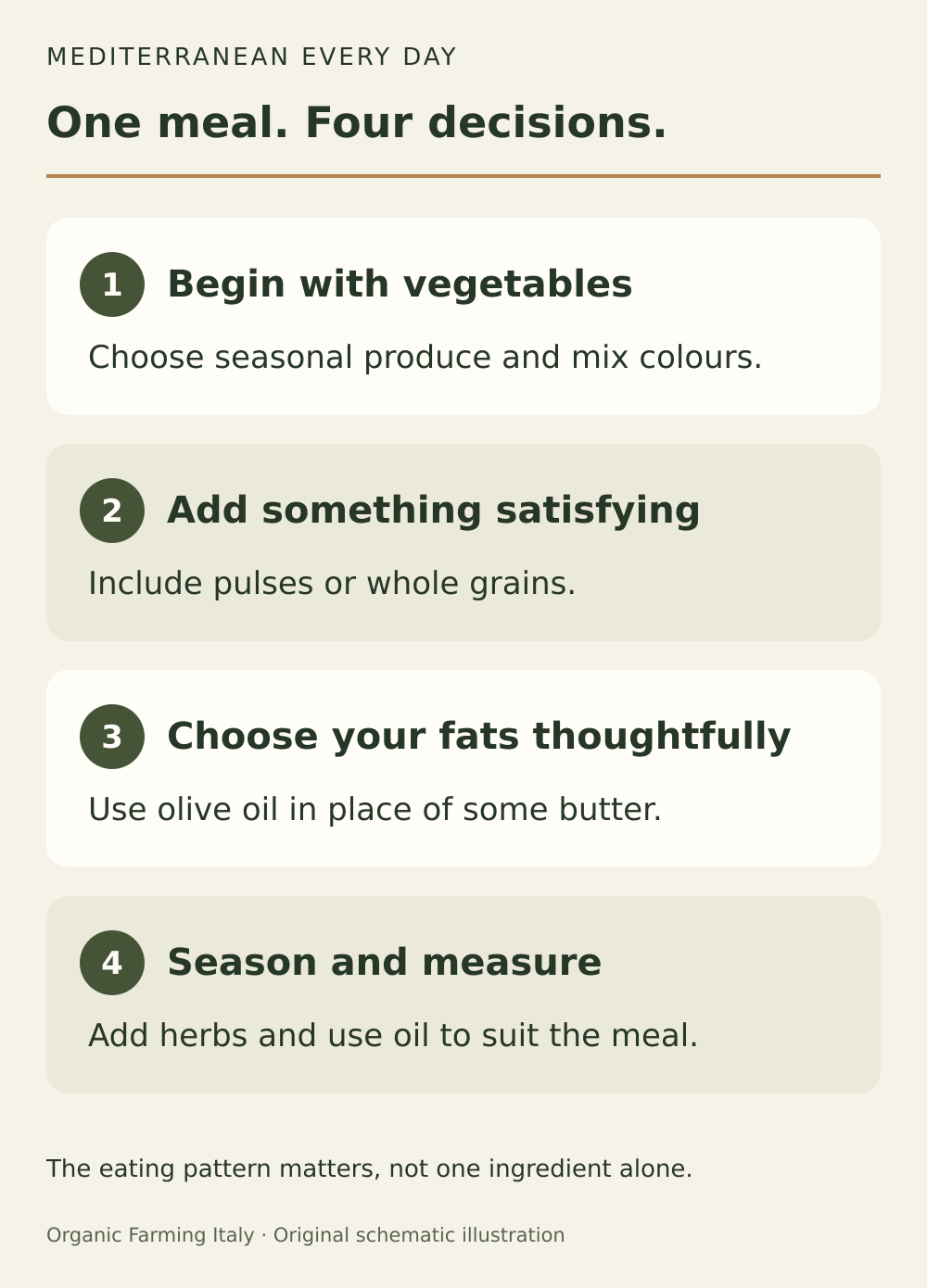
The new illustration below sets out this kitchen approach. It is not a prescription for portion sizes, but four decisions that can help you put a meal together.
What a major study can tell us
PREDIMED is frequently cited in discussions of olive oil. Its corrected 2018 republication covered 7,447 people in Spain at high cardiovascular risk. Researchers compared a Mediterranean diet supplemented with extra virgin olive oil, a Mediterranean diet supplemented with nuts, and a control group receiving advice on a reduced-fat diet.
Fewer major cardiovascular events occurred in the two Mediterranean groups during the study. Context matters: the intervention involved eating patterns and dietary guidance, not an isolated spoonful of oil. Its findings cannot provide a personal guarantee of protection or a universal percentage benefit for every bottle.
The republication also addressed departures from the original group allocation protocol. A fair account should acknowledge this. The study offers important evidence about a Mediterranean dietary pattern; it does not establish that olive oil alone prevents illness or replaces medical treatment.
Make sense of extra virgin quality and polyphenols
Extra virgin olive oil is obtained exclusively by mechanical processes and must meet defined chemical and sensory requirements. Alongside fat, it contains plant compounds, including various phenolic substances. Their amounts vary with the olive variety, processing and storage.
The EU authorises a specific health claim about olive oil polyphenols contributing to the protection of blood lipids from oxidative stress. Its use has conditions: the oil must contain at least 5 milligrams of hydroxytyrosol and its derivatives per 20 grams. Consumers must also be told that the beneficial effect is obtained with a daily intake of 20 grams of a qualifying oil.
This is not a universal intake recommendation, nor evidence that every extra virgin olive oil meets the conditions. A general total-polyphenol measurement is not automatically equivalent to the analysis needed for that claim. A particular product needs appropriate supporting evidence.
Bitterness and a peppery sensation can be characteristics of fresh olive oil, but they are not a laboratory test. A green colour does not establish a particular health effect either. Research on an isolated substance in a laboratory should not be confused with proven drug-like effects in people.
Use it in meals you already enjoy
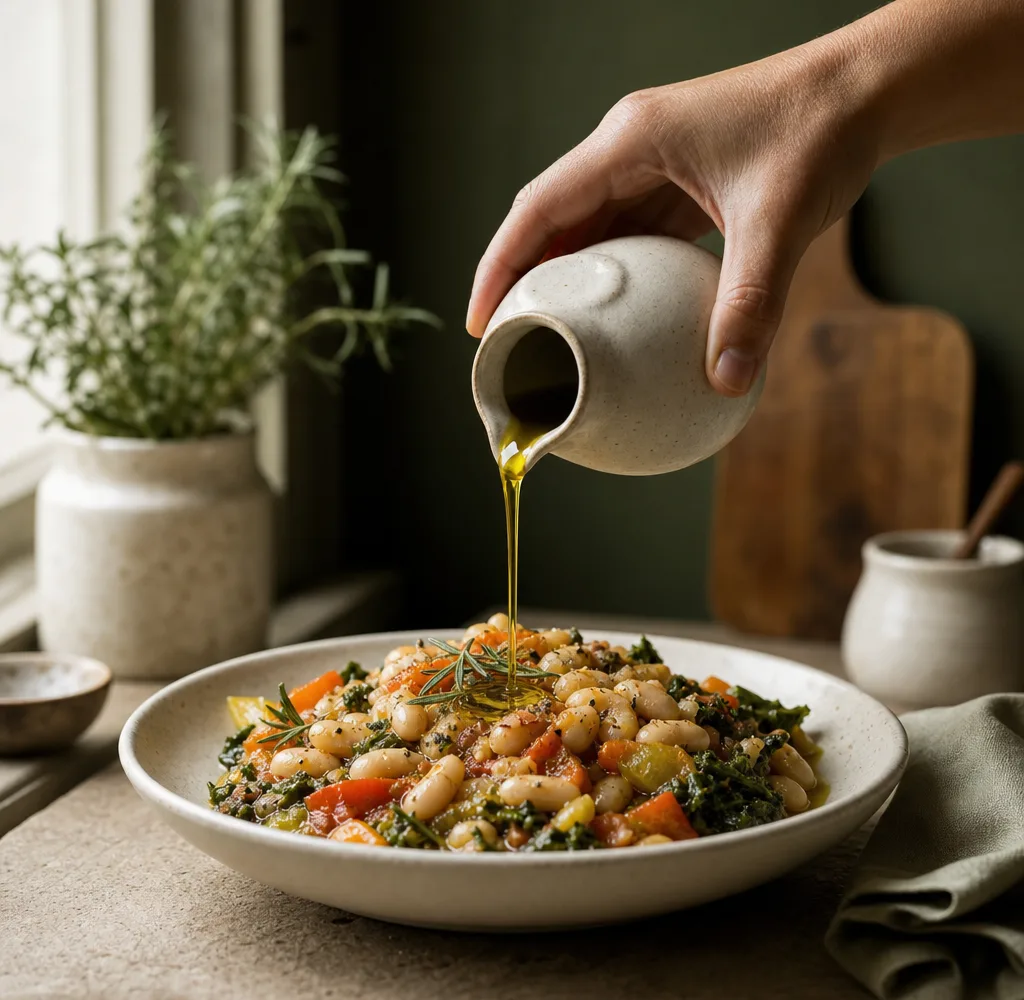
Start with familiar food. Mix a little oil with lemon juice and herbs for a salad, finish a vegetable soup with it, or use it to cook vegetables over moderate heat. A tasty meal does not need to be swimming in oil.
Extra virgin olive oil can be used for gentle cooking and many ordinary kitchen tasks. Avoid overheating it or letting it smoke. For very high temperatures, choose an oil explicitly suitable for that purpose and follow the manufacturer’s instructions. Heating can alter some sensitive minor compounds, but this does not mean that meals cooked with olive oil are inherently unhealthy.
A spoon is useful for measuring instead of always pouring directly from a large bottle. Fat supplies around nine kilocalories per gram, so 20 grams of oil provides roughly 180 kilocalories. That energy is part of the meal. There is no universal “health dose” that suits everyone regardless of what else they eat.
Buy and store with freshness in mind
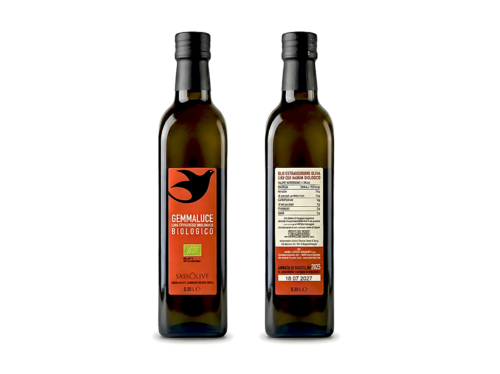
Choose a container size that matches how much you use. A large tin is not automatically better if it stays open for a long time. Look for clear origin information, the quality category and undamaged packaging. A stated harvest year can be useful; the best-before date is not a harvest date.
Keep olive oil away from direct sunlight and the warm spot beside the cooker. Close it properly and store it in a cool, dark place. Dark glass or suitable metal packaging helps protect it from light. Oil with a clearly rancid smell or taste should no longer be used as food.
Organic certification concerns farming and production requirements. It does not automatically demonstrate a particular polyphenol content or stronger medical effects. Flavour, transparency and how you intend to use the oil are useful buying criteria too.
Let your next meal be the first step
You do not need to overhaul everything at once. Pick a vegetable or pulse-based dish, replace some saturated fat with olive oil and season it thoughtfully. That is more practical than taking a daily oil shot with high expectations.
Olive oil can be an enjoyable part of a balanced diet. Its usefulness depends on your overall food choices, the amount and your personal needs. If you have a medical condition, symptoms or a prescribed diet, discuss changes with a qualified healthcare professional. This article is not individual medical advice.
Quick answers about olive oil and diet
Do I need to drink olive oil on its own?
No. You can use it in ordinary meals. What matters more is which other fats it replaces and how your diet is composed overall.
Is olive oil healthier than every other vegetable oil?
A blanket ranking is not useful. Olive oil mainly supplies monounsaturated fats; other oils, such as rapeseed oil, have a different fatty acid profile. Variety can be helpful.
Is 20 grams a general daily recommendation?
No. That amount is part of the conditions for a specific EU olive oil polyphenol claim and applies only to oils with the required content. Your needs depend on the rest of your diet.
Can olive oil replace medication?
No. Olive oil is a food. Research on dietary patterns or individual compounds does not justify stopping or changing a prescribed treatment.
Learn about the trees and their cultivation: how olive tree adoption works.