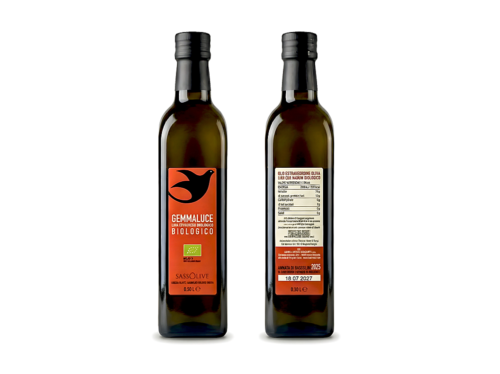
Hardly anything tastes as much like Liguria as freshly made Pesto Genovese: tender basil, pine nuts, garlic, Parmigiano Reggiano, Pecorino, and a mild, fruity extra virgin olive oil. That is all it takes. And that is exactly why every single ingredient counts in this dish.
This authentic Italian Pesto Genovese shows you how real Ligurian pesto is prepared – traditionally in a mortar, with a few high-quality ingredients and without everything that is added to many ready-made products or modern variations. No lemon juice, no cashews, no parsley, and no cream. Only what makes a real Pesto alla Genovese.
For us at Organic Farming Italy, this recipe is something special: Pesto Genovese belongs to Liguria just as much as olive groves, small mountain villages, and the sea. Especially in our region, you can see how much a simple dish thrives on the quality of its ingredients.
The name already reveals a lot: Pesto comes from the Italian verb pestare – to crush or pound. Traditionally, the ingredients are therefore not cooked, but processed in a mortar. It is precisely this gentle preparation that is typical of authentic Italian Pesto Genovese.
For an authentic Italian Pesto Genovese, these ingredients are particularly crucial:
The consortium for the protection of Basilico Genovese DOP names exactly this combination as the basis of traditional pesto and recommends Ligurian basil and a mild olive oil for a particularly authentic result.
Precisely because pesto is so well-known, countless variations exist. Many of them can taste very good – they just aren’t a classic Pesto alla Genovese.
When it comes to garlic, the same applies: more is not automatically better. The basil should remain the clear protagonist.
| Category | Sauce / Pasta |
| Cuisine | Italian, Liguria / Genoa |
| Preparation time | 10 minutes |
| Preparation time | 10–15 minutes |
| Total time | approx. 20–25 minutes |
| Servings | 4 |
| Difficulty | easy to medium |
| Special feature | prepared raw, traditionally in a mortar |
For 4 people:
| Ingredient | Quantity |
|---|---|
| Basilico Genovese DOP or very tender fresh basil | approx. 60–70 g leaves |
| Pine nuts | 20 g |
| garlic | 1 small clove |
| Parmigiano Reggiano, finely grated | 50 g |
| Pecorino, finely grated | 15–20 g |
| Extra virgin olive oil | approx. 50–70 ml |
| Coarse sea salt | 1 small pinch |
Important: The olive oil should not be too bitter or too pungent. A mild, fruity extra virgin olive oil is particularly suitable for pesto because it supports the delicate basil aroma instead of overpowering it.
For the classic version, Basilico Genovese DOP is used. This basil is grown in Liguria and is characterized by particularly tender leaves and a delicate aroma.
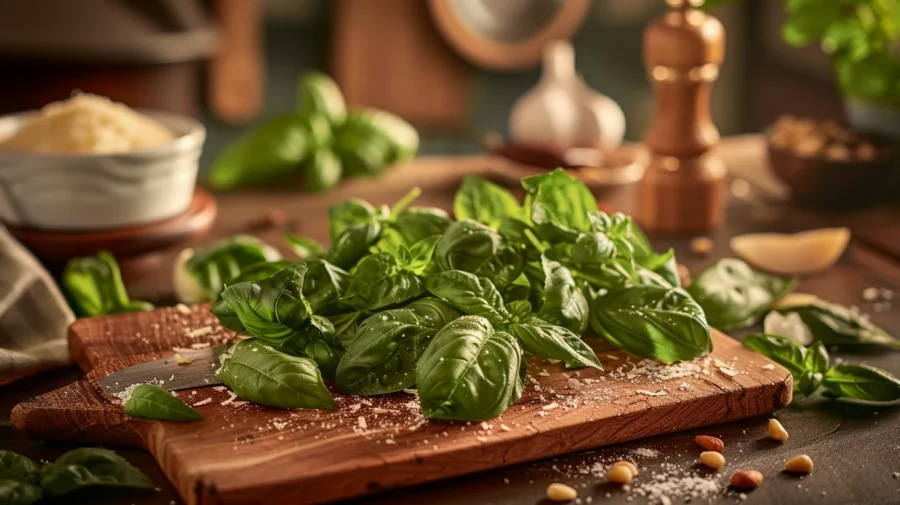
The difference to stronger basil varieties is important: some varieties develop a significantly mintier or peppier note. This can completely change the flavor of a pesto.
If you cannot get Basilico Genovese DOP, choose the youngest, small-leaved basil possible and avoid very large, hard leaves.
The classic method is slower than a blender, but it is worth it. In a mortar, the ingredients are crushed instead of cut. This creates a creamy consistency without unnecessarily heating the basil. For authentic Italian Pesto Genovese, this low temperature is particularly important.
Carefully pluck the basil leaves from the stems, rinse briefly under cold water, and then dry very thoroughly.
This is important: Wet leaves dilute the pesto and make processing more difficult.
Place the peeled garlic clove in the mortar together with a small pinch of coarse salt.
Work with the pestle until a fine paste is formed. The coarse salt acts as a small abrasive.
Add the pine nuts and grind them as well until a creamy mass is formed.
They give the pesto its soft, round texture.
Now add the basil leaves to the mortar in portions.
Instead of pounding vigorously from above, guide the pestle with circular movements along the inner wall of the mortar. This gently crushes the leaves and releases their essential oils.
This step is the heart of authentic Italian Pesto Genovese.
Finely grate the Parmigiano Reggiano and Pecorino and work them into the basil mixture.
The Parmigiano brings sweetness and depth, while the Pecorino adds a slightly stronger, salty note. It is precisely this mixture that makes the taste so balanced.
Finally, stir in the olive oil slowly in a thin stream.
The oil is not aggressively pounded in the mortar but combines at the end with the basil-cheese mixture to form a creamy sauce.
The finished pesto should be smooth, but not liquid.
Yes – if it has to be fast. Even the official consortium of Basilico Genovese DOP describes preparation in a blender as a possible alternative.
The key is that the basil does not get warm. High speeds and long blending times can heat the leaves and make the pesto darker and more bitter.
A large food processor is usually less suitable for small amounts of pesto than a small blender or chopper.
A bitter pesto can have various causes. Most often it is due to heat or a very strong olive oil.
For this authentic Italian Pesto Genovese, the following applies: work cool, process carefully, and ensure a harmonious aroma when choosing the olive oil.
Traditionally, more than one cheese is used. The classic combination for authentic Italian Pesto Genovese consists of Parmigiano Reggiano and a matured Pecorino.
Parmigiano Reggiano is milder, nuttier, and slightly sweet. Pecorino brings more spice and saltiness. Together, they create exactly the balance that Pesto Genovese needs.
You can find more about the origin and production of Parmigiano at the official Consorzio del Formaggio Parmigiano Reggiano.
In authentic Italian Pesto Genovese, the olive oil is not heated. Therefore, you can taste its quality particularly clearly.
A good oil combines basil, cheese, garlic, and pine nuts into a creamy sauce. At the same time, it must not overpower the other ingredients.
In Liguria, rather mild, elegant olive oils are traditionally used. That is exactly why a delicately fruity extra virgin olive oil often fits better here than a very pungent or extremely bitter oil.
Anyone who wants to delve deeper into the subject will find plenty of background information on quality, taste, and use in our Olive Oil Knowledge section.
Authentic Italian Pesto Genovese is traditionally not only eaten with spaghetti in Liguria. Particularly typical are:
With Trofie or Trenette, potato pieces and green beans are often cooked together in Liguria and then mixed with the pesto. This creates a particularly typical Ligurian pasta dish.
This is one of the most common mistakes.
Authentic Italian Pesto Genovese is not cooked. The finished sauce is only added to the hot, drained pasta.
It is best to stir the pesto in a large bowl with one to two tablespoons of pasta water until creamy and then toss the hot pasta in it.
This makes the pesto smooth without the basil losing its fresh color and aroma.
The blender heats the mixture and the basil can turn darker. Better to just pulse briefly or use a mortar.
Garlic is important but must not dominate the basil. For four portions, one small clove is usually enough.
Very large, hard leaves or strongly minty varieties significantly change the taste. Tender basil is the better choice.
This causes the basil to lose freshness and color. Always mix pesto with the finished pasta only.
A little starchy pasta water makes the pesto smoother and helps to distribute it evenly over the pasta.
Fresh pesto tastes best directly after preparation. If any is left over, fill it into a clean jar and cover the surface with a thin layer of olive oil.
It should be consumed as quickly as possible in the refrigerator. For longer storage, pesto can also be frozen in portions.
Yes. Small portions are particularly practical, for example in ice cube trays.
This allows you to thaw exactly the required amount later. It is best to thaw the pesto slowly in the refrigerator and do not heat it.
Ligurian and Italian cuisine consistently shows the same principle: few ingredients, but the best possible ones.
This applies to this authentic Italian Pesto Genovese just as much as to our Spaghetti Aglio e Olio or the traditional Minestrone alla Nonna.
And if you still feel like something sweet afterwards: our authentic Italian Tiramisu without cream is an excellent accompaniment.
Pesto is a general term for crushed or blended sauces. Pesto Genovese refers to the traditional Ligurian variant with basil, pine nuts, garlic, cheese, olive oil, and salt.
Traditionally, Basilico Genovese DOP is used. Alternatively, the youngest, most tender, and small-leaved basil possible is suitable.
Pine nuts belong in the classic recipe. Cashews, walnuts, or almonds result in other pesto variations.
Yes. A small blender also works if you work only briefly and as cool as possible. Traditionally, however, the pesto is prepared in a mortar.
Basil oxidizes quickly. Heat, long blending, and prolonged contact with air accelerate this process. Therefore, work as quickly and coolly as possible.
Traditionally, Parmigiano Reggiano and Pecorino are combined. This mixture ensures a balanced ratio of mild spice and strong saltiness.
A mild, fruity extra virgin olive oil is particularly suitable. A very bitter or pungent oil can overpower the delicate basil aroma.
For a classic Pesto Genovese, the sauce should not be cooked or fried. It is mixed with the hot pasta and some pasta water.
A good authentic Italian Pesto Genovese is not a complicated dish. But it hardly forgives poor ingredients.
Fresh basil, good cheese, pine nuts, and a fine extra virgin olive oil – that’s all it takes to bring a piece of Liguria to your plate.
Buon appetito!