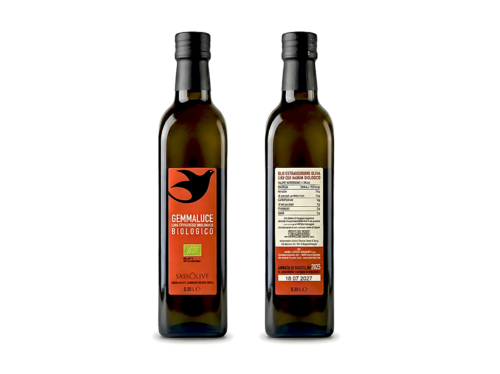
On a nutrition label, olive oil looks simple enough: lots of fat, including saturated and unsaturated fatty acids. But this table reveals little about its aroma, its bitterness, or its delicate plant compounds. That’s where it’s worth taking a closer look at the so-called minor constituents.
The term covers a range of different substances that occur alongside the main component of the oil. Some influence the aroma, others the color or resistance to oxidation. Some are also of interest for nutrition research and approved health claims. What matters is not confusing their significance with sweeping promises of healing.
What the nutrition label doesn’t tell you
Olive oil consists mainly of triglycerides: molecules in which fatty acids are bound to glycerol. The frequently mentioned oleic acid is one of these fatty acids. It is therefore something different from a polyphenol or an aroma compound.
The minor constituents don’t form a single uniform group. They include, among others, phenolic compounds, tocopherols, plant sterols, squalene, pigments, and volatile aroma compounds. Their quantities and properties vary. “Minor constituents” is therefore more of an umbrella term than a single nutrient for which a daily requirement could be stated.
Even the grade “extra virgin” isn’t a fixed recipe with always-identical levels. Two flawless oils can differ significantly in composition. From the term alone, you can’t derive a specific polyphenol value or a concrete effect for any individual bottle.
Polyphenols: between flavor and measured value
In olive oil, the common term polyphenols covers various phenolic compounds. These include hydroxytyrosol and tyrosol, as well as related and derived compounds. This mixture of substances changes during the processing of the olive; it isn’t simply transferred unchanged from the fruit to the bottle.
Some of the phenolic compounds contribute to bitterness and pungency. Oleocanthal, in particular, is associated with the characteristic throat-catching sensation. However, what you perceive while tasting isn’t a lab analysis: it doesn’t reliably tell you how many milligrams of a specific substance are present.
Likewise, the label “early harvest” doesn’t guarantee a specific measured value. Variety, ripeness, location, processing, and later storage all play a role together. A concrete quantity requires a suitable analytical report for that particular oil, not just an intense flavor description.
Putting vitamin E, sterols, and squalene into perspective
Tocopherols belong to the vitamin E family; in olive oil, alpha-tocopherol in particular plays a role. Vitamin E is an essential nutrient. However, the actual content in an oil varies. General information about vitamin E is therefore not automatically proof that every bottle meets the requirements for a specific nutrition or health claim.
Plant sterols are natural components of plant-based foods. The amounts found in ordinary olive oil shouldn’t be equated with specially fortified products and their tested intake amounts. Their mere presence doesn’t justify attributing a cholesterol-lowering effect to a serving of olive oil.
Chemically, squalene belongs to the hydrocarbons and occurs, among other places, in olive oil. The human body also produces it as an intermediate product in metabolism. However, these properties don’t amount to a proven treatment or prevention of disease through the consumption of a certain amount of oil.
What the approved polyphenol claim actually says
In the EU, suitable olive oils are permitted to carry the claim that olive oil polyphenols help protect blood lipids from oxidative stress. This claim has a clearly limited scope. It does not mean that olive oil treats cancer, replaces medication, or prevents every form of inflammation.
Its use is tied to conditions: the oil must contain at least 5 mg of hydroxytyrosol and its derivatives, such as the oleuropein complex and tyrosol, per 20 g of olive oil. In addition, it must be stated that the beneficial effect occurs with a daily intake of 20 g of an olive oil with the corresponding composition.
Important when reading analyses: a value for “total polyphenols” isn’t automatically the same as this legally defined quantity. The measurement method, the compounds captured, and the reference amount all need to match. The conditions here are explained as background information, not as proof for any specific product.
Why a green oil isn’t an analysis report
Chlorophylls and carotenoids influence the color. Depending on composition, an oil appears more green or golden yellow. Neither the polyphenol content nor any health superiority can be reliably read from this. An intensely green appearance is no substitute for quality testing and analysis.
Aroma and flavor also deserve a nuanced look. Fresh, green notes can be pleasant and informative when tasting, but they can’t simply be added up into a health score. “Mild” doesn’t automatically mean inferior, and “very pungent” isn’t a complete quality verdict.
When shopping, traceable origin information, the grade, good storage conditions, and an appropriate container size are more helpful than an isolated superlative on the label. If you’re interested in a particular compound, ask for the relevant data and which batch it refers to.
From the mill to your kitchen cupboard
Mechanical methods are used in producing virgin oils. Refining can significantly alter or reduce various minor constituents. However, this doesn’t mean that virgin oils preserve all the olive’s substances completely and unchanged, or that a refined oil no longer contains any minor constituents at all.
Changes continue after bottling. Light, heat, and oxygen can accelerate aging. Not all constituents react at the same speed or in the same way. So there’s no single, blanket shelf-life date that applies to all polyphenols.
At home, this means: seal the bottle well, protect it from light, and don’t store it permanently next to the stove or a sunny window. Buy amounts that you’ll use up regularly once opened. A dark, not-too-warm storage spot makes more sense than decoratively displaying a clear bottle in direct sunlight.
How to use this knowledge in everyday life
Start with an oil that you enjoy and that suits your dishes. Its aromas really come through on vegetables, legumes, or in a dressing. Used cold, it isn’t exposed to extra heat; however, this doesn’t mean there’s a blanket ban on using extra virgin olive oil for cooking.
Sensitive compounds can change when heated. How much depends partly on temperature, duration, and preparation method. “After cooking, everything valuable is gone” is just as inaccurate as claiming that heat makes no difference at all. Avoid overheating to the point of smoking.
Also think of oil as part of your overall diet, not as an extra dose meant to work independently of your meals. It provides a lot of energy. Vegetables, whole grains, legumes, and other varied foods remain important; more oil alone doesn’t automatically make a meal more balanced.
What research can show – and what it can’t
A test with isolated substances in a test tube answers a different question than a study with people who consume olive oil as food. Concentration, absorption, metabolism, and the rest of the diet can all change the outcome. An interesting lab finding is therefore not yet proof of a healing effect in humans.
Comparisons with painkillers or statements about tumor cells, in particular, can’t be translated into a reliable kitchen serving. Olive oil is a food, not a substitute for medically prescribed treatment. Even highly concentrated extracts aren’t simply the same as oil in a salad.
The most sensible conclusion is more sober and practical: minor constituents help you understand the diversity of virgin olive oils. Choose carefully, store well, and enjoy mindfully – without turning every natural compound into a medical promise.
Frequently asked questions about minor constituents
Are minor constituents the same as unsaturated fatty acids?
No. Fatty acids are part of the main fat fraction. The umbrella term minor constituents refers to other compounds present in smaller amounts, such as phenolic substances, tocopherols, or plant sterols.
Does every extra virgin olive oil contain the same amount of polyphenols?
No. Factors such as variety, ripeness, processing, and storage all influence the composition. The grade alone doesn’t guarantee a specific polyphenol content.
Can I tell there are a lot of polyphenols from a green color?
No. The color is largely shaped by pigments and doesn’t allow for a reliable determination of polyphenol content. A proper analysis is needed for that.
Can any olive oil advertise with the polyphenol health claim?
No. The approved claim is tied to defined conditions, including at least 5 mg of hydroxytyrosol and its derivatives per 20 g of oil. It doesn’t apply across the board to every olive oil.
What’s especially important for storage?
Protect the oil from light, unnecessary heat, and prolonged air contact. Seal the bottle carefully and choose an amount you’ll use up regularly after opening.
Can olive oil replace medication?
No. Studies on individual compounds don’t provide a substitute for medication. Don’t change a prescribed treatment based on claims about olive oil.
Sources and professional context
This information is intended for general orientation about food, not for diagnosis or treatment. The EU register entry describes the conditions of the approved polyphenol claim; the scientific papers provide context on composition and storage.
European Commission: EU Register of nutrition and health claims
Review: Bioactive Compounds and Quality of Extra Virgin Olive Oil
Study: Evolution of Extra Virgin Olive Oil Quality under Different Storage Conditions
Want to discover the differences yourself? Head to the guide on the flavor of olive oil.