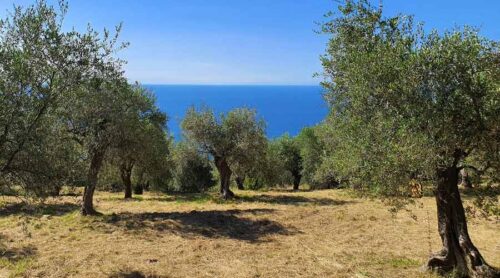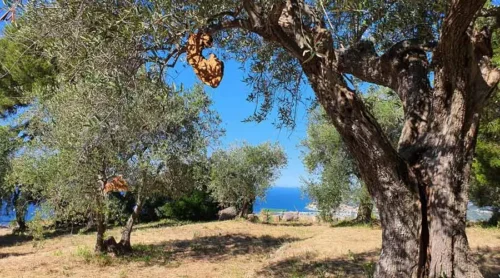
When the first olives land in the nets in October and the scent of freshly pressed oil drifts through the mills, one of the world’s oldest harvest traditions begins across the Mediterranean. The 2025/2026 olive harvest is now complete in most parts of Europe—and the results paint a nuanced picture. While some countries are seeing a strong recovery, others are struggling with the effects of heat, drought and the natural alternate-bearing cycle of olive trees. This article analyses production volumes, quality differences and regional characteristics of the current season.
Overall situation in Europe – the 2025/2026 olive harvest at a glance
After the strong recovery season of 2024/2025, when global olive oil production rose to around 3.57 million tonnes, the 2025/2026 olive harvest shows a moderate decline. The International Olive Council (IOC) forecasts total global production of about 3.44 million tonnes—around four percent less than the previous season. EU production is estimated at approximately 2.06 million tonnes, a decrease of three percent.
The reasons for the decline are varied. The natural alternate-bearing cycle—many olive trees produce fewer fruits after a productive year—plays a central role. Added to this are climatic challenges: a hot, dry autumn in Spain, ongoing drought in Crete, and localised problems with the olive fruit fly in some regions of Italy and Greece have reduced yields.
Despite the drop in production, total volume remains above the crisis level of the 2023/2024 season, when global output collapsed to just 2.59 million tonnes. Supply has stabilised, and prices for extra virgin olive oil have fallen by 30 to 40 percent compared with the record highs of 2024.
| Country | Production 2025/26 (t) | Previous year 2024/25 (t) | Change |
|---|---|---|---|
| Spain | 1.370.000 | 1.420.000 | –3.5% |
| Italy | 300.000 | 230.000 | +30 % |
| Greece | 250.000 | 192.000 | +30 % |
| Portugal | 145.000 | 170.000 | –15% |
| Turkey | 200.000 | 400.000 | –50% |
| Croatia | 5.400 | 5.000 | +8 % |
Spain – Europe’s largest olive oil producer under pressure
Spain remains by far Europe’s largest olive oil producer, with an estimated output of 1.37 million tonnes. However, that is three to eight percent below the initial forecasts, which in October 2025 were still at 1.44 million tonnes. A hot, dry autumn led to a significant reduction in fruit size and oil content, especially in non-irrigated olive groves.
Andalusia – the heart of Spain’s 2025 olive harvest
Andalusia, which accounts for around 70 percent of Spain’s olive oil production, recorded a harvest of about 1.08 million tonnes. That is 5.5 percent less than the previous season, but still around 20 percent above the five-year average. The province of Jaén, the world’s largest olive oil region, had to revise expectations down by about 20 percent—drought and a lack of autumn rainfall are the main causes.
In Córdoba, production fell by 7.5 percent to around 269,000 tonnes. The provinces of Granada and Málaga were particularly affected, where non-irrigated groves had to accept yield losses of 30 to 70 percent. Irrigated plantations, which have expanded significantly in recent years, proved much more resilient and were able to partially offset the losses.
Catalonia, Castilla-La Mancha and Extremadura
Outside Andalusia, developments vary. Castilla-La Mancha, Spain’s second-largest olive-growing region with nearly 450,000 hectares of olive groves, produced around 108,000 tonnes last season and is largely holding that level steady. Extremadura is seeing a slight increase to about 69,000 tonnes—here, modern super-intensive plantations are driving productivity.
Catalonia, by contrast, is going through difficult times. Five consecutive years of drought and extreme temperatures during olive flowering have halved production in recent years. At around 32,000 tonnes, the region remains an important export hub for bottled olive oil, but its own output is well below the historical average.
Italy – strong regional differences in the 2025 olive harvest
Italy is seeing a clear recovery in the 2025/2026 season. With an estimated production of around 300,000 tonnes, the country is about 30 percent above last year’s 230,000 tonnes. This increase is mainly thanks to the southern regions, while central and northern Italy struggled with the olive fruit fly and locally unfavourable weather.
Apulia – the engine of Italian olive oil production
Apulia confirms its role as Italy’s most important olive oil region, with an estimated production of 150,000 to 160,000 tonnes—an increase of more than 35 percent compared with last year. Timely summer rainfall provided the trees with enough moisture after a dry spring. The region thus produces almost 55 percent of Italy’s total olive oil. Quality is rated very good, with high polyphenol levels and a balanced flavour profile.
Tuscany – olive fruit fly as a challenge
Tuscany, known worldwide for its high-quality olive oils, is seeing a decline this season. At about 15,000 tonnes, production is well below last year’s level of over 20,000 tonnes. The main cause is severe waves of olive fruit fly infestation, especially in the province of Grosseto. Despite lower volumes, fly-free groves are showing good to very good oil quality—Tuscany remains a premium location for top-class extra virgin olive oil.
Liguria – modest harvest, outstanding quality
Liguria, home of the famous Taggiasca olive, is experiencing a quiet season with production of about 2,000 tonnes. After an above-average year, many trees are in a natural recovery year. In addition, there is fruit fly activity in coastal areas. Oils produced from healthy groves show the typical Ligurian elegance: mild, fruity and with delicate almond notes—valued by connoisseurs worldwide.
Southern Italy – Calabria and Sicily impress
Calabria and Sicily are among the winners of the 2025 olive harvest. Calabria produces over 35,000 tonnes—around 36 percent more than last year. Healthy olive groves, sufficient moisture and low pest pressure provide excellent conditions. Sicily reports a similarly strong result of 35,000 tonnes, supported by well-distributed rainfall and the absence of parasites.
Umbria, valued for its fruity and slightly bitter oils, is having a solid season with an estimated 8,000 to 10,000 tonnes. Olive quality is rated as good despite summer drought. Overall, Italy’s southern regions—Apulia, Calabria and Sicily together—produce over 230,000 tonnes, forming the backbone of the Italian olive oil industry.
| Region | Production 2025/26 (t) | Previous year (t) | Change | Quality |
|---|---|---|---|---|
| Apulia | 155.000 | 112.000 | +38 % | Very good |
| Calabria | 35.000 | 25.700 | +36 % | Excellent |
| Sicily | 35.000 | 26.600 | +32 % | Good to very good |
| Tuscany | 15.000 | 20.000 | –25% | Mixed |
| Umbria | 9.000 | 6.000 | +50 % | Good |
| Liguria | 2.000 | 2.500 | –20% | Excellent |
Greece – recovery with regional differences
Greece is seeing a clear recovery in the 2025/2026 season. The IOC forecasts production of around 250,000 tonnes—about 30 percent more than the previous season’s 192,000 tonnes. This brings the country closer again to the five-year average of 262,000 tonnes, but it is still below the record level of the 2023/2024 season with 340,000 tonnes.
The Peloponnese is emerging as Greece’s strongest region, with an estimated production of around 90,000 tonnes. Messinia, Laconia and Elis report strong harvests, supported by 15 to 20 percent more blossoms than last year. Irrigated olive groves benefited particularly from the improved conditions. The Koroneiki olive, Greece’s most important oil olive, produces oils in these regions with pronounced fruitiness and high polyphenol content.
Crete, usually one of Greece’s most productive locations with over 30 million olive trees, shows a mixed picture. Total production on the island is estimated at about 50,000 tonnes. While western Crete around Chania impresses with 23,000 tonnes and remarkable quality with a 92 percent extra virgin share, central Crete around Heraklion suffers from ongoing drought and olive fruit fly infestation. In some areas, yields fell by 60 to 70 percent compared with normal years.
Producer prices for Greek extra virgin olive oil are €4.30 to €4.65 per kilogram—well below the Italian level of €6.50 to €7.50. This price gap led to nationwide protests by Greek olive farmers in December 2025, demanding higher producer prices and subsidies.
Portugal and other Mediterranean countries
Portugal, Europe’s fourth-largest olive oil producer, is seeing a decline of about 15 to 20 percent to an estimated 140,000 to 150,000 tonnes. The Alentejo region, which accounts for around 70 percent of Portuguese production, was hit by high spring temperatures and strong winds during flowering, leading to irregular fruit set. Four months without rain in summer worsened the situation. Even irrigated groves struggled with water shortages. The quality of the harvested olives is nevertheless rated as good.
Turkey, a major producer outside the EU, is experiencing a pronounced alternate-bearing year with a drastic decline of an estimated 50 percent to only around 200,000 tonnes. After a strong 2024/2025 season with over 400,000 tonnes, the trees are in a natural recovery phase.
Croatia is delivering remarkable results despite low overall volumes. Although the olive volume reached a record level at 54,000 tonnes, oil yields fell to just 9 to 10 percent—the lowest ever recorded. Heavy September rainfall had soaked the olives with water and diluted the oil content. In terms of quality, however, Croatian oils impress with outstanding polyphenol levels—at international competitions, Croatian producers won a total of 125 awards in 2025.
Quality 2025/2026 – a good to excellent vintage
The good news for all olive oil lovers: Despite lower production volumes in some regions, the quality of the 2025/2026 vintage is good to excellent across large parts of Europe. Early-harvest oils from October and November in particular show high polyphenol levels, bold fruitiness and the typical throat tickle that indicates valuable oleocanthal.
In regions with sufficient water supply and low pest pressure—such as Calabria, the western Peloponnese and Chania on Crete—the oils reach exceptional quality levels. Chania reports an impressive 92 percent share of extra virgin quality. Spanish oils from irrigated plantations in Jaén and Córdoba also show good sensory profiles despite the drought.
Paradoxically, the climatic challenges have in some cases even led to more concentrated and more aromatic oils. Less water in the fruit means a higher concentration of secondary plant compounds—including the health-promoting polyphenols, tocopherols and sterols. For consumers who value a rich extra virgin olive oil, the 2025/2026 vintage offers excellent opportunities.
Price trends and market outlook
After the historic price peaks of 2023 and 2024, producer prices for extra virgin olive oil have eased significantly in the 2025/2026 season. In Jaén, the most important Spanish trading hub, prices are €4.07 to €4.33 per kilogram—around 11 percent lower than the same period last year. In Bari, the reference market for Italian olive oil, prices are €6.50 to €6.65 per kilogram, a drop of 30 percent compared with 2024.
For consumers, this is a welcome relief. However, prices remain above the level of 2022 and earlier. The olive oil sector faces structural challenges: rising production costs, increasing irrigation needs and accelerating climate change. Experts expect prices to settle at a higher level than in the pre-crisis period.
Conclusion for olive oil lovers
The 2025/2026 olive harvest shows how strongly olive oil depends on regional conditions. While Spain records a slight decline, Italy and Greece are seeing a noticeable recovery. The vintage’s quality is excellent in many regions—especially oils from Calabria, the Peloponnese and western Crete deserve attention.
For lovers of high-quality olive oils, it’s worth looking beyond the usual producers: smaller producers such as Croatia are also delivering impressive quality. If you value fresh, polyphenol-rich olive oil, look for oils from the current harvest and secure the enjoyment of a great vintage.
Would you like to support olive growing in the Mediterranean directly and receive top-quality olive oil in return? Learn more about our olive tree adoption and become part of a sustainable tradition. Follow us on Facebook for the latest news about the olive harvest and olive growing.
Key questions and answers about the 2025/2026 olive harvest
How much olive oil will be produced worldwide in 2025/2026?
The International Olive Council (IOC) estimates global olive oil production for the 2025/2026 season at around 3.44 million tonnes. That is a four percent decline compared with the strong 2024/2025 season. EU countries will produce about 2.06 million tonnes of this, accounting for around 60 percent of the total. Spain remains by far the world’s most important producer.
Why do harvest volumes fluctuate so much from year to year?
The strong year-to-year fluctuations are mainly due to the natural alternate-bearing cycle of olive trees. After a high-yield year, many trees produce significantly fewer fruits the following year to regenerate their reserves. In addition, climatic factors such as drought periods, heatwaves, frost or heavy rainfall during flowering can significantly affect fruit set. Pests such as the olive fruit fly further amplify these natural fluctuations.
Which regions will deliver the best olive oil quality in 2025/2026?
This season, particularly outstanding quality is coming from Calabria and Sicily in southern Italy, the western Peloponnese in Greece, and western Crete around Chania. The Chania region reports an impressive 92 percent extra virgin share. Croatian olive oils also stand out with exceptionally high polyphenol levels and have received numerous awards at international competitions.
How is climate change affecting the olive harvest?
Climate change is noticeably altering olive production in the Mediterranean. Increasing drought periods, heatwaves and irregular rainfall put stress on olive trees and reduce yields. Traditional, non-irrigated olive groves in particular suffer from water scarcity. At the same time, pests such as the olive fruit fly are spreading to higher elevations and more northerly areas. Irrigated and modern plantations are proving significantly more resilient to these changes.
Will olive oil prices continue to fall in 2026?
Producer prices have already eased by 30 to 40 percent compared with the record highs of 2024. Further moderate price declines are possible, but industry experts do not expect a return to pre-2022 prices. Structurally higher production costs, rising irrigation expenses and the effects of climate change point to a permanently higher price level. The exact development will depend largely on rainfall in spring 2026 and the upcoming flowering period.
What does alternate bearing mean in olive trees?
Alternate bearing describes the natural rhythm of many fruit trees producing especially many fruits in one year and significantly fewer the next. In olive trees, this phenomenon is particularly pronounced. After a high-yield harvest, trees invest their energy in regenerating leaf mass and root systems rather than fruit formation. Modern cultivation methods such as targeted pruning, irrigation and fertilisation can reduce alternate bearing, but cannot prevent it completely.
What should you look for when buying olive oil from the current harvest?
Look for the harvest year on the label—fresh olive oil from the 2025/2026 harvest offers the highest levels of health-promoting polyphenols. The term “extra virgin olive oil” guarantees the highest quality grade. Regional indications such as Apulia, Calabria or the Peloponnese point to particularly good vintages. If possible, taste the oil before buying: a slight throat tickle and a fruity-bitter note are signs of high quality and a high polyphenol content.