
Olive oil is a versatile natural product that, when handled correctly, preserves its full aroma and valuable nutrients over the long term. Whether it’s storage, dosage, or heating – with the following olive oil tips, you will get the most out of every drop.
Olive Oil Storage Tips – Dark, Cool, and Sealed
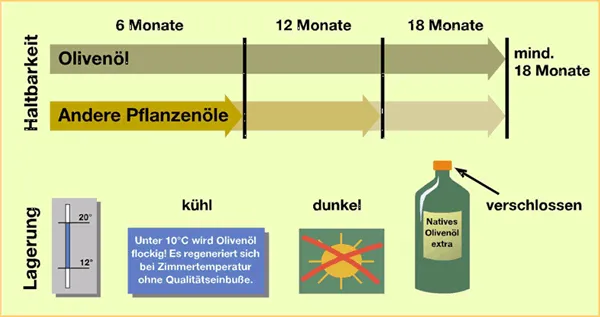
Olive oils should always be kept in a dark place at temperatures between 10 and 16 degrees Celsius. Carefully seal opened bottles after every use to prevent oxygen from entering. Under optimal conditions, olive oil typically remains shelf-stable for 18 months – the best-before date refers to the time of bottling.
An important olive oil tip: The less oil remaining in the bottle, the faster it should be used or transferred into a smaller container. This minimizes contact with air and preserves the aroma.
If you store olive oil in the refrigerator, you will notice it becomes flaky and cloudy. This does not affect the quality – however, the oil should be allowed to clear up at room temperature before being used.
Nutritional Values and Health Benefits
Olive oil contains 9 kilocalories per gram and is characterized by its high content of monounsaturated fatty acids of up to 80%. Cholesterol is practically non-existent, while it provides around 12 mg of vitamin E per 100 g. Additionally, olive oil contains a sufficient amount of beneficial linolenic acid (omega-3 fatty acid) – between 0.8 and 1.5 mg.
Olive Oil Heating Tips – Watch the Smoke Point
Thanks to its natural antioxidants, olive oil is more heat-stable than most other vegetable oils. Nevertheless – like any other oil – it should never be heated so intensely that it begins to smoke. Smoke is harmful to health, can ignite the oil, and gives all food a bitter taste.
If the olive oil starts to smoke in the pan, the temperature should be reduced immediately. If necessary, briefly remove the pot from the burner. Since the smoke point of olive oil is slightly lower than that of some other oils, it is recommended to turn down the heat quickly. As a general rule: Never heat oil in a closed pot – fire hazard!
Olive Oil Tips for Seasoning and Infusing
Olive oil can be wonderfully infused with garlic, dried chili peppers, fresh herbs, or bay leaves during heating. Before adding meat or vegetables to the pan, remove the spices so they do not burn.
When heating extra virgin olive oil, natural steam is produced, allowing the fruity flavors to unfold intensely. If you want to avoid too strong an olive oil scent in the kitchen, opt for a mild-fruity olive oil.
Olive Oil Dosage Tips – Less is More
Olive oil goes a long way. Salad, for example, should not be swimming in it. Generally, only add as much olive oil as suits your personal taste. Conscious dosing can save many calories without having to sacrifice full enjoyment.
For seasoning, marinating, and salad dressings, olive oil should always be at room temperature. This allows it to blend most quickly and evenly with the other ingredients and release its full aroma.
In summary, these olive oil tips offer many exciting insights. Those who consistently apply these tips will discover the variety and quality that distinguishes high-quality olive oil.
You can adopt your own olive tree and experience firsthand everything involved in growing olives: Discover olive tree adoption
Follow our community on Facebook and learn more about sustainable olive farming in Liguria: Organic Farming Italy on Facebook
Key questions and answers about olive oil tips
How do you store olive oil correctly?
Olive oil should always be kept in a dark, cool place at temperatures between 10 and 16 degrees Celsius. Carefully seal opened bottles after each use to minimize contact with oxygen. The less oil left in the bottle, the sooner it should be used or transferred to a smaller container. This ensures the aroma and quality of the olive oil are optimally preserved.
How long does olive oil last?
With proper storage, olive oil has an average shelf life of 18 months. The best-before date refers to the time it was bottled. Cool, dark storage and consistent sealing after every use are crucial for longevity. Any shorter expiration dates on the label serve as additional consumer protection and quality assurance.
Why does olive oil become flaky in the refrigerator?
When olive oil is stored in the refrigerator, flakes form and the oil becomes cloudy. This is a natural physical process and does not affect the quality in any way. Before using the olive oil, it should be allowed to clear up at room temperature. Only then will it unfold its full aroma and blend perfectly with other ingredients in salads and warm dishes.
Can you heat olive oil to high temperatures?
Thanks to its natural antioxidants and high proportion of monounsaturated fatty acids, olive oil is more heat-stable than many other vegetable oils. However, it should never be heated so much that it starts to smoke. Smoke is harmful to health and gives food a bitter taste. If the oil starts to smoke, reduce the temperature immediately. Additionally, oil must never be heated in a closed pot.
What are the nutritional values of olive oil?
Olive oil provides 9 kilocalories per gram and contains up to 80% monounsaturated fatty acids. Cholesterol is practically non-existent. There are around 12 mg of vitamin E per 100 g of olive oil, which acts as a natural antioxidant. Additionally, it contains between 0.8 and 1.5 mg of valuable linolenic acid, an omega-3 fatty acid that has a positive effect on health.
How can you infuse olive oil while cooking?
Olive oil can be excellently infused with garlic, dried chili peppers, fresh herbs, or bay leaves while heating. However, the spices should be removed from the oil before adding meat or vegetables to prevent them from burning. When heating extra virgin olive oil, natural steam is produced, which allows the fruity flavors to unfold particularly intensely.
What is the best way to dose olive oil?
An important olive oil tip concerns dosage: Olive oil is very efficient and should be used sparingly. Salad, for instance, should not be swimming in oil. Only add as much as suits your taste – this way you can save calories without sacrificing enjoyment. For seasoning and marinating, the olive oil should be at room temperature so that it blends quickly with the other ingredients.
Note: The answers are based solely on the content of this article.