
Spaghetti Carbonara – authentic Italian, creamy and without cream
There are dishes that require no grand staging. They only need the right ingredients, the right moment – and someone who prepares them with respect. Spaghetti Carbonara is exactly one of those. Anyone who has ever eaten an authentic Spaghetti Carbonara in Rome knows: the original has very little to do with what passes for “Carbonara” in many foreign kitchens.
This Spaghetti Carbonara recipe shows you how to prepare the dish in the authentic Italian way – creamy, intense in flavor, and completely without cream. Because the creaminess doesn’t come from a carton, but from the perfect combination of egg, cheese, and hot pasta water. Sounds simple? It is – if you know what matters. Cooking authentic Carbonara like in Italy is not an art, but a craft.
What makes an authentic Spaghetti Carbonara
Authentic Spaghetti Carbonara originates from Rome and is a dish of simple cuisine – cucina povera in the best sense. Few ingredients, no frills, but a technique that makes all the difference. In the authentic Italian Carbonara recipe, only these ingredients make it onto the plate:
- Guanciale – salt-cured pork cheek, not to be confused with pancetta or standard breakfast bacon
- Egg yolk (and depending on tradition, one whole egg) – the base of the creamy sauce
- Pecorino Romano – savory sheep’s cheese from Lazio, the backbone of the flavor
- Black pepper – freshly ground, generously portioned
- Spaghetti – or alternatively, rigatoni
What stands out: Cream does not appear in an authentic Spaghetti Carbonara. Nor do onions, garlic, or parsley. The creaminess is created solely by the emulsion of egg yolk, grated cheese, and starchy pasta water. This is the core of Carbonara original – and exactly what makes it so special.
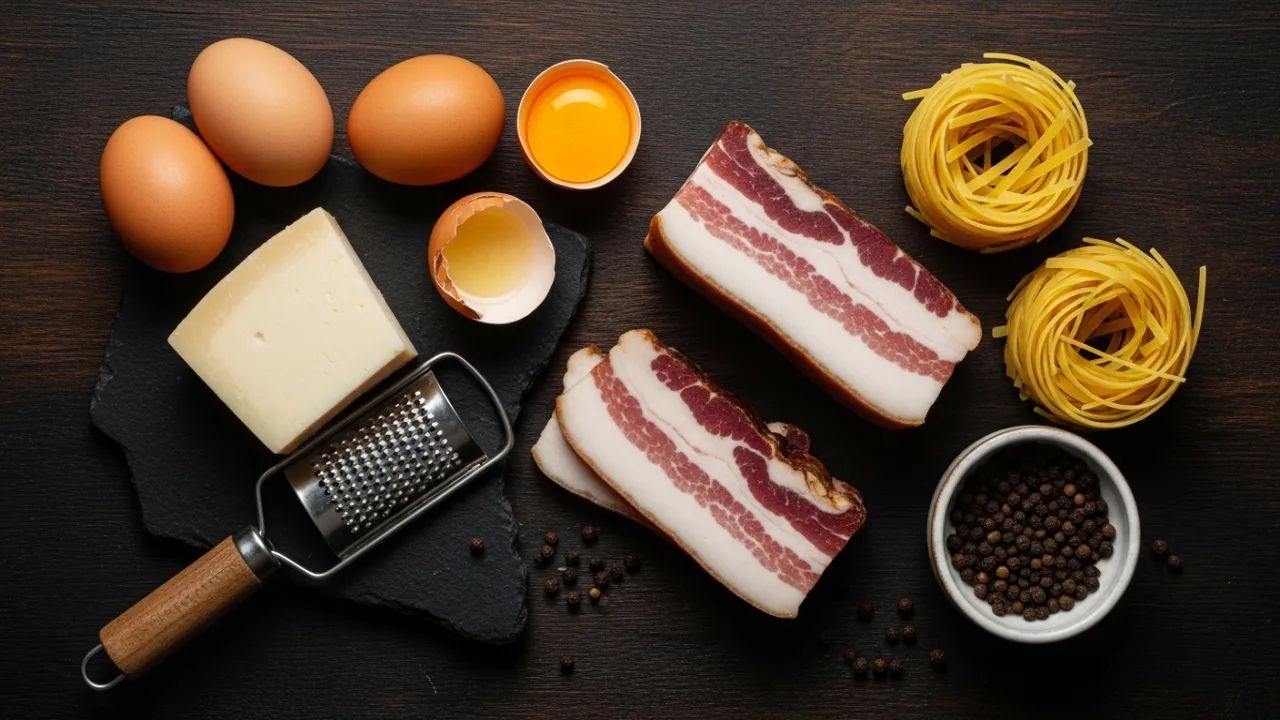
Guanciale, pancetta, or bacon – what is the difference?
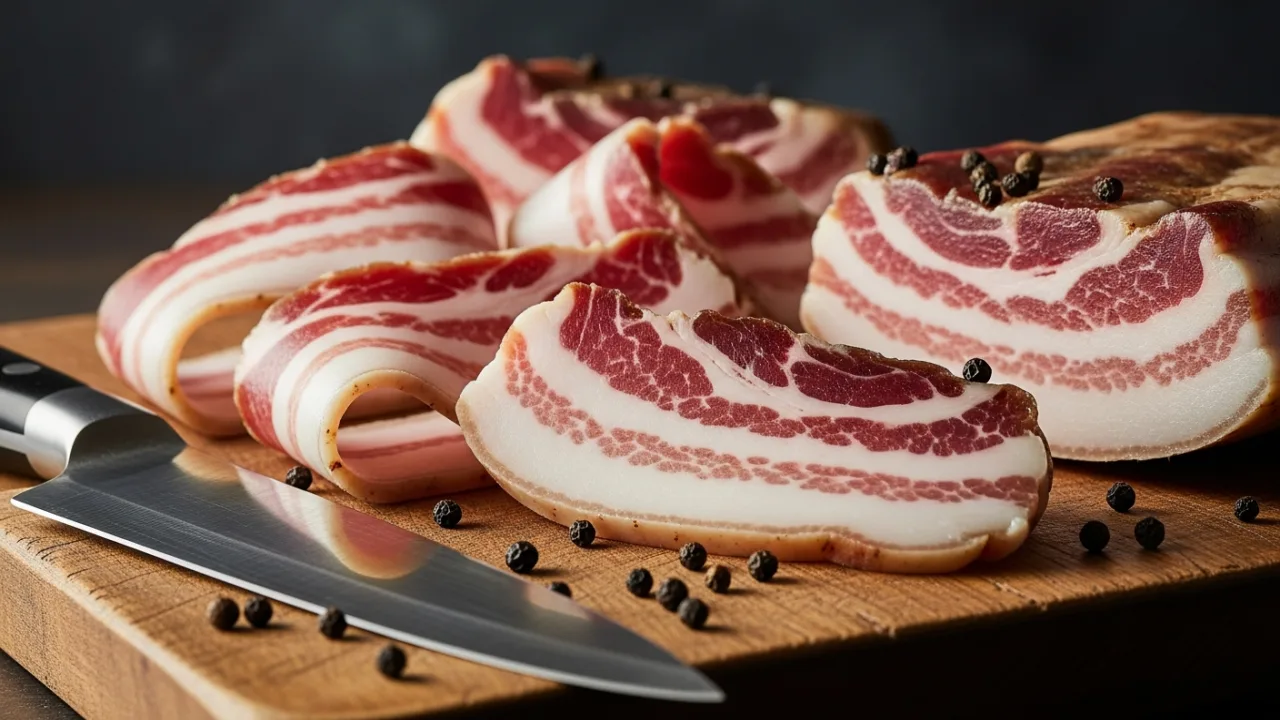
Guanciale is made from pork cheek, cured with salt and pepper, and has an intense, slightly sweet flavor. It is the only correct choice for an authentic Spaghetti Carbonara recipe. Pancetta comes from the belly and is milder. Standard breakfast bacon is smoked and has a completely different flavor profile – it is not a good choice for an authentic Carbonara. You can find guanciale in good Italian delis or online.
Ingredients for authentic Italian Spaghetti Carbonara
For 4 people:
| Ingredient | Quantity |
|---|---|
| Spaghetti | 400 g |
| Guanciale | 200 g |
| Egg yolks | 6 |
| Whole egg | 1 |
| Pecorino Romano | 80 g (finely grated) |
| Parmigiano Reggiano | 40 g (finely grated) |
| Black pepper | plenty, freshly ground |
| Salt | for the pasta water |
Note: Pecorino Romano is very salty. Therefore, salt the pasta water for your Spaghetti Carbonara slightly less than usual.
Spaghetti Carbonara Recipe – Step by Step
With these instructions, you will succeed in making an authentic Carbonara just like in a Roman trattoria. Timing in the final step is crucial – as that is when it is decided whether your Spaghetti Carbonara becomes creamy or turns into scrambled eggs.
Step 1: Prepare the guanciale
Cut the guanciale into strips or batons about 1 cm wide. It doesn’t have to be paper-thin – the pieces should become crispy when fried but still retain some texture inside.
Step 2: Render the guanciale
Place the guanciale without oil into a cold pan and heat it slowly over medium heat. The bacon will release its own fat and become golden brown and crispy. This takes about 8–10 minutes. Do not fry it too hot – patience pays off here.
Step 3: Mix the egg-cheese cream for the Spaghetti Carbonara
While the guanciale is frying, whisk the 6 egg yolks and 1 whole egg in a bowl with the grated Pecorino and Parmigiano. Add plenty of freshly ground black pepper. The mixture should be thick and creamy – almost like a thick batter. This is the sauce for your Spaghetti Carbonara without cream.
Step 4: Boil the spaghetti
Cook the spaghetti in plenty of salted water for 1 minute less than indicated on the package. Important: Reserve a cup of pasta water before draining the pasta. The starchy water is the key to the perfect emulsion in your Carbonara recipe.
Step 5: Combine everything – the decisive moment
Now comes the most important step. Remove the pan with the guanciale from the heat. Add the hot, drained spaghetti directly to the pan and toss them briefly in the fat. Then pour the egg mixture over the pasta and stir quickly and evenly. The residual heat from the pasta and the pan will cook the egg gently – without letting it turn into scrambled eggs.
If the mixture becomes too thick, add some pasta water spoonful by spoonful and continue tossing. The sauce should cling to the pasta in a silky and creamy way – not lumpy, not liquid. This is the art of the perfect Spaghetti Carbonara.
Step 6: Serving
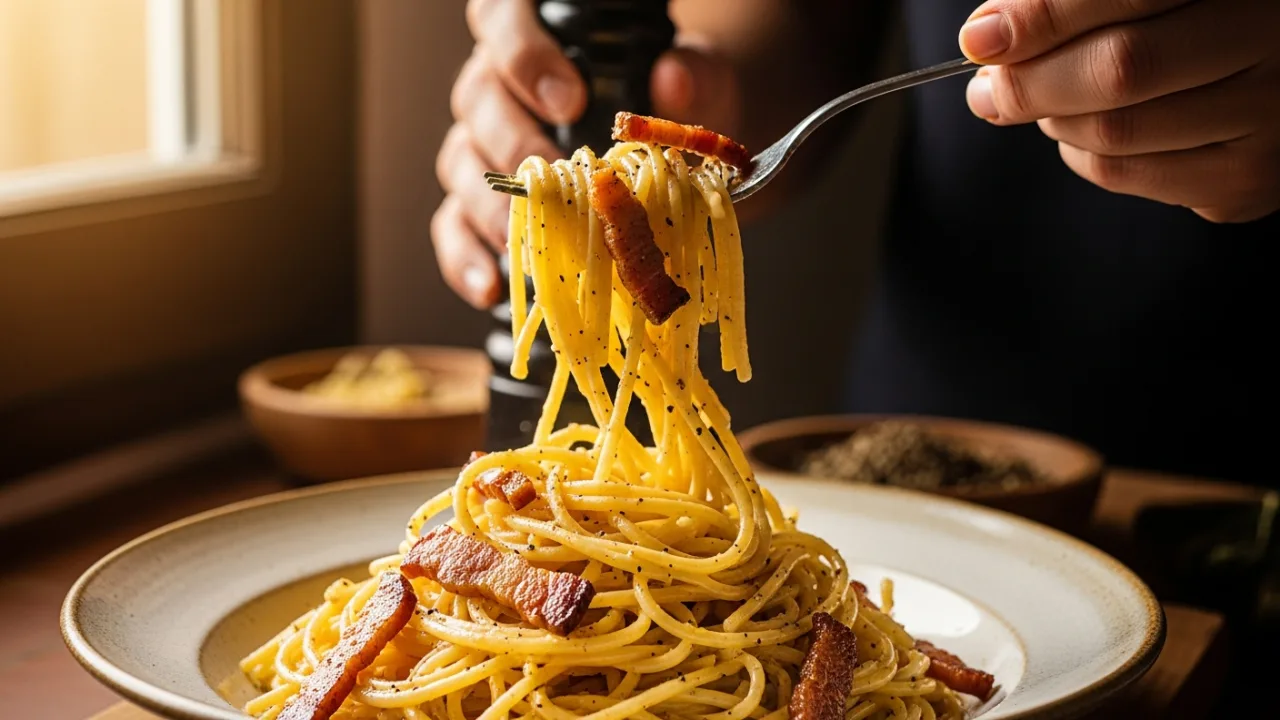
Serve immediately – Spaghetti Carbonara waits for no one. Top on the plate with more freshly grated Pecorino and a generous round of black pepper. Buon appetito!
The most important tips for creamy Spaghetti Carbonara without cream
To ensure your Spaghetti Carbonara is a success, here are the most important tips at a glance:
- Remove the pan from the heat: The egg mixture must never be exposed to direct heat. Otherwise, it will turn into scrambled eggs instead of a creamy Carbonara sauce.
- Use pasta water: The starch dissolved in it helps to form a stable emulsion – the secret of every good Spaghetti Carbonara.
- Grate the cheese finely: The finer the cheese is grated, the better it combines with the egg.
- Work quickly: No more than 60 seconds should pass from draining to serving.
- Do not rinse the pasta: The heat of the spaghetti is essential for the sauce.
- Egg yolks instead of whole eggs: More egg yolks = more creaminess. Most Roman chefs work almost exclusively with egg yolks.
Common mistakes with Spaghetti Carbonara – and how to avoid them
Mistake 1: Adding cream to the Spaghetti Carbonara
The classic among Carbonara sins. Cream makes the dish heavy and masks the delicate flavor of egg and Pecorino. Authentic Spaghetti Carbonara needs no cream – it is naturally creamy if you master the technique.
Mistake 2: Adding the egg mixture on the hot stove
If you add the egg-cheese mixture to a pan that is too hot, the egg will curdle immediately. The result: scrambled eggs with noodles instead of creamy Carbonara original. Always remove the pan from the heat.
Mistake 3: Using the wrong cheese
Emmental, Gouda, or cream cheese have no place in a Spaghetti Carbonara. Pecorino Romano is mandatory. In combination with some Parmigiano, the flavor profile becomes well-rounded – that is how Carbonara like in Italy tastes.
Mistake 4: Throwing away the pasta water
Without the starchy cooking water, the sauce lacks its “glue.” Always reserve at least one cup – this is mandatory for every good Spaghetti Carbonara recipe.
Mistake 5: Using bacon instead of guanciale
Smoked bacon distorts the flavor. Guanciale has an incomparable aroma – mild, savory, and buttery at the same time. For an authentic Italian Carbonara recipe, it is worth sourcing it.
Variations and notes on Spaghetti Carbonara
- Rigatoni instead of spaghetti: In Rome, Carbonara is often served with rigatoni. The ridges hold the creamy Carbonara sauce particularly well.
- Pancetta as an alternative: If guanciale is not available, pancetta is an acceptable alternative – significantly better than breakfast bacon.
- Without Parmigiano: Purists use exclusively Pecorino for their Spaghetti Carbonara. This results in a more intense, saltier sauce.
- For children: Use a bit less pepper and a bit more Parmigiano instead of Pecorino – this makes the Spaghetti Carbonara milder while remaining authentic.
FAQ – Frequently Asked Questions about Spaghetti Carbonara
Why is there no cream in authentic Spaghetti Carbonara?
In the original recipe from Rome, the creaminess of the Spaghetti Carbonara is created exclusively by the emulsion of egg yolk, grated Pecorino, and hot pasta water. Cream would mask the delicate flavor and is simply not part of the Italian tradition.
Which cheese belongs in Spaghetti Carbonara?
Traditionally, Pecorino Romano is used for Spaghetti Carbonara – a savory hard cheese made from sheep’s milk. Many chefs mix it with some Parmigiano Reggiano to round off the sharpness slightly.
Can you use bacon instead of guanciale?
You can, but the result will be significantly different in flavor. Guanciale has a buttery-mild aroma, while smoked bacon allows the smoky flavor to dominate. For an authentic Spaghetti Carbonara, pancetta is the better alternative if guanciale is not available.
Why does my Spaghetti Carbonara turn into scrambled eggs?
This happens when the egg mixture is exposed to excessive heat. The pan must be removed from the heat before you add the egg-cheese mixture to the pasta. The residual heat of the noodles is completely sufficient to bind the Carbonara sauce creamily.
Which pasta is best suited for Carbonara?
Classically, spaghetti is used – hence the name Spaghetti Carbonara. In Rome, rigatoni or mezze maniche are also popular. It is important that the pasta has a rough surface so that the sauce adheres well.
Can you reheat Spaghetti Carbonara?
This is not recommended. When reheated, the egg curdles further and the Spaghetti Carbonara loses its creaminess. It is a dish that tastes best when served fresh.
What is the difference between Carbonara and Alfredo?
Spaghetti Carbonara is based on egg yolk, Pecorino, and guanciale. Alfredo, on the other hand, is an American-Italian creation made of butter and Parmesan – without egg and without bacon. Flavor-wise and culturally, they are two completely different dishes.
How do you get Spaghetti Carbonara extra creamy?
The key to creamy Spaghetti Carbonara lies in the correct ratio of egg yolk to cheese, using pasta water as an emulsifier, and above all, removing the pan from the heat in time. Quick tossing and stirring ensures that everything combines into a silky sauce.
Would you like to learn even more about high-quality Italian ingredients? Discover our Olive Oil Knowledge and find out why good olive oil makes the difference in every kitchen – including your next Spaghetti Carbonara. Or visit us on Facebook for daily inspiration from Italian cuisine.
Have you tried this Spaghetti Carbonara recipe? We look forward to your feedback! Write to us or share your result on social media with the hashtag #CucinaDellaNonna.