The Taggiasca olive – origin, history, use
Taggiasca Olive – A comprehensive insight: On the global stage of olives, the Taggiasca olive occupies a prominent position. Farmers in Liguria praise it as the most outstanding and delicious olive the world has ever tasted. However, olive producers in Sicily, Crete, Spain and Provence share this opinion when it comes to their own harvests. Therefore, it is time to lift the veil and delve deeper into the world of the famous Taggiasca Olive.
The Taggiasca Olive, a fruit rooted in the hills of Liguria, enjoys an excellent reputation that extends far beyond its Italian borders. But what exactly makes this little olive so special? Here we take a close look at the Taggiasca olive to understand why it is considered by many to be the culinary queen.
Size, shape and color of the Taggiasca olive The Taggiasca olive is characterized by its modest dimensions, with its size usually ranging between 1.5 cm and 2.5 cm. Her characteristic elongated profile becomes slightly fuller at the base, with supple and flawless skin.
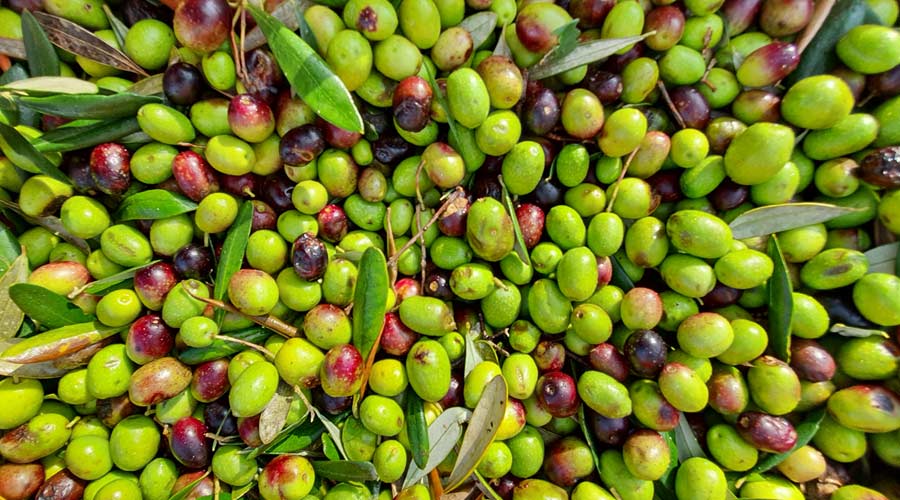
The flesh of this olive is remarkably firm and maintains its consistency over time. A standout characteristic of the Taggiasca olive is its diverse color palette. Even within a single tree, one can observe a kaleidoscope of colors, from a delicate light green to various shades of brown to striking purples and violets.
Another distinguishing feature of this olive is its intense aroma, which is favored by its limited size and lower water content compared to other olive varieties. Depending on the climatic conditions, this flavor is further intensified as the olive absorbs less liquid.
The centuries-old history of an olive variety
Already at the end of the 7th century began a remarkable movement of Benedictine monks who would leave their mark on the culinary and cultural history of Italy. Originally, these monks came from the picturesque monastic island of Lerins, located off the glittering coast of Cannes on the Cote d’Azur.
Driven by a mission, they moved beyond the borders of France and settled in the valley of the river Argentina in mainland Italy. Here, in the picturesque region near Taggia, they founded the monastery of Santa Maria del Canneto. But they did not come only to spread their faith and seek spiritual refuge. They also had the desire to help economically the local community that suffered from the exploitations of the Saracens.
One of the most formative acts of the monks was the planting of a very special tree: the first Taggiasca olive tree. This act was not only symbolic, but also practical, as the olive tree served as a resource for food and economy. The decision to plant this particular olive tree had profound implications. First, the olive that came from this tree and its descendants soon bore the name of the nearby province of Taggia, which led to the name “Taggiasca Olive”.
From this humble beginning in the Argentina River valley, the Taggiasca Olive began its triumph throughout Italy. Thanks to its unique characteristics and unmistakable taste, it soon became one of the most appreciated olive varieties in the country. It symbolizes not only the culinary heritage of the region, but also the enduring connection between faith, culture and economy that was shaped by these early Benedictine monks.
Distribution of Taggiasca Olive and climate
The Taggiasca olive, which has its humble origins in the
municipality of Taggia
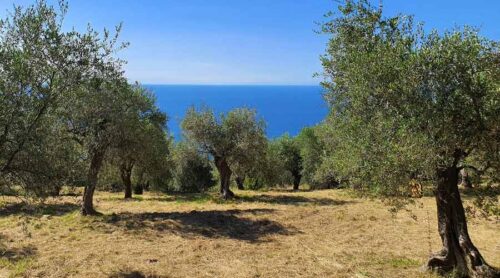
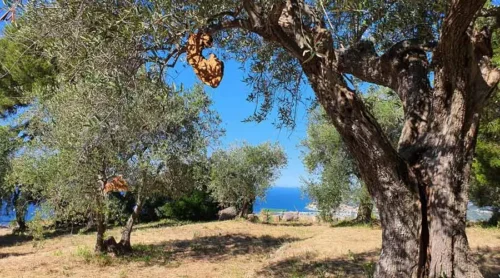
found its way to many regions of Italy. However, despite its spread, it has always retained its deepest roots in the province of Imperia and its adjacent regions. In addition, it also became native to parts of Piemonte and French Provence. The reason for this particular proliferation is the unique microclimate of these regions, which not only allows the olive to grow optimally, but also gives it a characteristic and sought-after flavor.
The Riviera Ligure di Ponente, where the Taggiasca olive feels particularly at home, offers a distinctive climatic profile. Geographically, the Maritime Alps, which reach impressive heights of up to 2,000 meters, are a natural barrier. They effectively protect the region from the cold north winds. In parallel, the Gulf Stream, flowing in from the south, contributes to a pleasant warmth.
These constant climatic companions ensure that the region is affected by only minimal temperature fluctuations. The result is a consistently mild climate that lasts all year round. In addition, the region spoils with an average of 300 sunny days per year, with temperatures remaining moderate despite the many hours of sunshine. For the Taggiasca olive, these are simply dream conditions that favor its growth and quality.
Quality and Use of the Taggiasca Olive
The Taggiasca olive is known for the dense, firm flesh it possesses. This unique consistency makes them particularly suitable for preservation, whether in high quality olive oil or in traditional brine. Pickling in brine, also called “salamoia”, a carefully prepared mixture of water and salt, has a rich history and has been considered a proven preservation method over the centuries.
Beyond its suitability for pickling, the Taggiasca olive has another shining star in its crown: it is the basis for the production of one of the most prestigious olive oils of all – extra virgin olive oil. This special oil is appreciated worldwide for its outstanding quality. Its flavor profile varies and, depending on when it is consumed after harvest, can range from slightly spicy and tangy to fruity with hints of almond.
The superior quality of this olive oil, coupled with the optimal growing region, led to it being trademarked in 1997. Thus was established the designation DOP Riviera Ligure Riviera dei Fiori, a seal reserved exclusively for extra virgin olive oils derived from the Taggiasca olive of this specific region.
However, obtaining and using this seal also entails financial burdens. For olive growers in the region, these costs may well be a hurdle. Therefore, there are many olive oils in the region that meet the qualitative requirements for the seal, but do not carry it for cost reasons. This highlights the need to pay attention to both the seal and the origin and quality when buying olive oil from this region.
The harvest of olives
Theart of olive oil production has its own season, and this usually falls in the months of October to December. It is in this period that the olive trees are resplendent with fully formed fruit, rich in intense flavors. This phase marks the peak of ripeness, where the olives develop their full flavor potential.
However, some industrial producers follow a different tactic: they leave the olives on the tree until January or even February. The reason for this is that during the colder winter months, the olives absorb more water, increase in size, and thus yield a greater harvest due to their increased mass. However, this gain in quantity often comes at the expense of quality, causing the olive oil to lose flavor and aroma.
In the picturesque region of Liguria, known for its steep slopes and terraced landscapes, Taggiasca olive oil production requires special care. Here the olives are still traditionally harvested by hand. This method is not only a matter of tradition, but also a necessity.
Due to the hilly topography of the region, there are hardly any flat areas where large olive plantations could be established and mechanized with harvesting tractors. And that is a blessing. This artisanal harvesting method is gentle on the trees and protects the natural inhabitants of the olive groves, including songbirds and beneficial insects.
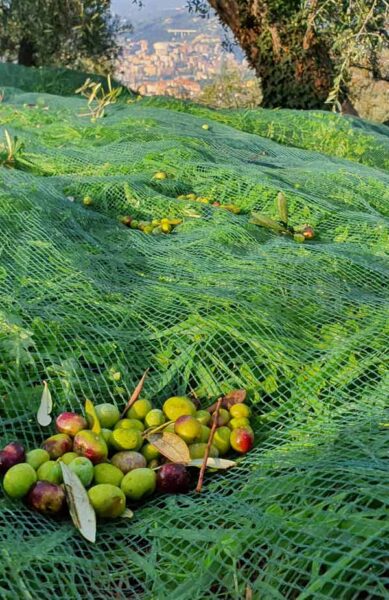
In past times, a stick made of sturdy chestnut wood, the “trappa”, was used to beat the olives from the branches. Directly below, nets were spread out to catch the falling fruits. Today, the technique has evolved somewhat: instead of the traditional wooden stick, a shaking machine is often used, which gently shakes the branches to loosen the olives. Nevertheless, the harvest remains a laborious and physically demanding activity that lasts for weeks and requires both dedication and perseverance.
Storage and shelf life
Olive oil, one of the staples of Mediterranean cuisine, has gained popularity not only for its variety of flavors but also for its health benefits. By law, the shelf life of olive oil is 18 months after its bottling or canistering. This serves as a guideline to ensure that the oil maintains its best properties during this period.
However, the end of these 18 months does not necessarily mean that the olive oil has passed its zenith or even spoiled. In fact, a high quality olive oil stored under optimal conditions may well last several years without significantly losing quality or flavor.
The storage of olive oil follows the same principles as the storage of many other foods. Two of the biggest enemies of olive oil are heat and light. Both factors can accelerate the aging process of the oil and affect its valuable properties. This includes not only taste and aroma, but also the valuable nutrients and antioxidants contained in the oil.
It is therefore advisable to store olive oil in a cool place, away from direct sunlight or other heat sources such as the stove or oven. A dark closet or pantry are ideal places. Additionally, it can help to keep the bottle or canister tightly closed to minimize air infiltration, which can also affect the quality of the oil.
In summary: Even if the best-before date of an olive oil has expired, it can still be a culinary highlight if stored correctly. A cool, dark place and a well-sealed bottle are keys to a longer life for this valuable food.
“Vino vecchio e olio nuovo”
Italian proverb
Olive oil, despite its considerable shelf life, begins to gradually lose aroma and intensity after pressing. Immediately after production, the oil is often characterized by a bittersweet pungency that is considered intense for some taste palettes, especially for many Germans.
As the months progress, especially from March after the main harvest season, this intense note diminishes, and the olive oil develops a milder character. Towards the end of its optimal shelf life, the olive oil has lost most of its original characteristics and is often primarily used for cooking rather than as a finishing oil. In our organic shop, you can buy fresh, premium organic Taggiasca olive oil.
Buy Taggiasca Olive Oil directly from the Producer
Do you want to try authentic Taggiasca olive oil from Liguria? At Organic Farming Italy, you receive extra virgin organic Taggiasca olive oil directly from the farmer – cold-pressed, organically grown, and with the unmistakable aroma of the Ligurian Riviera.
With an olive tree adoption, you can even adopt your own Taggiasca olive tree in Liguria and receive fresh olive oil from your tree every year. A unique gift for all who love Italian culinary culture.
Frequently Asked Questions about the Taggiasca Olive
What is a Taggiasca Olive?
The Taggiasca is a small, aromatic olive variety from Liguria (Northwest Italy). It was planted in the 7th century by Benedictine monks near the town of Taggia and is now one of the most famous olive varieties worldwide.
Why is Taggiasca Olive Oil so special?
Taggiasca olive oil is characterized by a mild, fruity aroma with subtle almond notes. The unique microclimate of Liguria – protected by the Maritime Alps and warmed by the Gulf Stream – gives the oil its unmistakable taste.
How does the Taggiasca Olive taste?
The Taggiasca olive has an intense, slightly fruity aroma. As a table olive cured in brine, it is mild and nutty. As an olive oil, it offers a delicately bitter pungency immediately after harvest, which mellows to a milder character after a few months.
Where do Taggiasca Olives grow?
Taggiasca olives primarily grow in the province of Imperia in Liguria, along the Riviera Ligure di Ponente. Smaller populations also exist in Piedmont and the French Provence.
When are Taggiasca Olives harvested?
The harvest of Taggiasca olives takes place between October and December. In Liguria, olives are traditionally harvested by hand, as the steep terraces do not allow for machine use.