A recipe by Signora Emilia from our Cucina della Nonna series.
Making your own tagliatelle starts with two simple ingredients: flour and eggs. They become a golden-yellow pasta dough that you roll out thinly and cut into long, flat ribbons. Cooked fresh, the noodles have a delicate bite and soak up the sauce beautifully. A lovely recipe for an afternoon when the kitchen is allowed to smell like Italy.
In our Cucina della Nonna series, Signora Emilia shows you the basics of Italian egg pasta. You will learn which flour works best, what good dough should feel like, and how to work it with a rolling pin or a pasta machine. You will also find tips to prevent the ribbons from sticking and a simple serving idea with olive oil and sage.
You do not need perfect equipment. A large board, a bit of space, and patience while rolling are enough to get started. If you would like to make tagliatelle yourself for the first time, allow a little extra time: by the second attempt, the motions will feel much easier.
Table of contents
- The recipe at a glance
- Ingredients for four servings
- Which flour is best?
- Make tagliatelle in 7 steps
- With or without a pasta machine
- Cooking, sauces, and serving
- Avoid common mistakes
- Prep and freezing
- Frequently asked questions
- The right organic olive oil
Make Your Own Tagliatelle: the recipe at a glance
| Cuisine | Italian |
| Recipe | Fresh tagliatelle all’uovo |
| Yield | 4 generous main-course servings |
| Active prep | approx. 40 minutes |
| Resting time | 30 minutes |
| Brief drying | approx. 10 minutes, depending on room conditions |
| Cooking time | approx. 2–4 minutes |
| Total time | approx. 85 minutes |
| Difficulty | medium; very manageable with a little practice |
Make Your Own Tagliatelle: ingredients for 4 servings
For the classic basic dough, you need flour and eggs. The extra dusting is only for handling; work as little of it as possible into the dough. This quantity makes four generous portions with sauce.
| Wheat flour Tipo 00 or Type 405 | 400 g, plus a little for dusting |
| Eggs, size L | 4; about 220–240 g total without shells |
| Fine durum wheat semolina (semola rimacinata) | optional, a little for dusting the tray |
| Salt | for the cooking water |
Also helpful: a large wooden board, a fork, a dough scraper, a rolling pin or a pasta machine, a sharp knife, and one or two baking trays.
Which flour should you use to make tagliatelle?
For this recipe, Italian wheat flour Tipo 00 is a good choice. Make sure it is suitable for fresh pasta. German wheat flour Type 405 also works for a classic egg pasta dough. However, the labels are not exact equivalents: on their own, they do not tell you how much liquid a flour absorbs or how elastic the dough will be.
If you would like to make tagliatelle yourself and try different flours, still start with a simple combination of flour and egg. This will help you learn the desired consistency. Later, for example, you can replace 100 g of the wheat flour with finely ground durum wheat semolina. The dough may then become a little firmer and need more moisture or a longer resting time.
One egg per 100 g of flour is a practical rule of thumb, not a fixed requirement. Eggs vary in size, and flours vary in how much water they absorb. The finished dough should be firm and pliable. When kneading, it should neither fall apart into dry crumbs nor cling to your hands as a sticky film.
Signora Emilia’s kitchen tip: When mixing, hold back a small amount of flour at first and work it in as needed. It is best to add extra liquid with slightly damp hands. This allows you to control the consistency much more precisely than with a generous splash of water.
Make tagliatelle in 7 steps
Step 1: Mix flour and eggs
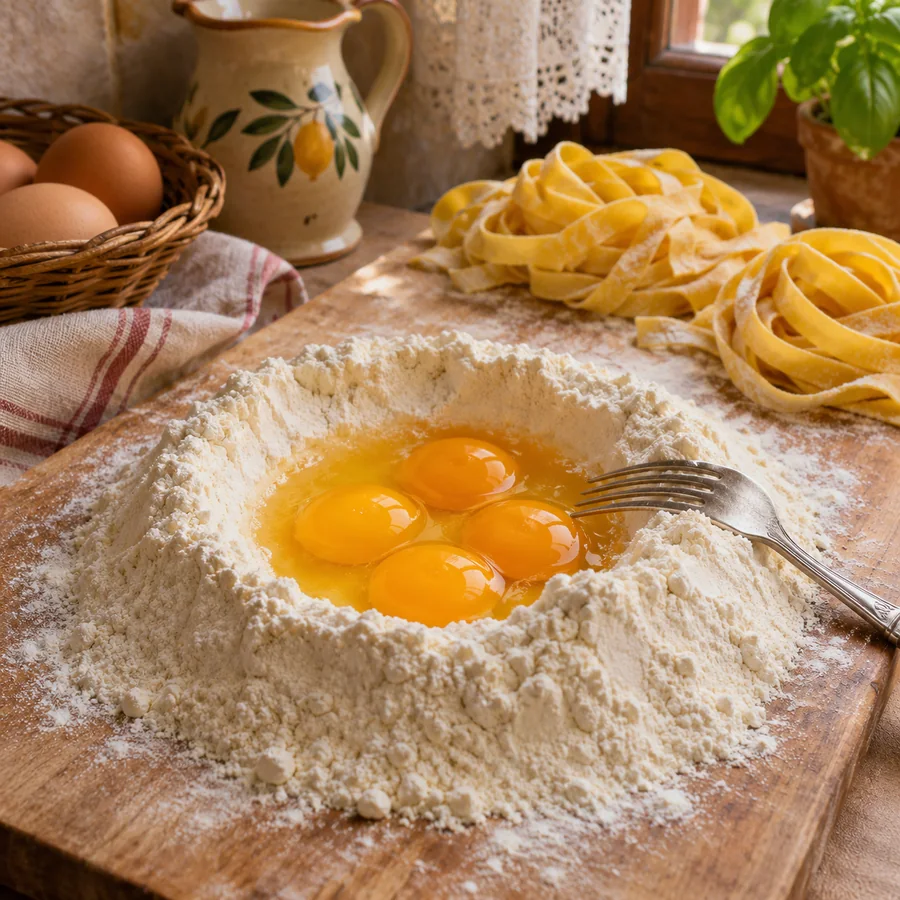
Place the flour on a large board and form a wide well in the middle. Crack the eggs one by one into a small bowl first, then add them to the well. Beat them with a fork and gradually incorporate a little flour from the inner edge. Keep the outer flour wall as intact as possible so the eggs do not run across the board.
As soon as a thick mass forms, a dough scraper helps bring it together. You can do this first step just as well in a large bowl and only then transfer the dough to the work surface. In the basic dough, we leave out salt and oil; the salt comes later in the cooking water.
Step 2: Knead the pasta dough thoroughly
Knead the mixture by hand for about 8–10 minutes. Push the dough away from you with the heel of your hand, fold it back, and turn it slightly. At first it often looks uneven; over time, the surface should become smoother. Do not add extra water after just a few movements.
If the dough remains noticeably crumbly after you have thoroughly brought it together, dampen your hands and keep kneading. If it sticks a lot, work in a small pinch of flour. If you would like to make tagliatelle yourself, focusing on the consistency will give you more reliable results than rigidly sticking to exact gram amounts.
Step 3: Let the dough rest for 30 minutes
Shape it into a ball and wrap it tightly in cling film or a suitable reusable food wrap. Let it rest for about 30 minutes at normal room temperature. The surface must be protected from drying out.
The resting time makes rolling easier later. If the dough keeps springing back under the rolling pin, it often simply needs more time. Then let it relax for another 10–15 minutes, well covered. In the meantime, prepare your sauce and a tray lightly dusted with semolina.
Step 4: Roll the tagliatelle thinly
Divide the dough ball into four pieces. Work with only one at a time and keep the others tightly covered. Roll the dough out on a lightly floured surface from the centre outwards, turning it regularly. Use only as much flour as needed to prevent sticking.
Aim for an even sheet about 0.5–1 mm thin. The dough may look slightly translucent, but it should not tear when lifted. Cut long sheets into manageable pieces of about 25–30 cm. You will find the instructions for the pasta machine directly below the seven steps.
Step 5: Cut the sheet into ribbons
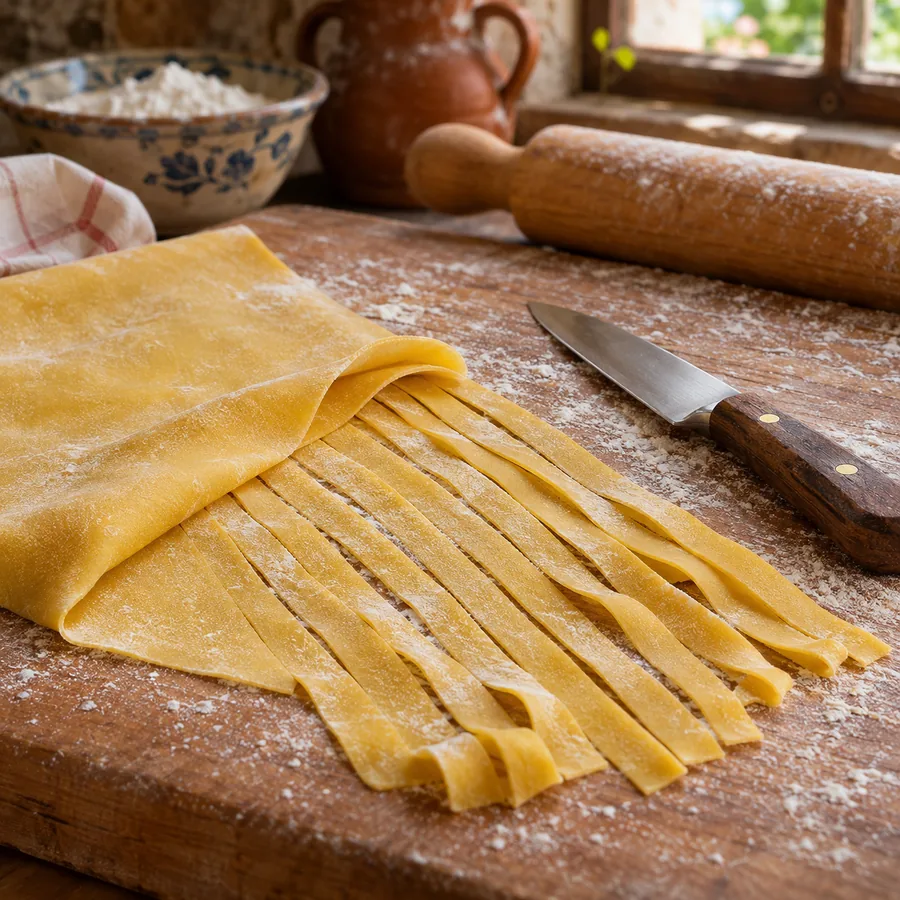
Let the rolled-out sheet dry briefly, usually about 5–15 minutes. It should feel dry enough to fold, yet remain flexible. If needed, dust it very lightly with flour and fold it loosely over itself several times. Do not press the layers firmly together.
Using a sharp knife, cut strips about 6–8 mm wide. Unfold the ribbons immediately and loosen them with your fingertips. When making tagliatelle yourself, an even cut matters more than millimetre-perfect precision: noodles that are similarly wide and equally thin cook together most reliably.
Step 6: Arrange the fresh tagliatelle loosely
Lay the noodles loosely spread out on the prepared tray or shape small, airy nests. Dust them only lightly with flour or fine durum wheat semolina. The ribbons should still be easy to separate; tightly pressed nests can stick together in the water.
Work the remaining dough the same way. If you would like to make several batches of tagliatelle, extra trays are helpful. Fresh pasta does not belong in a tall pile. Before cooking, carefully check that the ribbons are lying freely and separate any stuck spots now.
Step 7: Cook and combine with the sauce immediately
Bring plenty of water to a boil in a large pot, about 4 litres for this quantity. Salt it to taste; about 7–10 g per litre is a useful starting point. If your sauce or cheese is already very salty, use less salt accordingly.
Add the pasta and stir gently. Fresh, thin tagliatelle usually need only about 2–4 minutes. Taste a ribbon early, as thickness and drying time affect the cooking time. Reserve a cup of cooking water, add the noodles to the prepared sauce, and toss briefly to combine. Do not rinse with cold water.
Making tagliatelle with a pasta machine
You can make tagliatelle with a pasta machine and still use the same basic dough. First press a piece of dough flat and run it through the widest roller setting. If needed, fold the sheet loosely once and roll it again at this setting until it is even.
Then reduce the roller gap step by step. Do not skip settings, and do not pull on the sheet as it comes out. Which number marks the right final setting depends on your machine. What matters is a thin, stable sheet of dough, not the highest number on the dial.
Let the sheet dry briefly, then run it through the tagliatelle attachment or cut it with a knife. If the attachment does not separate the strips cleanly, the surface is often still too moist. A few minutes of waiting help more than adding more and more flour.
Which sauce goes well with homemade tagliatelle?
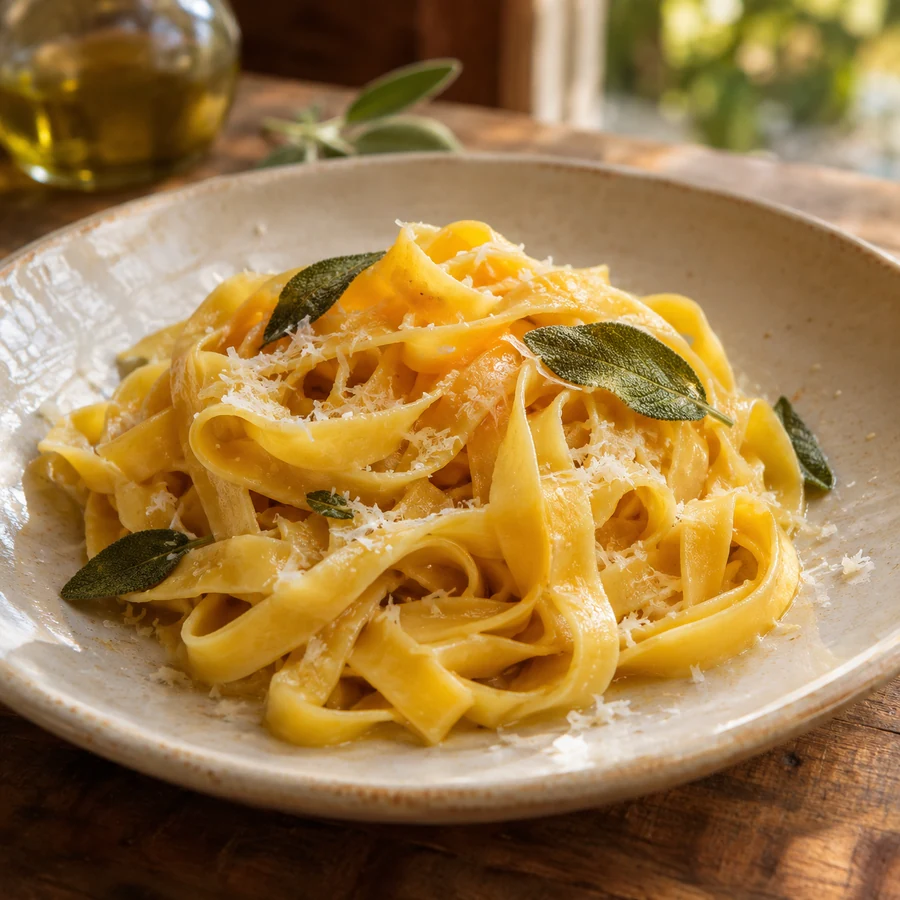
If you would like to make tagliatelle yourself for the first time, a simple sauce is especially suitable: you can taste the egg pasta and immediately tell whether the thickness and bite are right. For four servings, you can prepare 4 tbsp extra virgin olive oil, 8–10 small sage leaves, a little black pepper, and, if desired, 40 g Parmesan.
Warm the olive oil over low to medium heat in a wide pan. Let the sage become fragrant briefly without burning it. Add the cooked tagliatelle and, at first, a few tablespoons of cooking water. Toss the pasta until the oil and starchy water come together into a light coating. Remove the pan from the heat and add pepper and, if desired, Parmesan.
A slowly simmered tomato sauce or a ragù also works wonderfully. For a fresh herb option, you will find our Pesto Genovese recipe. Stir pesto into the pasta with a little cooking water away from direct heat so its aroma is preserved.
No oil in the cooking water: To prevent the noodles from sticking, they need enough space and gentle stirring. The good olive oil goes into the sauce or is used to finish on the plate. Finish the sauce before you cook the pasta: fresh tagliatelle do not like waiting in a colander.
Make your own tagliatelle: avoid common mistakes
The dough crumbles
First bring it together thoroughly. If it is still too dry, dampen your hands and keep kneading. Add liquid only in very small amounts.
The dough sticks
Work in only a little flour and keep the work surface only lightly dusted. Large amounts of flour make the pasta unnecessarily firm.
The sheet springs back
Give the tightly covered dough extra resting time, then continue rolling in smaller stages.
The ribbons stick together
Let the sheet dry briefly before cutting, fold it loosely, and unfold the cut strips immediately.
The pasta has a hard core
It is probably too thick or needs longer in the water. Roll it out more evenly and check the bite by tasting.
The pasta turns soft and sticky
Cook it for less time and combine it with the sauce immediately. Keep in mind that it will continue to cook slightly while tossing.
Preparing and freezing fresh tagliatelle
The nicest option is to make tagliatelle yourself and then eat them together right away. However, you can prepare the process: knead the dough the evening before, wrap it tightly, and place it in the refrigerator. Work it the next day and let it soften briefly beforehand so it rolls out more easily.
Ideally, cook cut egg pasta on the day it is made. For longer storage, freezing is practical: place small, loosely shaped portions spaced apart on a tray. Once they are frozen solid, transfer them to a suitable freezer container and label it with the date.
Add the frozen noodles directly to boiling water. Thawing can make the ribbons damp and sticky again. Allow a little extra cooking time and check the bite again. Detailed guidance on freezing and handling fresh pasta is also provided in the King Arthur Baking School pasta handbook (PDF, English).
Brief drying for cutting is not full preservation. Therefore, do not simply leave egg pasta on the kitchen table for days. For this recipe, we recommend cooking it fresh or freezing it in portions.
FAQ: Making tagliatelle
Which flour is suitable for making tagliatelle?
For classic egg tagliatelle, wheat flour Tipo 00 for pasta is suitable. German wheat flour Type 405 also works. Depending on the flour and egg size, you will need to adjust the consistency with a little flour or slightly damp hands.
How many eggs do you need for 400 g of flour?
As a starting point, use four large eggs for 400 g of flour. In this recipe, we use size L eggs with a total of about 220–240 g of contents without shells. What matters is a firm, pliable dough.
Can I make tagliatelle without a pasta machine?
Yes. Roll the rested dough out thinly with a rolling pin in small portions. Let the sheet dry briefly, fold it loosely, and cut it with a knife into strips about 6–8 mm wide.
How long does pasta dough need to rest?
Let this egg pasta dough rest for about 30 minutes, well wrapped. If it springs back strongly when rolling, another 10–15 minutes of resting time will help. The surface should not dry out.
How thin and how wide should tagliatelle be?
For this recipe, roll the sheet out to about 0.5–1 mm thin and cut ribbons about 6–8 mm wide. Even thickness and width help the noodles cook at roughly the same time.
How long do homemade tagliatelle need to cook?
Fresh, thin tagliatelle usually need about 2–4 minutes. Depending on thickness, drying time, and the desired bite, it may take longer. Taste a ribbon early and add the pasta directly to the sauce.
Does olive oil belong in tagliatelle dough?
For this classic basic dough, flour and eggs are sufficient. Olive oil is not necessary. Use good extra virgin olive oil instead for a suitable sauce or for finishing.
Can you freeze fresh tagliatelle?
Yes. Pre-freeze the uncooked noodles in small, loose portions on a tray, then transfer them to a freezer container. Cook them straight from frozen and check the bite, rather than thawing them first.
Are these tagliatelle vegan?
No. This recipe contains eggs. For vegan pasta, you need a separate dough made from durum wheat semolina and water, with a different liquid ratio. Therefore, do not simply omit the eggs here without replacing them.
The right organic olive oil for your tagliatelle
Premium organic extra virgin olive oil 2026
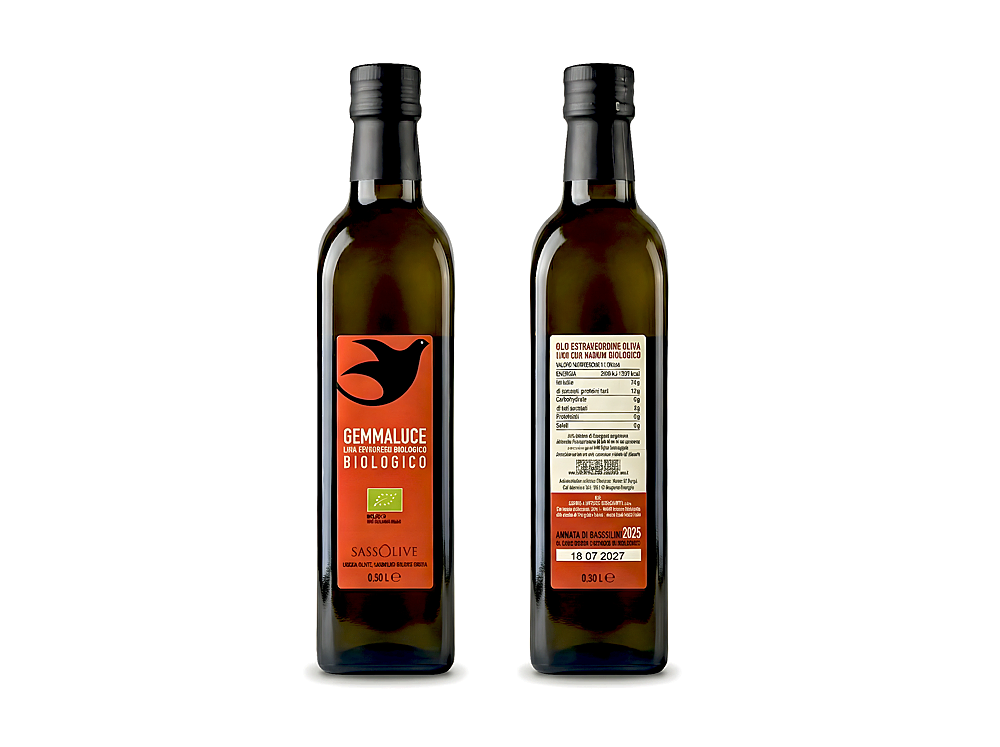
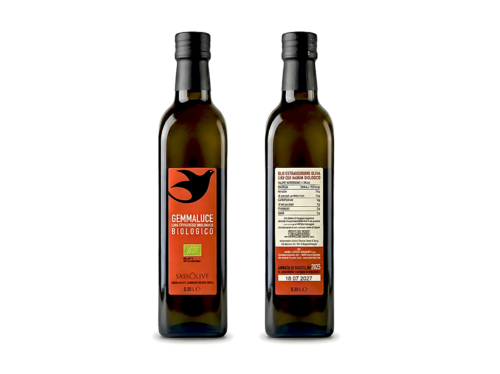
If you would like to make tagliatelle yourself and serve them with a light sauce, our organic extra virgin olive oil from Liguria is an excellent match. Warm it gently with sage, or use it to finish a tomato or vegetable sauce.
You do not need any oil in egg pasta dough. On the finished plate, however, a good olive oil adds a fine aroma to fresh pasta. Discover the currently available organic olive oil from Organic Farming Italy.
Buon appetito – fresh pasta for your table
Making tagliatelle yourself does not require a long ingredient list. A pliable dough, sufficient resting time, and evenly thin sheets are the most important basics. Take your time on the first attempt and taste the pasta early while cooking: with each batch, your feel for the dough will improve.
If you would like to try more Italian classics, you will also find homemade gnocchi, Focaccia Genovese, and our overview Recipes and knowledge about Italian cuisine.
Have you tried the recipe? Please write in the comments whether you made your tagliatelle with a rolling pin or a machine, and which sauce you served with them.