Pruning an olive tree: the 10 best tips
Hands-on experience from Farm Sassolive & scientifically grounded – ideal if you would like to adopt an olive tree and understand its care.
Pruning an olive tree: experience, knowledge, and a lot of love for the trees
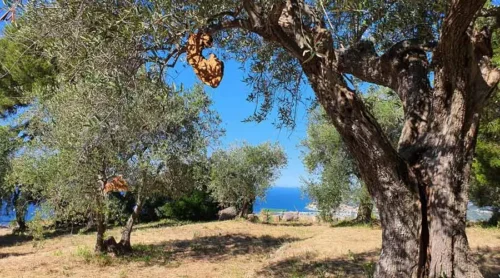
On the picturesque Sassolive farm, more than 1,200 organically grown olive trees thrive. These trees require careful, expert care to reach their full potential and deliver the expected harvest. In particularly productive years, this management can result in up to 2,000 liters of premium organic olive oil being produced. Anyone who would like to adopt an olive tree experiences this rhythm first-hand.
The care cycle follows a fixed annual schedule:
- Prune olive trees in January and February: optimize structure and prepare the tree for the season.
- Fertilize in March and April: targeted nutrient supply for growth and fruit set.
- Protection in summer: safeguard against heat and pests.
- Harvest from October 1: the highlight of a year of hard work.
If you would like to adopt an olive tree, you will experience this annual cycle from winter pruning to the freshly bottled bottle.
A decisive factor is rain, especially in December/January, when olive trees form their flower clusters – water shortage reduces flowering and therefore the harvest. Anyone who wants to adopt an olive tree quickly understands how important this phase is.
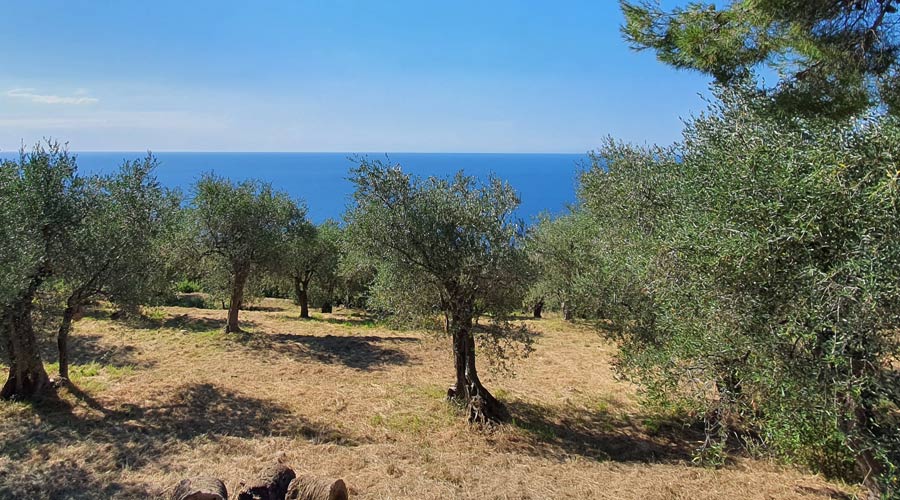
While olive trees are relatively drought-tolerant, extreme drought (as in 2022) causes trees to drop fruit. Anyone who would like to adopt an olive tree will see that water and pruning management always go hand in hand.
Pruning for production differs greatly from ornamental pruning: the goal is high, consistent quality and yield at a manageable tree height (3–4 m) – which makes harvesting easier. Especially if you would like to adopt an olive tree, this working height is worth its weight in gold.
If trees grow far too tall (up to 6 m), a radical rejuvenation prune helps: leave the trunk with a few shoots; the tree will resprout; then select 3–4 future scaffold branches. You can also experience this live if you adopt an olive tree and would like to accompany the rebuild.
The 10 best tips for pruning an olive tree
1) Shape goal “Light & air”: an open crown instead of a “broom”
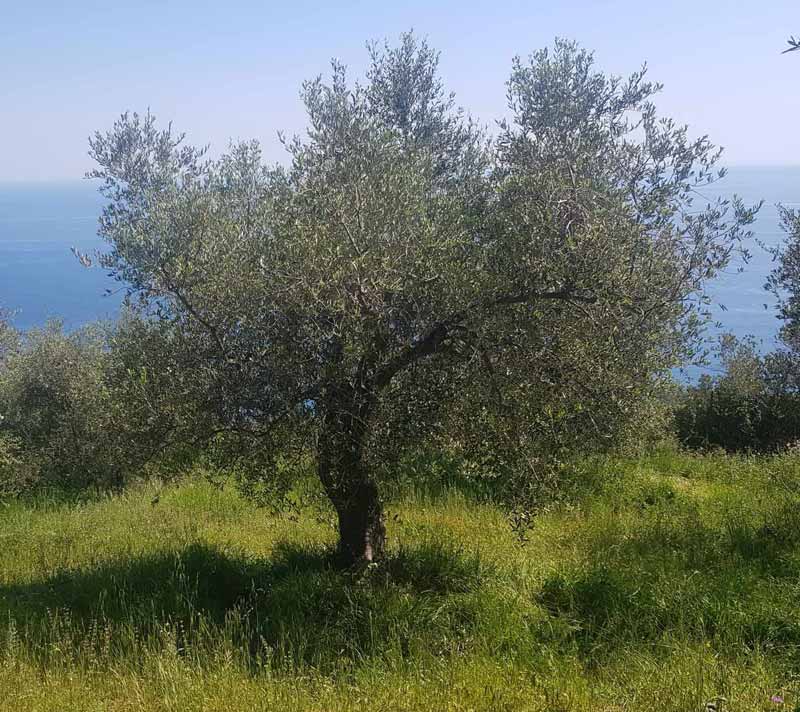
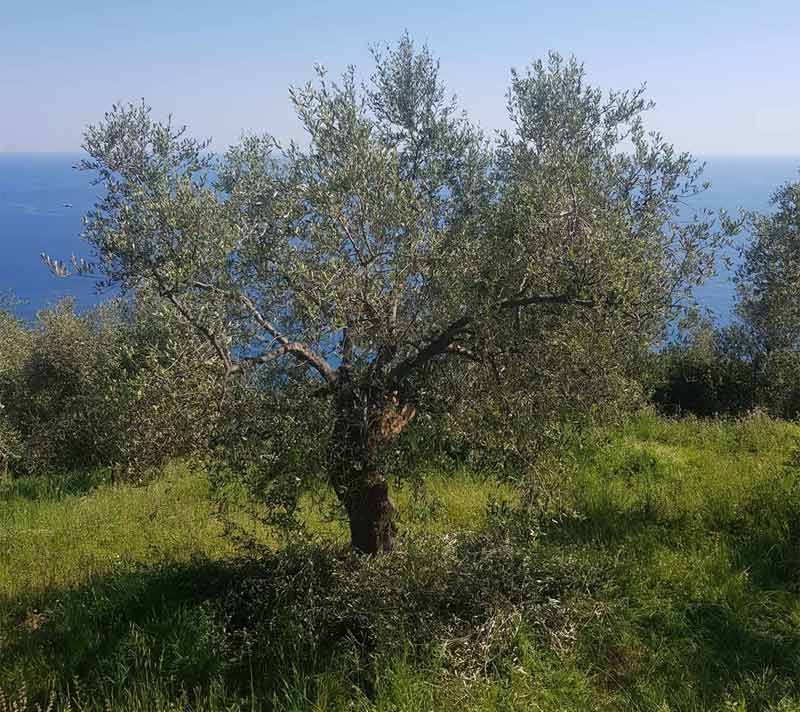
An open, well-ventilated crown dries faster, reduces disease pressure, and promotes even fruiting. The proven approach is the goblet-shaped (vase) crown with 3–4 well-distributed scaffold branches; the interior remains light-permeable.
2) The right timing
Late winter to very early spring, once severe frosts are over and before vigorous new growth. This allows cuts to heal quickly and the season to start with a well-structured crown. If you would like to adopt an olive tree, you can experience the winter pruning with us.
3) Know where the fruit forms
Olives bear mainly on one-year-old shoots (grown the previous year). The consequence: remove old, poorly bearing wood every year and encourage young wood – instead of simply “shearing the crown short.”
4) Use pruning methods correctly: “thin out” before “shorten”
Thinning (removing entire branches at the base) opens the crown and preserves the architecture. Shortening (cutting tips) produces many water shoots; therefore, use it sparingly and purposefully.
5) Remove water shoots & competing shoots early
Steeply growing water shoots inside the crown and suckers on the trunk take light, energy, and order. Remove them early – especially sensible if you would like to adopt an olive tree and want a stable yield structure.
6) Train young trees, maintain old trees
Training prune: build a framework with 3–4 scaffold branches, keep the interior open, remove competing shoots. Maintenance prune: remove old/shading wood, encourage renewal shoots. You will learn both hands-on if you would like to adopt an olive tree.
7) Prune in moderation (rule of thumb: max. 25–30% per year)
Cutting back too hard stresses the tree, promotes water shoots, and reduces yield in the short term. Anyone who would like to adopt an olive tree can see on site how moderate pruning maintains balance.
8) Tool hygiene & clean cuts
Sharp, clean tools reduce crushing and infection risks. Make cuts flush at the branch collar (no stubs) and avoid large wounds.
9) Rejuvenate old or neglected trees
Bring “overgrown” trees down to working height gradually (over 2–3 years) or do a strong cut-back with a rebuild (select 3–4 scaffold branches). Then regulate water shoots consistently – ideal to experience if you would like to adopt an olive tree.
10) Keep an eye on the climate
After drought/heat, prune more cautiously (more leaves = more photosynthesis/protection); after strong growth, thin out a bit more firmly. This keeps quality and stability high – important if, year after year, you expect “your” oil with your adopt an olive tree.
Training prune: towards the perfect crown
The training prune aims to create a crown structure that remains productive over the long term. In practice, this means:
- Clearly define the outer crown shape
- Keep the internal structure light-permeable
- Establish a hierarchy between main and secondary branches
- Remove weak or non-productive wood
Marking up photos of the crown in advance helps enormously with planning & teamwork. If you would like to adopt an olive tree with us, you can follow this planning on your own tree.
Maintenance prune: vigorous & reliably productive
During the maintenance prune, we remove dead wood, damaged sections, and over-aged, shading branches. If necessary, we cut back into healthy wood – followed by good care to encourage strong new growth. A simple vitality test (green vascular tissue under the bark) shows whether a branch is alive. You can experience this too if you would like to adopt an olive tree.
Pruning an olive tree – it is all about light
Olives fruit on young wood – therefore, remove old, weakly bearing wood every year, promote young wood, and shorten or remove shading branches above lower fruiting zones. This exact logic is what distinguishes “nicely pruned” from reliably productive.
For us as organic farmers, pruning is part of our philosophy: without chemicals, using natural methods and a lot of manual work. It is more time-consuming – but sustainable. If you would like an emotional connection, you can adopt an olive tree with us; this way, you can follow the development of “your” tree from pruning to the bottle.
Adopt an olive tree: learning in practice
To adopt an olive tree is more than a gift – it is an invitation to truly understand its care. During farm visits, you will see live how pruning, fertilization, protection, and harvest work together. This turns adopting an olive tree into a year-long project in which you experience everything from winter pruning to the oil. Your adopt an olive tree also supports our sustainable farming – a win-win for the tree, nature, and you.
FAQ – pruning an olive tree (quick answers)
- When is the best time to prune an olive tree?
- In practice: late winter to very early spring, once severe frosts are over and before vigorous new growth. If you would like to adopt an olive tree with us, you can be there exactly then.
- Why should the crown remain open?
- More light & air inside reduces disease pressure, improves flower and fruit quality, and makes harvesting easier. The “vase” principle with 3–4 scaffold branches is ideal for this.
- Where does an olive tree produce fruit?
- Mainly on one-year-old shoots that grew the previous year – therefore, reduce old wood each year and promote young wood.
- How much may I prune?
- As a rule of thumb, no more than about 25–30% of the crown per year. Cutting back too hard leads to water shoots and breaks in yield.
- What should I do with water shoots and suckers?
- Remove them early – they shade the crown, consume energy, and disrupt the crown structure.
- How do I best train young trees?
- Build a framework of 3–4 scaffold branches, keep the interior open, remove competing shoots. Later, switch to maintenance pruning.
- Is radical pruning possible for old trees?
- Yes – as a rejuvenation prune followed by a rebuild. Then regulate water shoots and select new scaffold branches. Ideal to experience if you would like to adopt an olive tree.
- Do I need wound sealant?
- More important than “sealing” are clean, sharp cuts at the branch collar and good timing. Avoid large wounds whenever possible.
- Can I prune right after the harvest?
- In many regions, work is done between harvest and bud break – the main thing is that severe frosts are over and the tree starts the season with a clear structure.
- I would like to learn more – what does adopting an olive tree give me in practical terms?
- You accompany “your” tree throughout the year: winter pruning, fertilization, protection, harvest – and you receive the oil. Adopt an olive tree combines knowledge, enjoyment, and nature conservation.
Interested? Here you can adopt an olive tree – and join us live for the next pruning.