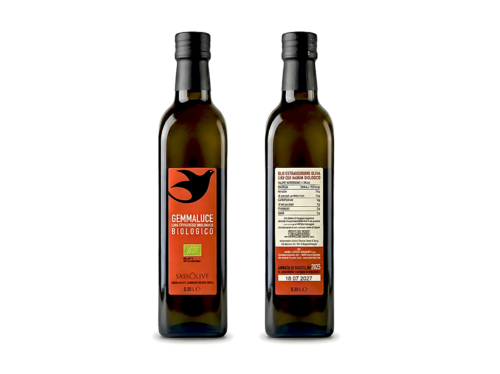
You open a bottle of olive oil and think of freshly cut herbs. The next reminds you more of almonds, with a distinct peppery kick in the finish. Both can come from fresh olives and yet have completely different effects. This is precisely what makes the selection exciting: it’s not about finding a single ‘best’ aroma, but an oil that tastes good to you and your food.
You don’t need a lot of specialized vocabulary for this. Two different extra virgin olive oils, a few minutes of peace, and a little curiosity are enough for an initial comparison. Here you’ll learn how to organize your impressions, what differences are truly important, and why a robust oil on the plate sometimes seems milder than when tasted pure.
Start with two bottles instead of a list of varieties
For your experiment, choose two fresh oils with different profiles if possible: one described as rather mild, and one distinctly fruity or more robust. The bottles should not have been open next to the stove for months. Otherwise, you might be comparing storage conditions rather than the original character.
Prepare a separate clean, odor-neutral small glass for each oil. For home use, it doesn’t have to be a professional tasting glass. Avoid coffee, strongly spiced foods, and strong scents in the room immediately beforehand. Have water ready, start with small amounts, and take a break between samples.
First, note just three things: What does the scent remind you of? How does the oil feel in your mouth? What remains after tasting? This creates a personal comparison without being guided by the label, price, or origin.
A short tasting in three calm steps
Warm the glass briefly in your hand
Pour a small amount of oil into the glass. Hold it in one hand and cover the opening with the other. Gently warm it with your hands and move it slightly. This helps to perceive the aromas; you don’t need a hot stovetop or microwave for this.
Start with your nose
Remove the covering hand and briefly smell the glass. Then put it down again before smelling it once more. Don’t immediately search for the ‘correct’ term. Perhaps you’ll first notice fresh leaves, herbs, or a more ripe fruit note. This first impression is your starting point.
Taste a little and allow time for the finish
Take a small sip, spread the oil in your mouth, and then exhale slowly. Pay attention to the impression on your tongue and later in your throat. You don’t need to drink a whole tablespoon or provoke a strong scratchy sensation. Stop the sample if it becomes unpleasant, and give your palate a break.
Three observations that help you classify
Fruity, in olive oil, primarily describes the aromatic impressions of fresh, healthy olives. These can be reminiscent of green or riper fruits. Don’t just think of fruit: grass, leaves, herbs, or tomato can also be fitting associations. Such descriptions do not mean that these ingredients have been added to the oil.
Bitterness is a taste impression that can occur particularly in oils from green or ripening olives. Pungency, on the other hand, is an irritating, peppery sensation, often in the throat. Both can be part of a good extra virgin olive oil. An oil is therefore not automatically spoiled if you find it bitter or pungent.
Conversely: maximum bitterness or the strongest possible scratchy sensation is not a competition for the ‘best’ oil. What matters is a harmonious profile, freshness, and appropriate use. Whether you prefer a mild or pronounced style can remain a matter of taste.
Why the same varietal name doesn’t always taste the same
The olive variety provides a direction but does not fully determine the final aroma. Location, ripeness of the fruit, harvest, and processing also shape the result. Added to this are the storage conditions after production. Two oils of the same variety therefore do not have to taste like two bottles of the same beverage.
An oil designated as Coratina is often associated with a more distinctive bitter and peppery profile, while a Taggiasca oil is more likely to have a more subdued impression. These are guidelines, not firm taste promises. Taste the specific bottle instead of deciding solely based on the varietal name.
The distinction between single-varietal and blend is also not a ranking. A single-varietal oil can showcase the character of one variety. A carefully crafted blend can consciously combine different characteristics. For your kitchen, how the result tastes is more important than how many varieties were involved.
The most exciting test takes place on the plate
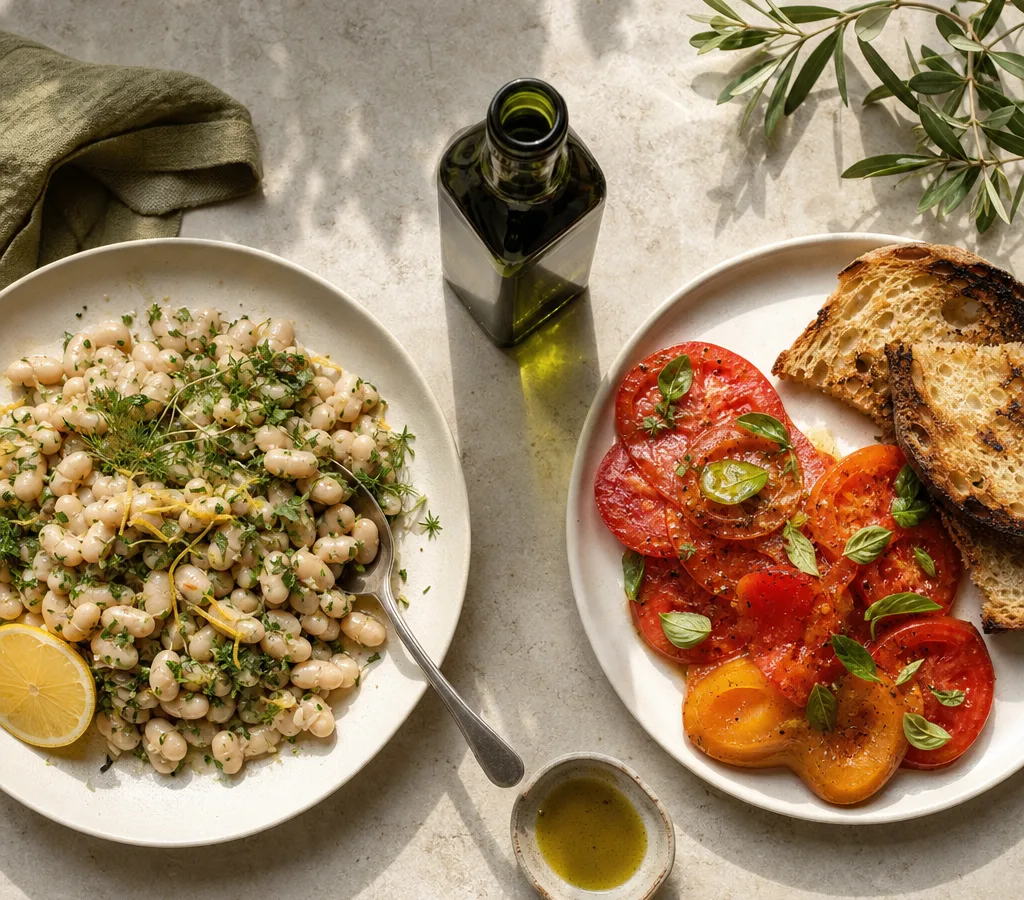
Then try both oils with the same simple food. White beans, a boiled potato, or a piece of bread are better suited than a dish with many spices. Add only a little oil to each and compare again. You may prefer a different one than when tasting pure.
For delicate flavors, such as with tender vegetables or a mild fish dish, a subtle oil can be a good match. A more robust profile, however, can stand up to beans, lentils, roasted vegetables, or a tomato soup. These combinations are suggestions, not rules you must follow.
You’ll get a surprisingly clear change with a little lemon: acidity, oil, and the other ingredients work together. An oil that is very peppery on its own can appear balanced as part of a dressing. Dosage and combination are therefore always part of the taste experience.
What helps when shopping – and what can easily mislead you
Color is not a reliable measure of quality. A green oil is not automatically fresher or better than a golden-yellow one. In professional sensory tests, colored tasting glasses are used so that color influences the judgment as little as possible. At home, you can at least consciously avoid basing your preference on hue.
Likewise, mild taste and low acidity are not the same. Free acidity is determined analytically; it cannot be tasted out of the oil as ‘sour taste.’ A pleasant-sounding label or a single measured value replaces neither a complete quality check nor your own taste test.
Instead, pay attention to the quality grade, traceable origin, an appropriate bottle size, and good storage. Buy in such a way that you use the oil regularly after opening. Seal it well and protect it from light and heat. Even an originally excellent oil loses its appeal if stored unfavorably for a long time.
Your small taste note is more valuable than a score
You don’t have to be able to precisely name a scent to perceive a difference. ‘Rather fresh and green’ or ’rounder, with a longer peppery kick’ are already useful notes. Write down what food you tasted the oil with. You can build on that with the next bottle.
However, the boundary between personal preference and a formal quality assessment is important. A trained panel works according to established procedures. A private tasting cannot replace that. If an oil smells distinctly rancid, moldy, or otherwise unpleasant, you should not dismiss this impression as merely an unusual varietal aroma.
Perhaps you’ll end up finding two favorites: one for mild everyday cooking and one for targeted seasoning. Or you’ll stick with a single versatile bottle. Both are perfectly fine. You’ve reached your goal if you choose more consciously and enjoy cooking with olive oil more.
Questions that arise during the first comparison
Is a peppery olive oil spoiled?
Not automatically. Pungency can be a typical sensory characteristic of extra virgin olive oil. It differs from unpleasant defects like a distinctly rancid smell.
Can you taste the acidity of an olive oil?
Free acidity is an analytical measurement and not to be equated with sour taste. It cannot be reliably tasted during a private tasting.
Do I need blue tasting glasses?
For an initial comparison at home, clean, odor-neutral small glasses are sufficient. Professional tests use colored glasses to reduce the influence of oil color on the assessment.
Are aromas like grass or tomato added?
In an unflavored extra virgin olive oil, such terms are descriptions of the natural aroma profile. They do not mean that grass, tomato, or herbs are included as ingredients.
Is a single-varietal oil generally better than a blend?
No. Both single-varietal oils and carefully composed blends can be convincing. The specific quality, taste profile, and intended use are decisive.
Technical Background
The terms fruitiness, bitterness, and pungency are based on the technical terminology of the IOC. The comparison described here is a suggestion for home use, not an official panel test.
International Olive Council: Standards and Methods for the Sensory Assessment of Olive Oil
Learn more about the origin of the oil: Olive trees and their adoption.