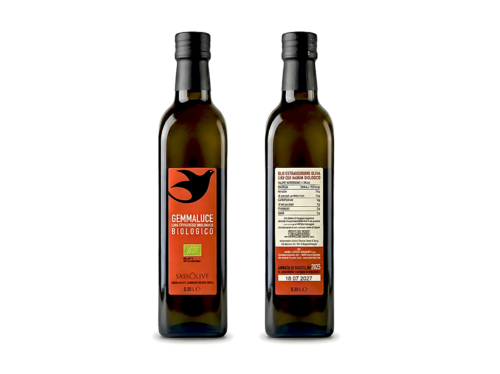
A good olive oil doesn’t deserve a place of honor next to a hot stovetop. It deserves a protected spot in the cupboard – and regular use. Because freshness isn’t maintained by long-term storage, but by proper keeping and a bottle size that suits your kitchen.
These olive oil tips guide you from shopping to the finished plate: What protects the aroma, when is an opened bottle still good, and how do you use the oil effectively for frying, seasoning, or mixing a dressing? Instead of rigid shelf-life promises, here you’ll find everyday decisions and the reasons behind them.
The cover image is an AI-generated stock photo of a Mediterranean kitchen. For daily storage, bottles belong in a dark cupboard, not next to the stove.
1. Choose storage location based on light and heat
The three most important adversaries of freshness are oxygen, light, and heat. A dark, rather cool cupboard with as consistent a temperature as possible is therefore better than a sunny windowsill. The shelf directly above the hob or next to the oven is also unsuitable, even if the bottles look particularly nice there.
You don’t need a special cellar. Find the spot in your kitchen that heats up the least when cooking. A dark glass bottle protects against light, but it doesn’t replace a sensible location. Close it after each use instead of leaving an open pourer permanently in the bottle.
2. Buy for your consumption, not for the pantry
A large bottle is only practical if you use the oil regularly. The International Olive Council recommends containers whose contents are used up approximately within one to three months after opening. This is a guideline for good freshness, not a general boundary between safe and unsafe.
For a larger canister, you can transfer a portion into a smaller, food-safe, light-protected bottle. The container must be clean, completely dry, and tightly sealable. Do not always refill new oil onto old remnants: first empty and clean the usage bottle and let it dry thoroughly. The storage container should also be sealed immediately after use.
3. Understand the best-before date correctly
There is no single shelf-life number that applies to every olive oil and every kitchen. Initial quality, harvest, processing, packaging, and storage conditions all interact. The best-before date on the bottle is a manufacturer’s indication for the unopened product under specified conditions – not a promise that an opened oil will taste fresh for just as long.
A harvest date can additionally help to classify the age. However, it is not the same as the bottling date. For oils used infrequently, note the opening date on the label and use the already open bottle first. An expired best-before date does not automatically mean spoilage for pure olive oil; however, distinctly rancid oil will not improve with heating.

4. Cold clouding is not a judgment of quality
At low temperatures, components of the oil can crystallize. It becomes cloudy or flaky and can partially solidify. This change alone does not mean that the oil is spoiled, nor that its quality has been lost due to the cold.
Let a cold bottle return to room temperature, closed and without intense heat. For a dressing, the oil will then be easier to dose and mix. The refrigerator is usually not necessary if you have a suitable cool storage place. Conversely, the so-called refrigerator test proves neither the authenticity nor the quality of an olive oil.
5. Fry with control, not with smoke
Extra virgin olive oil is not only suitable for salads. You can also use it for sautéing, many pan-fried dishes, and baking. How well an oil tolerates a certain heating depends, among other things, on quality, freshness, duration, and temperature. The smoke point is therefore not an identical number for all olive oils, nor is it a complete measure of heat stability.
Do not heat a pan with oil unattended on the highest setting for a long time. Adjust the heat to the dish and add ingredients in good time. For deep-frying, a suitable thermometer helps; judging the temperature by smoke is not a good method. If the oil smokes significantly, stop the heat supply and let it cool safely. Do not reuse severely overheated oil.
Steam from moist foods is not the same as smoke from overheated oil. Pay attention to everything happening in the pan, not just a single cloud. Never use water on burning fat and do not carry a burning pan around.
6. Dose with a spoon first, then to taste
For a small salad, you can start with a little oil, mix carefully, and only then add more. A spoon helps estimate better than a free pour from a large bottle. For roasted vegetables, a small amount distributes particularly evenly if you mix oil and vegetables in a bowl before cooking.
As a starting point for a vinaigrette, about three parts olive oil to one part vinegar or lemon juice is suitable. Stir in salt and, if desired, a little mustard, then taste. Very acidic vinegar, sweet tomatoes, or strong arugula require different ratios. The recipe is a starting point, not a binding nutritional portion.
A few drops on the finished plate often deliver more noticeable aroma than the same amount cooked for a long time. Try this on bean soup, grilled zucchini, or warm bread. This way, you consciously decide whether the oil should primarily serve for cooking or as a seasoning ingredient.
7. Choose the aroma to match the food
A mild, fruity oil allows fish, steamed vegetables, and delicate salads to take center stage. A robust, bitter, or peppery oil can complement legumes, tomatoes, grilled vegetables, and bread. These are taste ideas, not fixed rules: compare two oils on the same cooked potato sometime.
Garlic, rosemary, or chili can be gently warmed in the oil for the current dish. Remove delicate pieces in good time or lower the temperature so they don’t turn dark and bitter. For a fresh finish, you can add chopped herbs with the oil only after cooking instead.
Important for homemade infused oils: Fresh garlic and fresh herbs in oil can pose a botulism risk under unsuitable conditions. Do not store such mixtures unrefrigerated; brief heating does not reliably make them shelf-stable. For simple kitchen use, prepare them fresh for the current meal. For longer storage, a tested preservation method or commercially produced products are necessary. Dangerous toxins cannot be reliably detected by smell.
8. Distinguish between fruity, bitter, and rancid
Smell a small portion in a clean glass and taste it neat or with a neutral piece of bread. Fresh oil can evoke grass, green tomato, almond, or ripe olive. Bitterness on the tongue and a peppery sensation in the throat are desirable characteristics in many virgin oils, not automatically signs of spoilage.
A stale impression, reminiscent of old nuts, crayons, or old fat, can indicate rancidity. Color helps little in this judgment: both green and golden-yellow oils can be good. This simple test concerns the sensory freshness of pure oil; it is not a safety test for homemade garlic or herb mixtures.
9. Maintain the right balance of nutrients
Olive oil consists almost entirely of fat and provides, according to the usual nutritional calculation factor, around nine kilocalories per gram. A high proportion of monounsaturated fatty acids, especially oleic acid, is typical. Depending on the oil, it also contains vitamin E and, in virgin oils, varying amounts of phenolic compounds.
Olive oil is primarily a source of monounsaturated fatty acids, not a particularly rich source of Omega-3. Reliable nutritional data is needed for individual fatty acids or vitamin content; general values do not apply unchanged to every oil. Use olive oil as part of a varied diet and dose according to the dish and need, not based on a supposed healing promise.
Common Kitchen Questions about Olive Oil
Where is the best place for olive oil in the kitchen?
In a dark, rather cool cupboard with as consistent a temperature as possible, away from the stove, oven, and sun. Close the bottle after each use.
How long should I use an opened bottle?
That depends on the oil and storage. As a freshness guideline, the International Olive Council recommends choosing an appropriate container size and, after opening, consuming the oil within one to three months if possible. Observe label instructions.
Is flaky olive oil bad?
Cold can make olive oil cloudy or partially solidify. This change alone is not spoilage and not proof of authenticity. Bring the oil back to room temperature without intense heat.
Can I fry with extra virgin olive oil?
Yes, it is suitable for many common cooking and frying applications. Control heat and duration, do not heat until it smokes significantly, and do not reuse severely overheated oil.
How do I start with a simple olive oil dressing?
About three parts olive oil to one part vinegar or lemon juice is a possible starting point. Add salt and, if desired, a little mustard, and adjust the ratio to ingredients and taste.
Can I make garlic oil myself for storage?
Fresh garlic or fresh herbs in oil can pose a botulism risk if stored incorrectly. Do not store unrefrigerated. The easiest way is to prepare it fresh for the current dish; for longer storage, a tested preservation method is necessary.
Is bitter olive oil automatically spoiled?
No. Bitterness and a peppery sensation can be typical characteristics of a fresh virgin olive oil. A distinctly stale, rancid impression is to be distinguished from this.
Technical Foundations and Further Articles
The recommendations are based on consumer guidelines from the International Olive Council and information from UC Davis on storage, packaging, cooking, and safe handling of garlic in oil. The new graphic is a guide, not a shelf-life measurement or a comparison of different vegetable oils.
International Olive Council · Consumer Guidelines on Storage
UC Davis · Olive Oil Myths and Facts
UC Davis · Olive Oil Packaging
UC Davis · Garlic: Safe Methods to Store, Preserve, and Enjoy