Olive oil already exists inside the fruit. The mill does not create it: it opens the cells and separates the oil from water and solid material. How carefully that work is done influences flavour just as the cultivar and condition of the harvested olives do.
This guide follows the journey from orchard to sealed bottle. It explains how a traditional press differs from a modern decanter, why fresh fruit should not wait around, and what “first cold pressing” and “cold extraction” actually mean. The diagrams simplify the processes; they are not scale drawings of machinery.
The orchard establishes the starting conditions
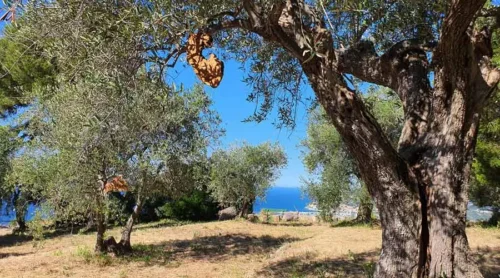
The olive tree is deeply connected with Mediterranean farming and cultural history. Sunny sites, suitable soils and a water supply adapted to local conditions support healthy fruit. Drought tolerance does not mean that water can never be limiting. Shortages around flowering, fruit set and oil formation can affect the crop.
Olive cultivars differ in growth habit, fruit size, ripening pattern and aromatic potential. Root development depends on soil, irrigation and management, so a single maximum rooting depth cannot describe every tree. Young trees do not all start producing meaningful crops at exactly the same age either.
Old olive trees can remain productive across generations, but age alone is no quality certificate for their oil. Healthy fruit, appropriate pruning, plant protection and coordination with the mill matter more than an impressive trunk. Irrigation can stabilise yields, but must fit regional water availability.
How much oil does a harvest provide?
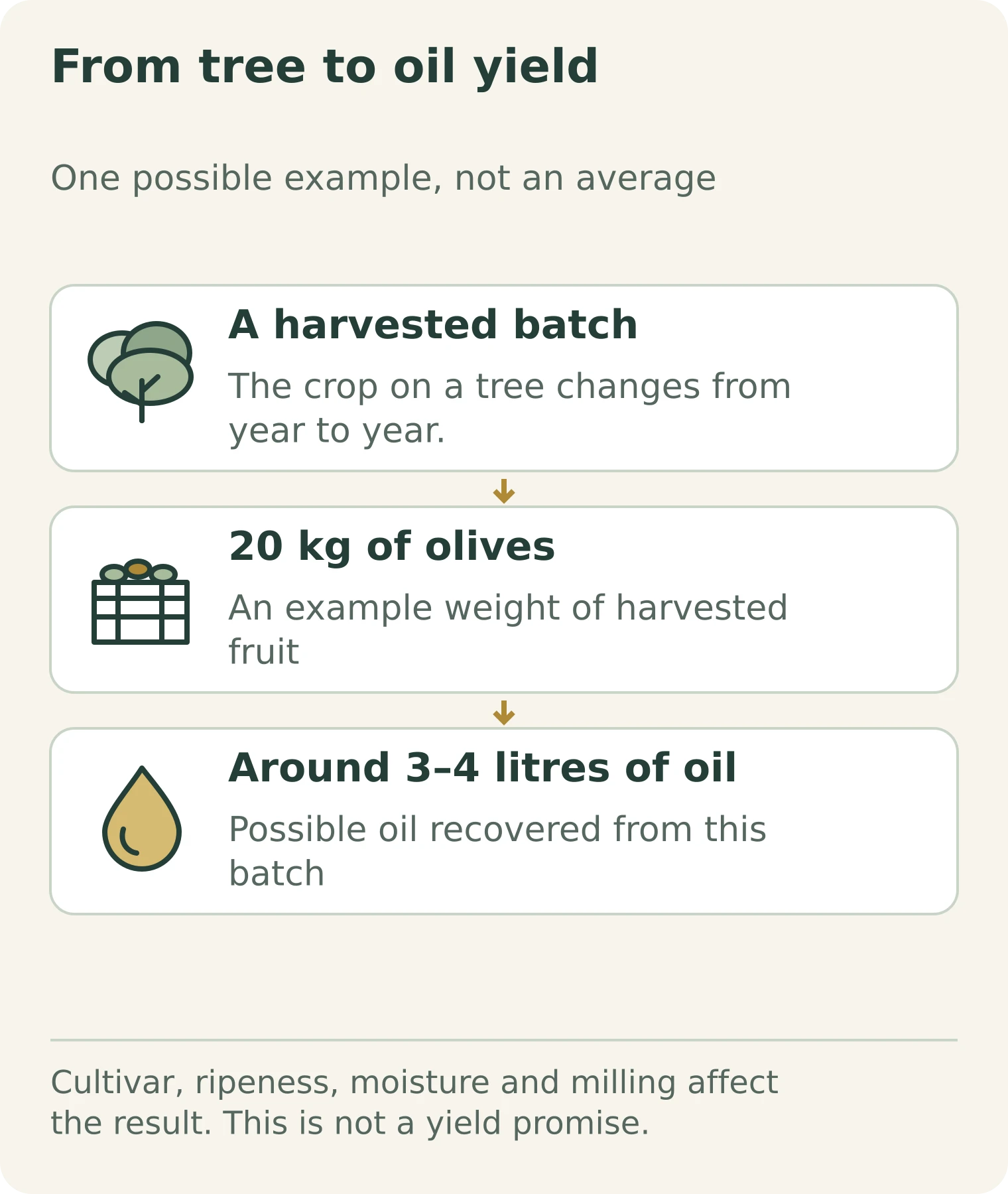
The crop on an individual tree varies with cultivar, age, site, weather and alternate bearing. Equal weights of olives do not necessarily yield equal amounts of oil: moisture, oil content and extraction efficiency all affect the result.
As an illustration, a 20-kilogram batch of olives can be shown yielding approximately three to four litres of oil. This is a possible example, not a guaranteed tree yield or a worldwide average. Reliable farm planning needs measured results from the particular orchard and season.
Pruning and harvesting are labour-intensive parts of production. Their share of costs differs between hillside orchards, traditional groves and highly mechanised systems. A fixed percentage would hide those differences.
Flowering, fruit growth and harvest form an annual cycle
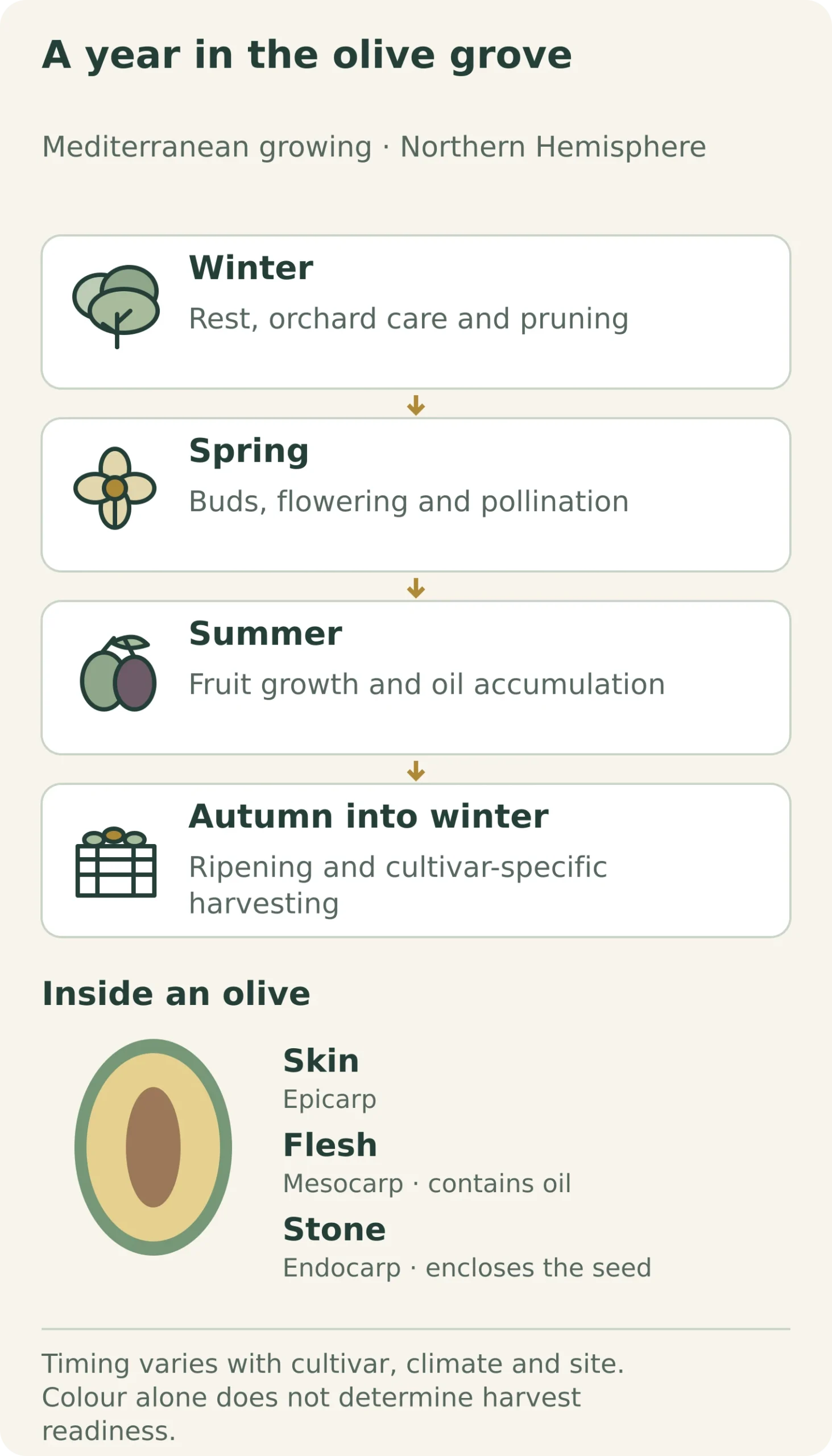
In Northern Hemisphere Mediterranean growing areas, winter rest is followed by spring growth. Successfully pollinated flowers develop into small fruits. During summer the olives grow, the stone hardens and increasing amounts of oil accumulate in the flesh.
Many cultivars change from green through purple shades to darker colours as they ripen. Skin colour is not a universal harvest calendar, however. Cultivar, altitude, weather and the intended oil style all shift development. Mediterranean oil-olive harvesting often falls in autumn and winter; other regions and the Southern Hemisphere follow different windows.
Earlier harvests often produce greener aromas and more noticeable bitterness or pungency, with a lower yield. Riper, healthy fruit can produce gentler, ripe-fruity oils. Overripe or already damaged fruit is not automatically the right choice for making a mild oil.
Pick carefully, ventilate the fruit and keep it moving
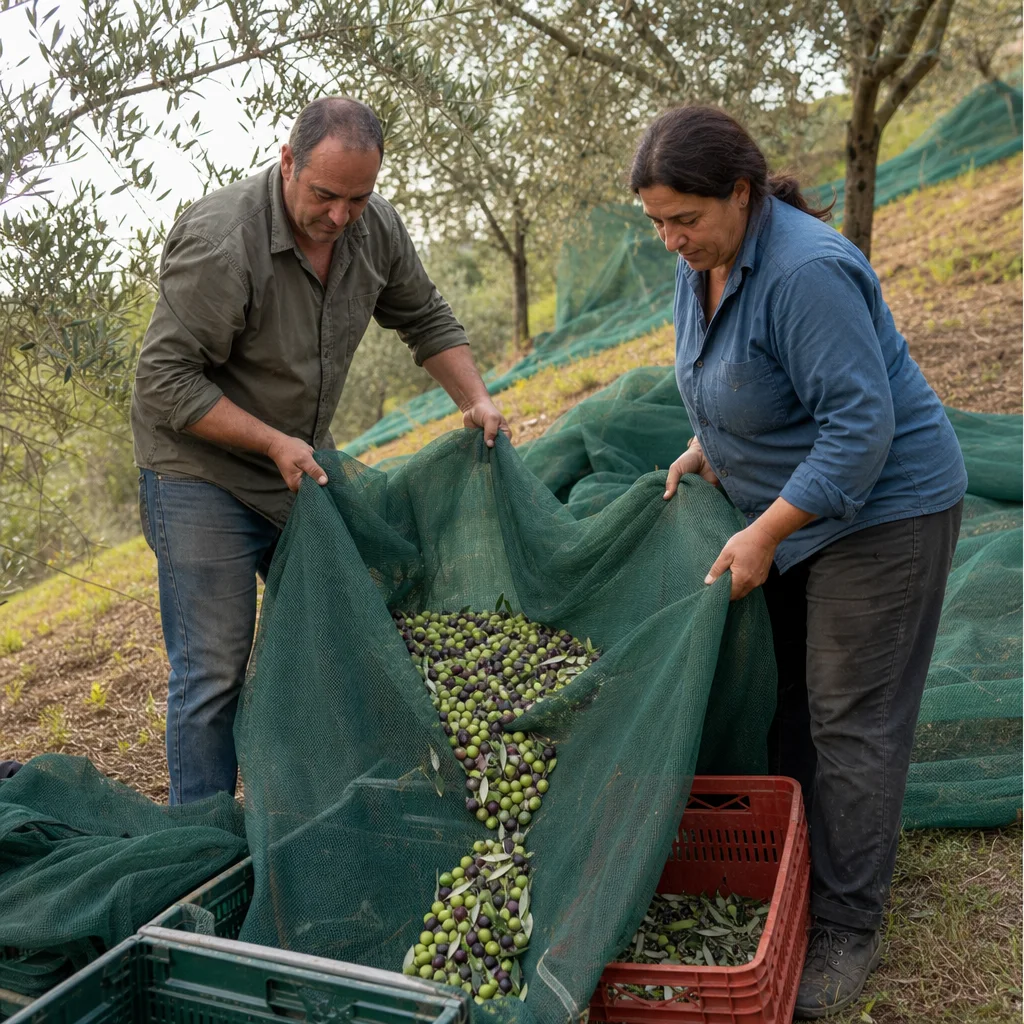
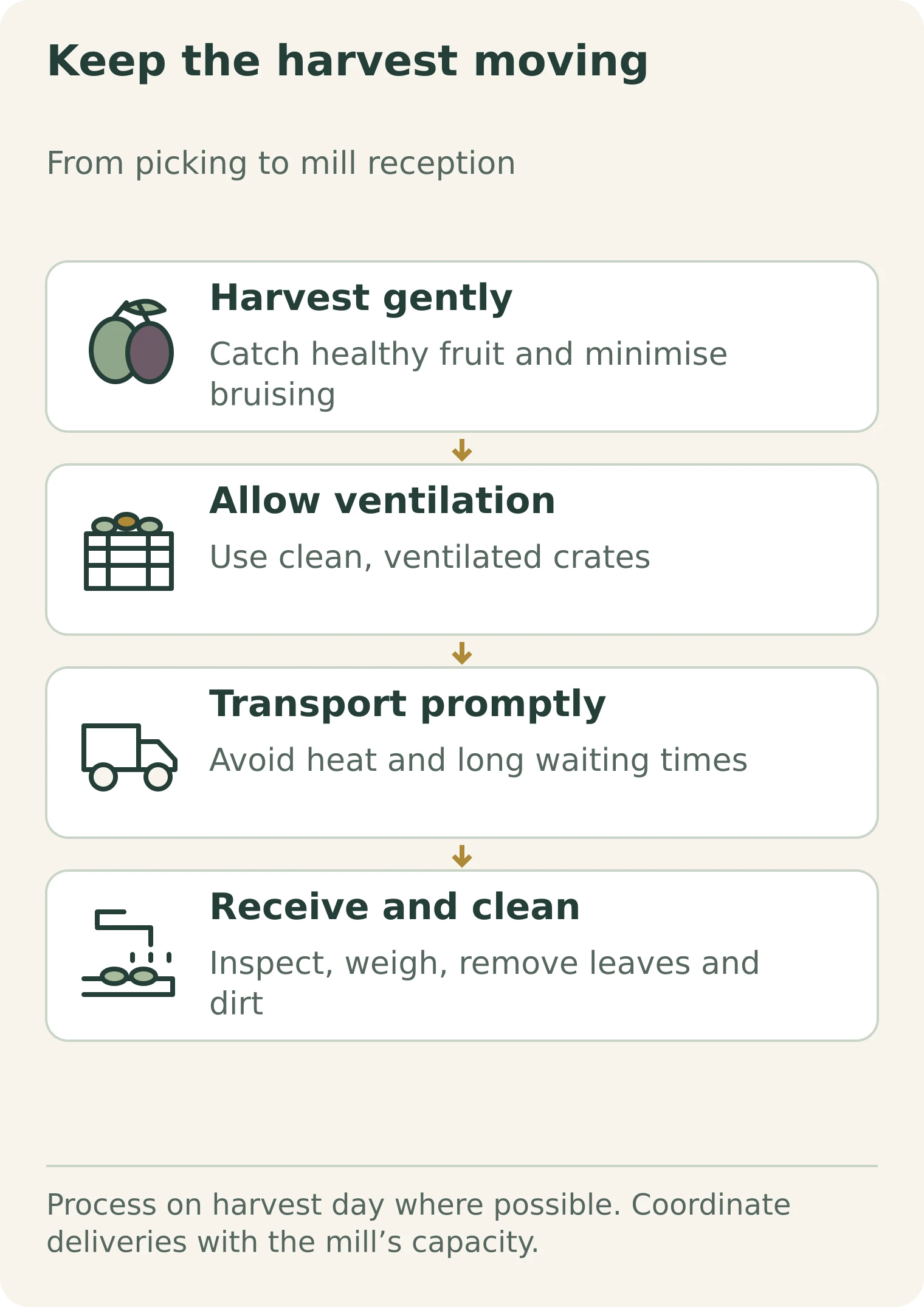
Hands, powered combs, shakers and over-the-row harvesters suit different landscapes and planting systems. Nets catch the fruit. The key is not simply “hand or machine”, but how little damage occurs and how well deliveries match the mill’s capacity.
Fruit that has spent a long time on the ground does not belong in a carefully planned batch for high-quality virgin oil. Bruising, heat and tightly packed containers encourage deterioration. Clean, ventilated crates and short journeys help preserve the harvest’s condition.
The mill should receive and process the fruit as soon as possible, preferably on the day it is picked. Waiting one to three days is not a general quality rule. When delays occur, cool conditions, ventilation and undamaged fruit become even more important.
At reception, batches are inspected, weighed and identified. Leaves, twigs and foreign material are removed, with suitable cleaning to eliminate soil and dirt. Preparation for extraction then begins.
Crushing and malaxation turn the fruit into a workable paste
A stone mill or metal crusher opens the fruit cells. Olives are usually processed with their stones, although some systems remove all or part of the stone first. The resulting paste contains flesh, small stone fragments, water and oil droplets.
Slow kneading, known as malaxation, allows small droplets to join into larger ones. Enzymatic reactions also contribute to aroma development. Time, temperature, oxygen exposure and paste characteristics need to be managed together. There is no universally correct mixing time of exactly 20 minutes.
Longer processing or more warmth may improve extractability but can also change sensory quality. Enclosed equipment and controlled gas atmospheres help manage oxygen exposure. Complete air exclusion is not a universal explanation for good aroma, since the desired reactions also need to be considered.
The traditional route: stone milling and hydraulic pressure
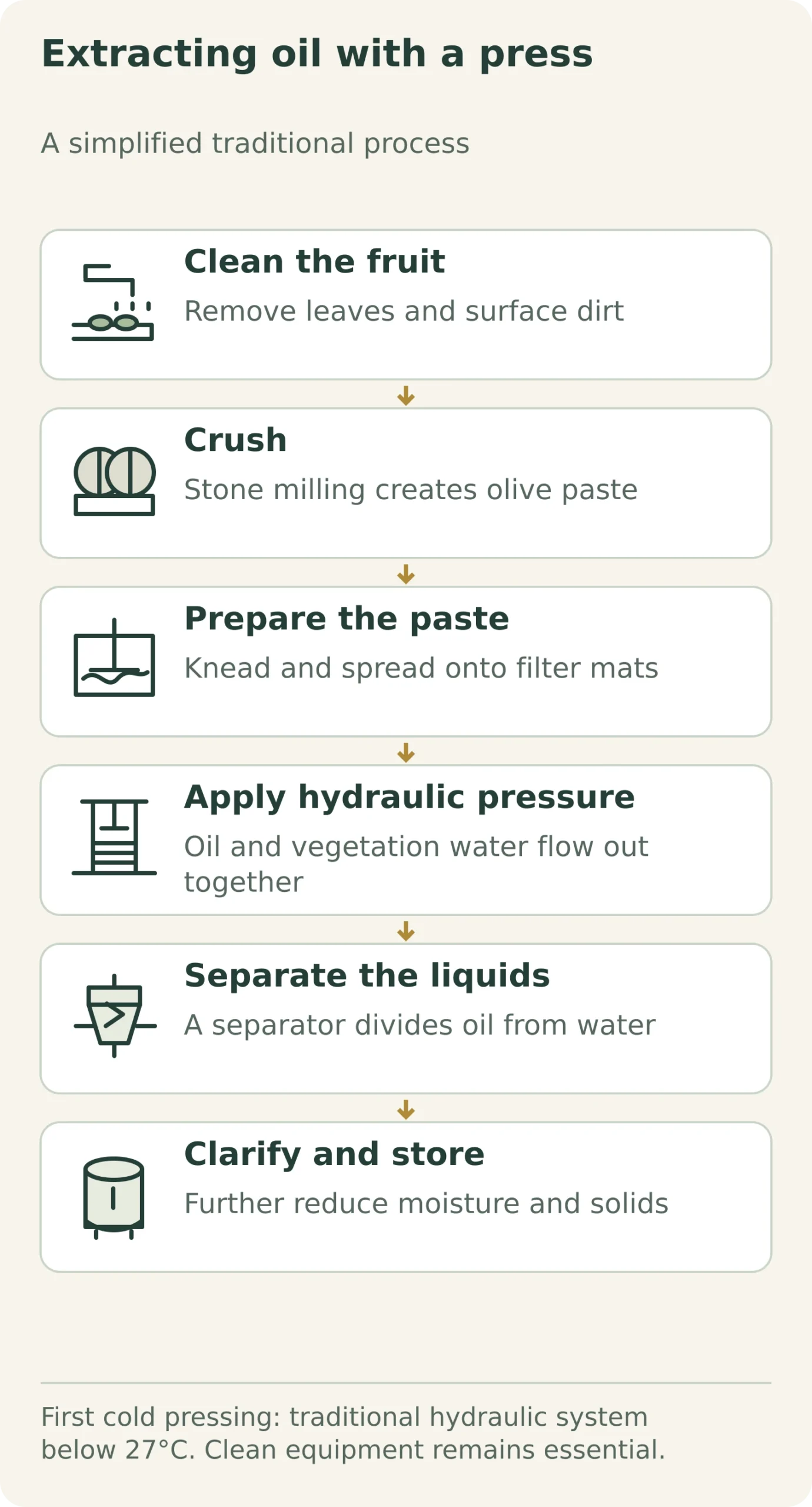
In a traditional press system, prepared paste is spread onto suitable circular filter mats. The mats are stacked and hydraulic pressure separates the liquid from solid residues. That liquid initially contains both oil and vegetation water; it is not yet fully clarified oil.
A separator divides the liquid phases. Filtration or controlled settling followed by careful racking can reduce remaining moisture and solids. Clean mats, short holding times and thorough cleaning are particularly important to avoid unwanted odours from earlier batches.
This system explains the historical language of “pressing”. It does not automatically make better oil than a modern process, and stone milling does not guarantee a consistently high phenolic content. The entire handling of fruit, paste and oil determines the outcome.
The continuous route: separating oil in a decanter
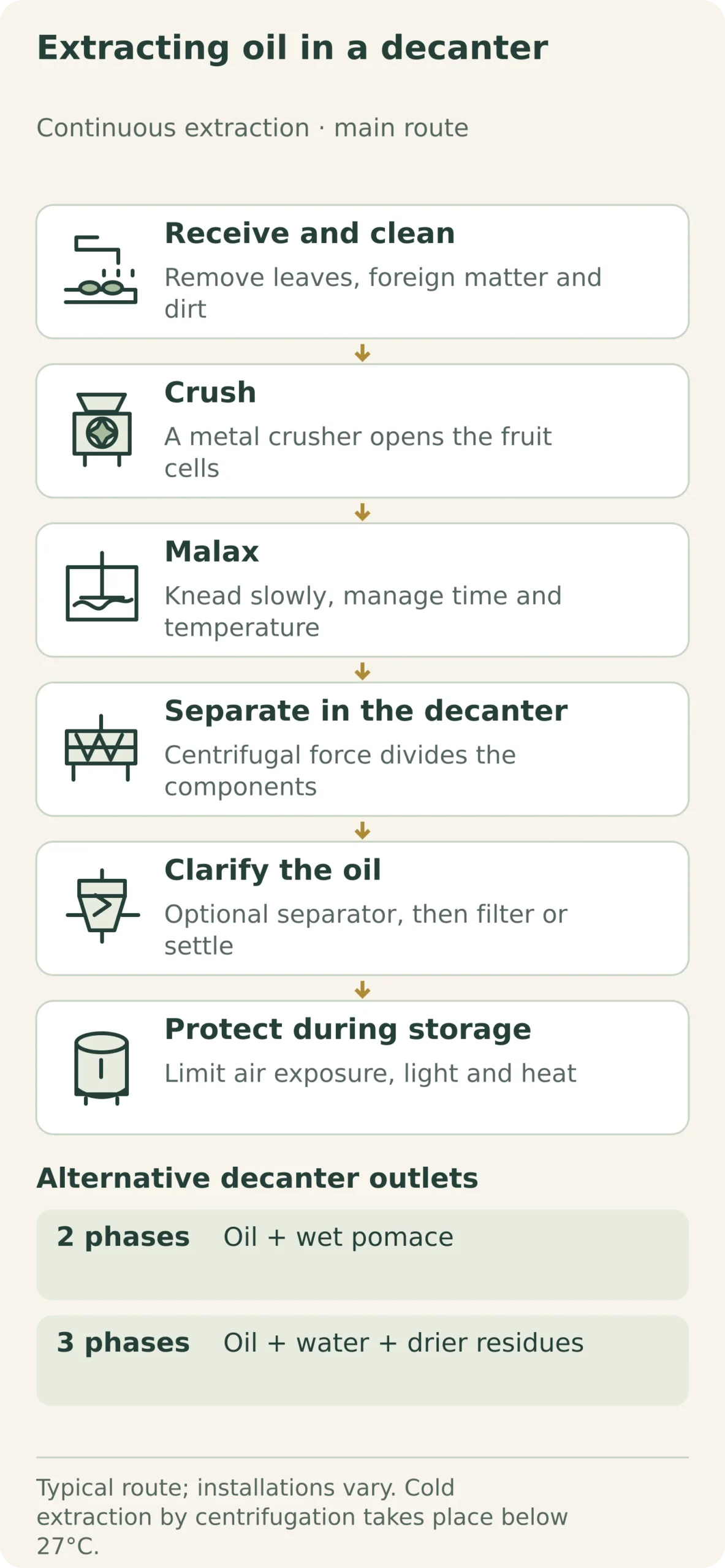
Continuous systems coordinate reception, cleaning, crushing and malaxation. Stainless steel and accessible components support hygiene. Adequate capacity helps protect quality when it prevents freshly picked olives from waiting in long queues.
The decanter is a horizontal centrifuge. It uses differences between the paste’s components to separate them. A two-phase system has outlets for oil and wet pomace. A three-phase system has separate outlets for oil, water and drier solid residues, generally using more process water.
The emerging oil may then be clarified further in a vertical separator. Filtration, settling and racking complement this stage depending on the installation. A further centrifuge recovering residual oil or treating vegetation water is not an obligatory step in every mill. The diagram therefore shows a typical main route and the alternative decanter outlets.
Lower water addition can reduce losses of water-soluble compounds and the amount of wastewater. Wet pomace still requires suitable management or use. Modern does not mean environmentally impact-free, just as traditional does not automatically mean gentler.
What “cold” means, and how Sinolea differs
EU rules distinguish two reserved indications. For virgin or extra virgin oil, “first cold pressing” refers to a first mechanical pressing using a traditional hydraulic system below 27°C. “Cold extraction” means extraction below 27°C by percolation or centrifugation. Exactly 27°C is not below 27°C.
Cold does not mean that crushing and processing generate no warmth, or that temperatures are never controlled. The relevant issue is the process conditions. The indication also does not replace the chemical and sensory criteria required for extra virgin classification.
Sinolea relies on the different wetting behaviour of oil and water on metal surfaces. Thin metal plates dip into the paste, collect oil preferentially and allow it to drip off. Since this does not recover all the available oil, a decanter may process the remaining paste.
Destoning and percolation are technical options, not an automatic ranking of the best oils. They can change yield and characteristics. A claim that destoned or so-called drip oil is always superior would go too far.
Clarifying, protecting and bottling complete the process
Newly extracted oil can contain fine solids and water. If these are not adequately removed, they can shorten shelf life and encourage defects. Filtration is therefore not evidence of an inferior product. Cloudiness alone does not make an oil better either.
Virgin oil is obtained through mechanical or physical processing rather than chemical refining. This differs from the separate production routes for refined olive oil and olive-pomace oil. Settling or filtering a virgin oil does not turn it into refined oil.
Before bottling, suitable closed tanks, limited oxygen exposure and controlled temperatures help protect the oil. Dark glass or appropriate metal containers then reduce light exposure. After purchase, heat, light and leaving a bottle open for a long time remain avoidable stresses.
The result depends on the whole chain: healthy fruit, appropriate harvesting, fast logistics, clean and well-controlled processing, and protected storage. Neither a picturesque press nor a single temperature statement can replace all those steps.
Questions about making olive oil
Is all olive oil pressed?
No. Traditional systems use hydraulic presses. Many modern mills separate oil from the paste by centrifugation in a decanter. Both routes can produce virgin oil when the relevant process and quality requirements are met.
How soon should harvested olives be processed?
As soon as possible, preferably on the day of harvest. Fruit damage, heat and poor ventilation increase deterioration risks. A delay of one to three days is not a general quality recommendation.
What happens during malaxation?
The paste is slowly kneaded so small oil droplets join into larger ones. Aromas also develop during this stage. Temperature, duration and oxygen exposure are adapted to the fruit and equipment.
How do first cold pressing and cold extraction differ?
Under EU rules, first cold pressing involves a first mechanical pressing in a traditional hydraulic system below 27°C. Cold extraction occurs below 27°C by percolation or centrifugation. These indications apply to virgin and extra virgin olive oils.
What distinguishes two-phase and three-phase decanters?
A two-phase decanter produces oil and wet pomace. A three-phase decanter has separate outlets for oil, water and drier residues. Water requirements and by-product management differ.
How many litres of oil does a tree yield?
There is no fixed amount. The example of 20 kilograms of olives producing around three to four litres illustrates one possible batch, not a guaranteed tree yield. Fruit moisture, oil content and extraction all affect the result.
Is unfiltered olive oil better?
Not automatically. Filtration removes moisture and suspended solids that can create storage problems. Initial oil quality and subsequent storage matter more than cloudiness alone.
Is Sinolea oil always higher quality?
No. Sinolea exploits the different wetting of metal by oil and water. It can influence oil characteristics, but neither this method nor destoning guarantees superior quality.
Technical sources and notes
Technical check: 20 October 2026. The diagrams are original, simplified explanations, not equipment plans or yield promises. The quantity example is not an average tree yield. The newly generated illustrative photos do not document a named farm or mill. UC Davis and the AOCS Lipid Library support the process explanations; EU rules govern the cold-processing indications.
UC Davis: Olive Oil Processing
How growing conditions influence oil quality