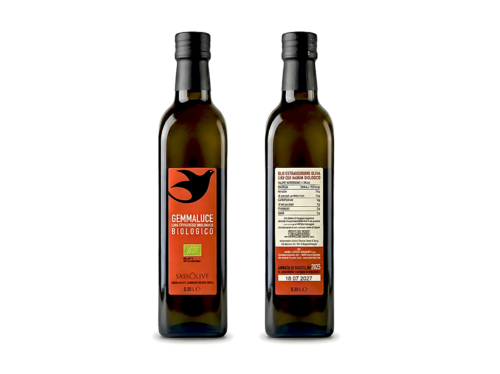
Two bottles say “extra virgin” and still cost very different amounts. Is one automatically better? The quality grade answers only part of that question. It describes a legally defined category. How fresh an oil reaches you, how it tastes, and how transparent its origin is are additional factors you need to consider.
Read the category before the marketing promise
A bottle may catch your eye with an Italian brand name, a landscape image, and terms like “premium”. For classification, the exact product designation matters more at first. “Extra virgin olive oil”, “virgin olive oil”, “olive oil — composed of refined olive oils and virgin olive oils”, and “olive pomace oil” refer to different products. Terms like “premium” do not create an additional official quality grade.
Within the overall legal system there are further categories, such as lampante oil and refined intermediate products. Not every category is intended for direct sale to consumers. A list of four designations relevant in retail should therefore not be understood as a complete list of all legal categories.
What “extra virgin” tells you about the bottle
Extra virgin is mechanically extracted oil that must meet defined chemical and sensory requirements. A low acidity value alone is not enough. The required sensory assessment and other characteristics are part of it as well. The designation is therefore a minimum requirement for the category, but not a ranking of all oils within that category.
Two oils that both comply with the rules can differ greatly in aroma, intensity, and personal suitability for a dish. Mild does not automatically mean lower quality. Bitterness or a peppery impression in a fruity oil is not automatically a fault either.
Virgin, refined, or from pomace: different routes
Virgin olive oil is also mechanically extracted, but it meets different requirements than extra virgin; limited sensory defects are possible within this category. Blends sold as “olive oil” made from refined and virgin olive oils contain a refined portion and usually a less pronounced aroma. Olive pomace oil has a different starting point: the residues left after the first oil extraction. It is processed accordingly and must be labeled as such.
These differences are useful when shopping, without you having to derive a blanket statement for every single dish. If you’re looking for the fresh aroma of the olive, it makes sense to start with extra virgin and try different intensities.
Then check origin, freshness, and packaging
Separate the oil’s origin from the bottler’s address. An Italian company address on its own is not proof that all olives were grown in Italy. So read the origin statement, not just the front label. A protected designation of origin and an organic label, in turn, answer different questions than the quality grade.
Also pay attention to how the oil is displayed in the shop. Dark bottles and light-protective packaging help protect it from light. A harvest note can provide additional guidance, while the best-before date is not a harvest date. Buy an amount you can use up quickly in everyday life after opening.
Why one measurement and a medal don’t explain everything
Free acidity is an analytical value and should not be equated with a sour taste. A statement on the bottle replaces neither the other tests nor good storage. Likewise, a competition medal is not a substitute for the legal category. It refers to an assessment under specific competition conditions.
For your purchase, a traceable combination is more helpful: a clear product designation, a specific origin, understandable information on harvest or batch, and a suitable pack size. If you’re interested in lab values, ask for a current report for the specific batch and for an understandable interpretation.
A quick decision aid for your shopping
Start with the product designation, then clarify the origin and consider how quickly you’ll use up the bottle. Check storage and packaging. Finally, decide based on your taste and the meal you’re planning. This helps you avoid confusing a high price, a green color, or a single buzzword with full proof of quality.
Frequently Asked Questions
Is “premium” its own olive oil quality grade?
No. What counts for the category is the legal product designation. Premium is not an additional official quality grade.
Do all extra virgin olive oils taste the same?
No. The category sets requirements, but it does not standardize the variety, aroma intensity, or your personal taste.
Does a low acidity value prove the highest quality grade?
No. Classification depends on other chemical characteristics and, for virgin oils, also on sensory requirements.
Does an Italian bottler address mean Italian olives?
Not automatically. What matters is the oil’s origin statement; a company address alone does not answer that question.
Is organic the same as extra virgin?
No. Organic refers to ecological production and certification. Extra virgin describes a category with its own quality requirements.
Is the best-before date the harvest date?
No. The information has different meanings. A separate harvest note can provide additional guidance.
Sources and further information
EUR-Lex – Regulation (EU) 2022/2104 / Regulation (EU) 2022/2104
You can adopt your own olive tree and experience firsthand everything involved in growing olives: Discover olive tree adoption
Follow our community on Facebook and learn more about sustainable olive farming in Liguria: Organic Farming Italy on Facebook