A steaming dish of lasagne, golden brown on top and layered underneath with slow-cooked Ragù, creamy Béchamel, and Parmigiano Reggiano – hardly any dish represents Italian comfort food as much as an authentic Lasagne alla Bolognese.
However, there are some crucial differences between an original Italian lasagne and many variations served outside Italy under this name. The original requires neither mountains of mozzarella nor a heavily tomato-based minced meat sauce. What’s essential is a good Ragù alla Bolognese, a delicate Béchamel, Parmigiano Reggiano, and thin pasta layers.
This Original Italian Lasagne Recipe shows you step-by-step how to make the classic lasagne from Bologna – with time, good ingredients, and precisely the techniques that make all the difference.
Italy’s most famous classic lasagne comes from Bologna and is fully called Lasagne verdi alla Bolognese. Therefore, anyone looking for an Original Italian Lasagne Recipe will end up with this very Bolognese tradition. Bologna Welcome also offers a good introduction to the regional original version.
What’s special about it: The traditional pasta is green. Fresh egg pasta dough is made with finely processed spinach. Between the thin pasta layers, alternately come:
An authentic Lasagne Bolognese is therefore much finer and more balanced than many heavily cheese-baked variations.
The traditional Bolognese version usually does not include:
The heart of it is the Ragù – and that primarily needs one thing: time.
| Category | Pasta / Oven Dish |
| Cuisine | Italian, Emilia-Romagna / Bologna |
| Preparation time | approx. 40 minutes |
| Ragù cooking time | approx. 2–3 hours |
| Baking time | approx. 30 minutes |
| Total time | about 3 hours |
| Servings | 6–8 |
| Difficulty | medium |
| Special feature | classic with Ragù, Béchamel and Parmigiano |
| Ingredient | Quantity |
|---|---|
| Beef mince | 500 g |
| Pork mince | 250 g |
| Onion | 1 medium |
| Carrot | 1 large |
| Celery stalk | 1 |
| Extra virgin olive oil | 2 tbsp |
| Dry red wine | 150 ml |
| Passata or finely crushed peeled tomatoes | 400 g |
| Tomato paste | 1 tbsp |
| Whole milk | 150 ml |
| Salt | to taste |
| Black pepper | to taste |
| Ingredient | Quantity |
|---|---|
| Butter | 80 g |
| Flour | 80 g |
| Whole milk | 1 liter |
| Nutmeg | freshly grated |
| Salt | to taste |
| Ingredient | Quantity |
|---|---|
| Lasagne sheets, preferably fresh egg pasta | approx. 500–600 g |
| Parmigiano Reggiano | approx. 200–250 g |
| Butter for the dish | a little |
For the very traditional version: Use green lasagne sheets with spinach. These are exactly what the classic Lasagne verdi alla Bolognese are made from.
If you can’t get green pasta sheets, you can use high-quality thin egg lasagne sheets. The combination of Ragù, Béchamel, and Parmigiano remains the crucial point for the taste.
A good lasagne doesn’t start with layering, but several hours before. That’s why this Original Italian Lasagne Recipe stands or falls with a slow-cooked Ragù.
The Ragù should not be a thin minced meat and tomato sauce. An authentic Ragù alla Bolognese is denser, meatier, and much more complex.
Finely dice the onion, carrot, and celery. The smaller the vegetables are cut, the better they will combine with the Ragù later. You shouldn’t be able to recognize large pieces of vegetable in the end.
Heat extra virgin olive oil in a heavy pot over medium heat. Add the vegetables and let them soften slowly for about 8 to 10 minutes. They should not brown.
Add beef and pork mince to the vegetables. Increase the temperature slightly and carefully break up the meat. Fry until the liquid has largely evaporated and the meat develops light roasted aromas.
Do not stir constantly. The meat should occasionally come into contact with the hot bottom of the pot.
Add red wine and let it reduce completely. The alcohol should evaporate, leaving only the aroma.
Stir in the tomato paste briefly, then add the passata or finely crushed tomatoes. Now significantly reduce the temperature.
Cook the Ragù for at least 2 hours, preferably about 2½ to 3 hours, over very low heat. Let it just gently bubble.
If it becomes too dry, add a little water or mild broth.
Stir in the milk towards the end of the cooking time. It rounds off the acidity of the tomatoes and makes the Ragù softer and fuller in flavor.
Season with salt and freshly ground pepper. The finished Ragù should be thick and concentrated. If you draw a spoon through the pot, liquid should not immediately run back into the track.
The second crucial sauce for an authentic lasagne is the Béchamel. It should be creamy, but not pudding-thick. Only then will it spread between the individual layers.
Melt butter in a pot over medium heat. It should not brown.
Add the flour all at once and stir with a whisk. Heat the mixture for about 1 to 2 minutes. This removes the raw taste of the flour.
Gradually add the milk, stirring constantly. Start by incorporating only small amounts. Once a smooth cream has formed, the remaining milk can be added more quickly.
Gently simmer the Béchamel for about 8 to 10 minutes. Season with salt and freshly grated nutmeg. The finished sauce should lightly coat a spoon but still flow easily.
Now the three components come together: pasta, Ragù, and Béchamel. And here’s the rule: more is not automatically better.
The most beautiful lasagne layers are created when each individual layer is built up relatively thinly.
Preheat oven to 180 °C top/bottom heat. Lightly grease a rectangular baking dish with butter. First, put a small amount of Ragù and some Béchamel on the bottom. This prevents the first pasta layer from sticking.
Place the lasagne sheets on top. With fresh pasta, the individual sheets may overlap slightly.
Spread a thin, even layer of Ragù over the pasta. Don’t use too much. A lasagne should have many fine layers, not consist of a few thick meat layers.
Spread some Béchamel over the Ragù. The sauce doesn’t have to completely cover the entire surface white.
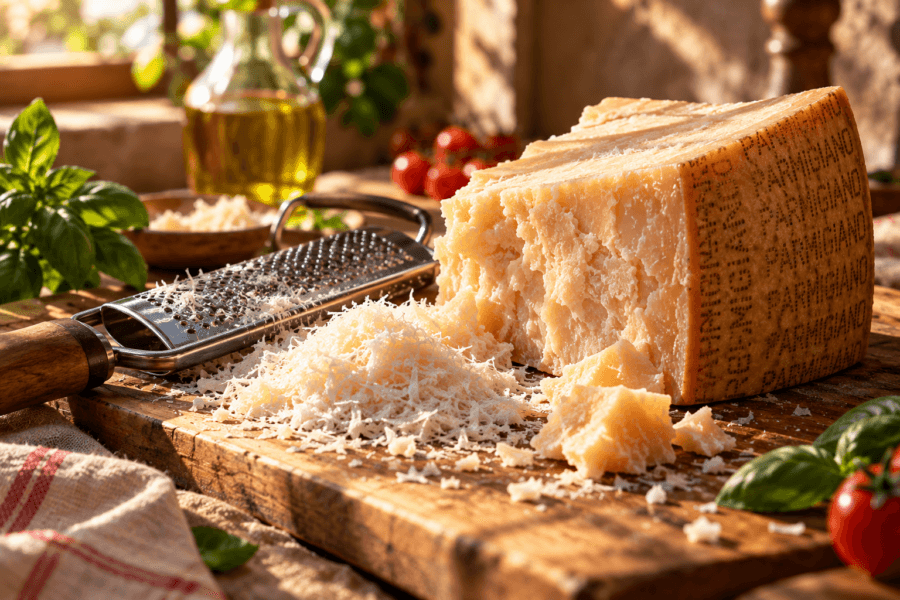
Sprinkle with freshly grated Parmigiano Reggiano. Then comes the next layer of pasta.
Traditionally, a Lasagne alla Bolognese consists of several thin layers. Therefore, repeat pasta → Ragù → Béchamel → Parmigiano until the dish is filled. Six layers are a good guideline.
Cover the last pasta layer with some Ragù and Béchamel and generously sprinkle with Parmigiano. A few small flakes of butter on the surface ensure a particularly beautiful golden-brown crust when baking.
Bake the lasagne in the preheated oven at 180 °C for about 25 to 30 minutes. The surface should be golden brown and slightly crispy in places.
If you use dry lasagne sheets, the cooking time may be extended by a few minutes depending on the manufacturer. It is important to have enough liquid in the Ragù and Béchamel so that the pasta can cook completely.
Even if it’s hard: don’t cut the lasagne immediately after baking. Let it rest for at least 10 minutes.
During this time, the individual layers will set. The sauce will bind, and the lasagne can then be neatly portioned. If you cut it directly from the oven, you often get a plate full of runny layers.
A very liquid meat sauce makes the lasagne unstable. Solution: Reduce the Ragù long enough.
The dish then quickly tastes like pasta with minced meat and tomato sauce. Solution: Use tomatoes sparingly and prioritize the meat and soffritto.
A thick Béchamel spreads poorly and makes the lasagne heavy. Solution: Keep the sauce creamy and still slightly flowing.
Classic lasagne thrives on many layers. Solution: Spread Ragù and Béchamel thinly and plan for at least five to six pasta layers.
While mozzarella creates long cheese strings, it overpowers the structure of classic Lasagne alla Bolognese. Solution: Use Parmigiano Reggiano for the original.
Then the hot layers slide apart. Solution: Let it rest for 10 to 15 minutes after baking.
Especially with uncooked lasagne sheets, the lasagne can remain hard. Solution: Ensure that each pasta layer has contact with Ragù or Béchamel.
What many outside Italy don’t know: The classic Lasagne alla Bolognese is traditionally made with green pasta.
For this, spinach is cooked, squeezed very well, finely processed, and kneaded together with eggs and flour to form a pasta dough. The spinach gives the dough its characteristic green color and a very subtle vegetable note.
The combination is therefore correctly called: Lasagne verdi alla Bolognese.
If you want to prepare the lasagne particularly authentically, you should use fresh green lasagne sheets or make the pasta dough yourself.
Yes – very well, in fact. You can layer the entire lasagne the evening before, cover it, and store it in the refrigerator.
The next day, take it out of the refrigerator about 30 minutes before baking, then bake as usual.
The Ragù can also be cooked one or even two days in advance without any problems. Often, it tastes even more aromatic the next day.
Yes. Lasagne is best frozen in portions. Both baked and prepared unbaked lasagne can be frozen.
Well-sealed, it will keep in the freezer for several months. To reheat, warm it slowly in the oven. This preserves the structure much better than in the microwave.
Thin egg pasta sheets are ideal for an authentic lasagne. Even more traditional are green lasagne sheets with spinach.
When buying lasagne sheets, you should look for high-quality pasta. Whether the sheets need to be pre-cooked depends on the specific product. Fresh lasagne sheets usually only need to be blanched very briefly or not at all.
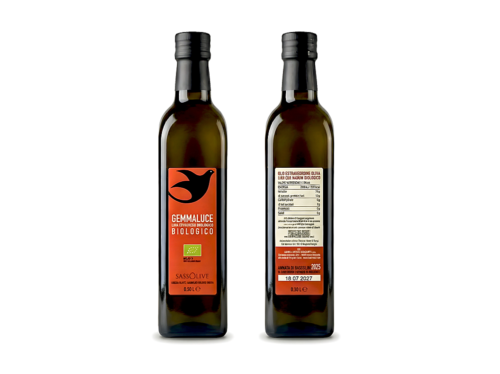
While olive oil is not as dominant in lasagne as in our Spaghetti Aglio e Olio Recipe, a good extra virgin olive oil, together with onion, carrot, and celery, forms the aromatic base of the Ragù.
Especially when slowly sautéing the Soffritto, the sweet and savory aromas of the vegetables develop. If you want to learn more about how to recognize high-quality olive oil, you can find more information in our article on extra virgin olive oil.
Many of the most famous Italian dishes work on the same principle: not as many ingredients as possible make a dish good, but a few high-quality ingredients and the right preparation.
This applies to our Original Italian Spaghetti Carbonara as much as to Spaghetti Aglio e Olio or a classic Lasagne alla Bolognese.
And after a hearty plate of lasagne, another Italian original fits perfectly: our Tiramisu without cream.
Classic Lasagne alla Bolognese consists of thin pasta layers, Ragù alla Bolognese, Béchamel sauce, and Parmigiano Reggiano. Traditionally, green pasta sheets with spinach are used in Bologna.
Not in the classic Lasagne verdi alla Bolognese. Parmigiano Reggiano is used there. Mozzarella appears in other regional Italian lasagne variations, but it is not characteristic of the Bolognese original.
That depends on the pasta. Fresh lasagne sheets are traditionally blanched briefly. Many modern dry lasagne sheets can be used directly. The package instructions provide the best guidance here.
For a classic Lasagne alla Bolognese, at least five to six thin pasta layers are ideal. Many even layers, rather than a few very thick ones, are crucial.
Milk makes the Ragù rounder and milder and balances the acidity of the tomatoes. It is included in many traditional preparations of Ragù alla Bolognese.
Parmigiano Reggiano is used for Lasagne alla Bolognese. It is best grated fresh immediately before preparation. You can find more about its protected origin and production at the official Consorzio del Formaggio Parmigiano Reggiano.
At 180 °C top/bottom heat, a lasagne usually needs about 25 to 30 minutes. For dry pasta sheets, the baking time may be slightly longer.
Often, a Ragù that is too thin, a Béchamel that is too liquid, or watery vegetables are the cause. Reduce the Ragù sufficiently and let the lasagne rest after baking.
Yes. A fully layered lasagne can be stored very well overnight in the refrigerator and baked fresh the next day.
Lasagne fundamentally refers to an entire family of layered Italian pasta dishes. Lasagne alla Bolognese is the traditional version from Bologna with Ragù, Béchamel, Parmigiano, and classically green spinach pasta sheets. That’s why our Original Italian Lasagne Recipe consciously focuses on this Bolognese variation.
A good Lasagne alla Bolognese doesn’t require extraordinary tricks. This Original Italian Lasagne Recipe needs good ingredients, thin layers, and above all, enough time for the Ragù.
That’s precisely the secret of many Italian family recipes: they are not complicated – but they cannot be rushed.
Buon appetito!