Six ingredients, fifteen minutes, one dish that all of Italy loves. Spaghetti Aglio e Olio – garlic and oil – is the most honest pasta in the world. No tomato sauce, no cream, no minced meat. Just a good olive oil, a few slices of garlic, a hint of chili pepper, and spaghetti cooked al dente. Once you understand how these few ingredients create a truly magnificent dish, you will cook it every week.
Throughout Southern Italy, especially in Naples, Aglio e Olio is often made late at night – the famous spaghettata di mezzanotte, the midnight spaghetti meal, when friends are still sitting together and need a simple, quick meal. This is exactly what makes the charm of this dish: it is always doable, always there, always good. Provided the technique is right – and the olive oil.
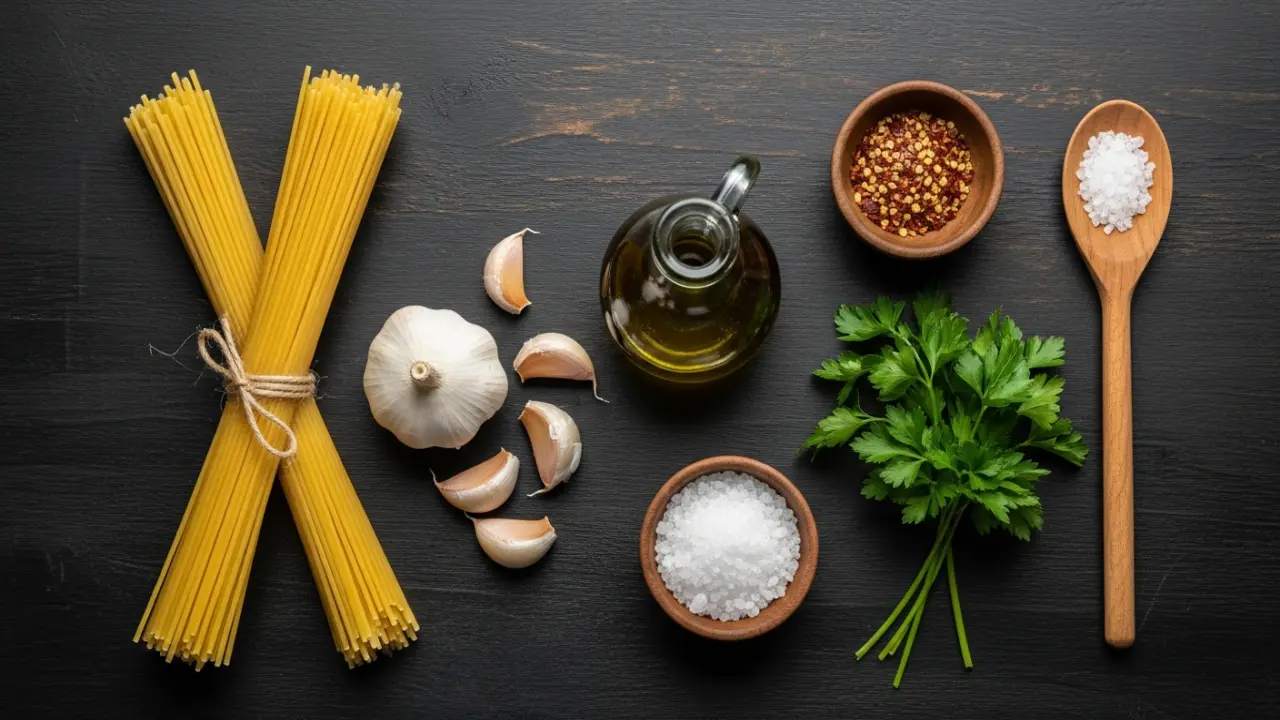
With Spaghetti Aglio e Olio, a dish made of so few ingredients, every detail counts. An authentic Aglio e Olio recipe requires exactly these things – and nothing more:
That is all. No cream. No butter. No Parmesan (classically not – only as an optional variation). This very reduction is the strength of the dish: if the olive oil is good, you can taste every drop. If the garlic is golden yellow instead of brown, it has the perfect sweetness. And if the pasta binds the emulsion well, every forkful is a small piece of Italy.
| Category | Pasta |
| Cuisine | Italian (Southern Italy / Naples) |
| Preparation time | 5 minutes |
| Cooking time | 10 minutes |
| Total time | approx. 15 minutes (preparation parallel to boiling water) |
| Servings | 4 |
| Difficulty | easy (with a feel for technique) |
| Special feature | few ingredients, vegan, no cream, no cheese |
For 4 servings:
| Ingredient | Quantity |
|---|---|
| Spaghetti (durum wheat, bronze-cut) | 400 g |
| Extra virgin olive oil | 8 tbsp (approx. 100 ml) |
| Garlic cloves, thinly sliced | 6 large cloves |
| Dried chili pepper or chili flakes | 1–2 pieces / 1 tsp |
| Fresh flat-leaf parsley, finely chopped | 1 bunch (optional) |
| Coarse sea salt for the pasta water | approx. 10 g per liter of water |
| Black pepper from the mill | to taste (optional) |
| Pasta water (from cooking) | reserve 1 cup |
Important: Use a truly high-quality extra virgin olive oil – preferably directly from Italy, from the first cold pressing. In this recipe, the oil is the main ingredient, not a mere accompaniment. A cheap oil will ruin the entire dish.
Bring plenty of water to a boil in a large pot – at least 4 liters for 400 g of spaghetti. Salt the water noticeably salty with coarse sea salt, about 10 g per liter. The Italian proverb says: “The pasta water should taste like the sea.” This is particularly important here because the pasta water will later become part of the sauce.
Peel the garlic cloves and cut them into the thinnest, most even slices possible. The thinner they are, the faster and more evenly they will infuse the oil later. Do not press, do not chop – slices are classic and yield the best texture. If you prefer a milder garlic flavor, you can remove the green germ from the center.
As soon as the water boils, add the spaghetti and cook them for 2 minutes less than indicated on the package. They should be al dente – with a noticeable bite in the center. They will continue to cook in the pan with the pasta water.
While the pasta is cooking: Place a large pan over medium heat – not high! Add about half of the olive oil, then add the garlic slices. Let the garlic infuse slowly for 2 to 3 minutes until it is just light golden and smells wonderful. Do not let it turn brown under any circumstances – brown garlic becomes bitter and ruins the dish.
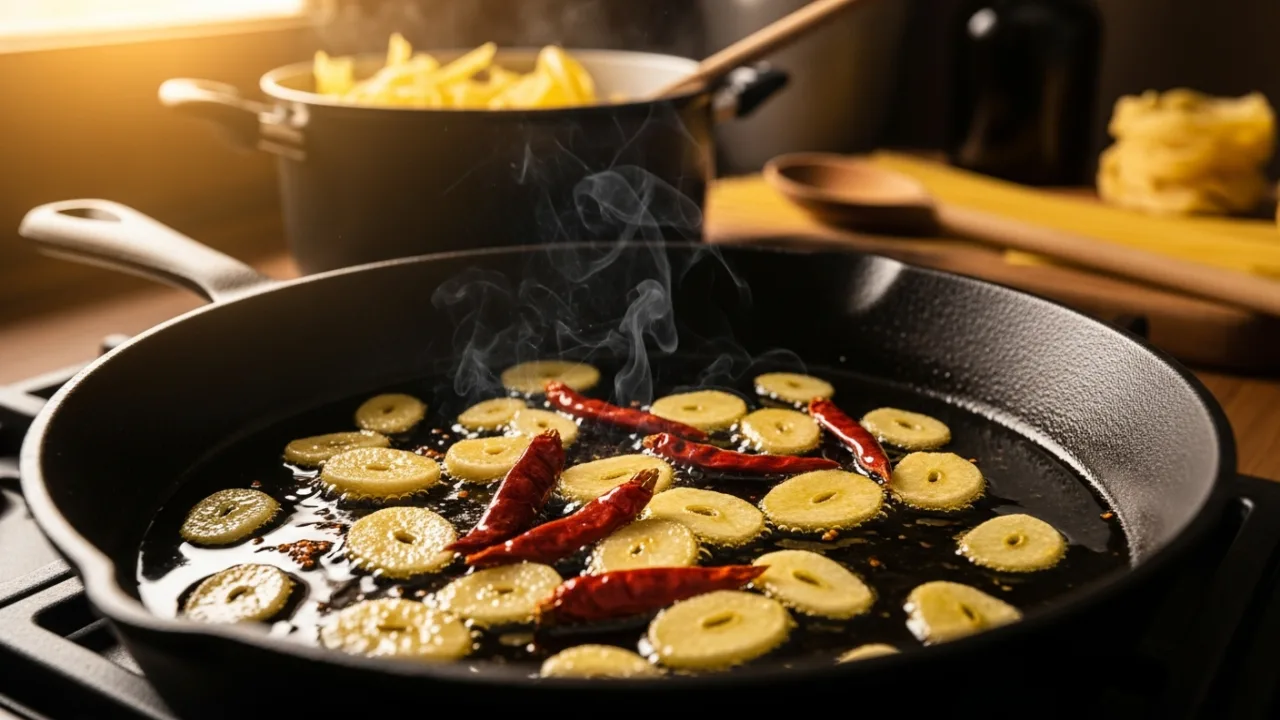
Crumble the dried chili pepper between your fingers and add it along with its seeds to the pan – or sprinkle in chili flakes. Let it infuse briefly, about 30 seconds. If the garlic threatens to brown too quickly: remove the pan from the heat. The residual heat is sufficient.
Before you drain the spaghetti, use a ladle to remove a full cup of the starchy pasta water. This water is the key to a creamy consistency – if you forget this, you will end up with oily, non-emulsified pasta.
Lift the spaghetti directly from the pot into the pan using pasta tongs – or drain them briefly (do not rinse!) and add them immediately to the oil with garlic and chili pepper. Return the pan to medium heat.
Pour two to three ladles of the hot pasta water over the spaghetti and toss everything vigorously. The starch from the pasta water combines with the olive oil to form a silky, slightly creamy sauce. This tossing is crucial – in Italian, it is called mantecare. Let the spaghetti finish cooking in the pan for 1 to 2 minutes.
Remove the pan from the heat and toss in the remaining cold olive oil. This preserves the full aroma of the extra virgin olive oil – many of the delicate flavors would be lost during intense heating. This step makes the difference between good and great Aglio e Olio.
Sprinkle with finely chopped parsley and serve immediately in pre-warmed deep plates. Aglio e Olio must not sit – otherwise, it will become dry. If you like, add some freshly ground black pepper on top. Buon appetito!
Probably the most well-known variation. One or two crumbled dried Calabrian chili peppers or a teaspoon of good chili flakes bring a pleasant, warming heat – not aggressive, but well-rounded. If you like it really spicy, add a fresh, finely chopped chili. This turns Aglio e Olio into the complete Aglio Olio Peperoncino.
A bunch of fresh, flat-leaf Italian parsley, finely chopped just before serving and sprinkled over the pasta, provides a fresh, green accent. This is also classic – but not mandatory. Curly parsley is less suitable because it is more aromatic and bitter.
In Italy, Aglio e Olio is classically served without cheese. If you still want some cheese: a little freshly grated Pecorino Romano or Parmigiano Reggiano just before serving – but sparingly. Cheese makes the sauce thicker and masks the olive oil. A mixed variation is Pasta Cacio e Pepe – where cheese is the central element.
Let 2 to 3 anchovy fillets melt in the oil with the garlic. They provide a wonderful umami depth but do not taste “fishy.” A traditional Southern Italian variation.
In Southern Italy, breadcrumbs toasted in olive oil (mollica) are sometimes sprinkled over the pasta – instead of cheese. Crunchy, salty, wonderful. Finely crumble bread or stale white bread and toast in 2 tbsp of olive oil until golden brown.
In a dish with only six ingredients, you cannot hide behind complex sauces. The olive oil is the sauce. This is exactly where good Aglio e Olio separates from the truly magnificent.
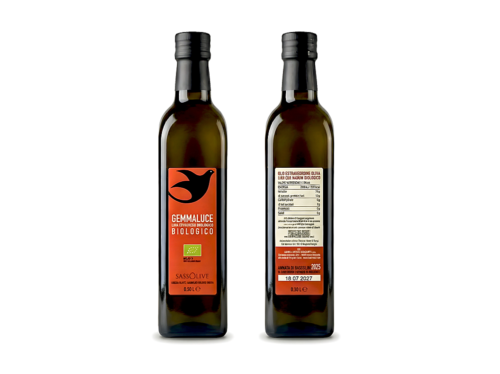
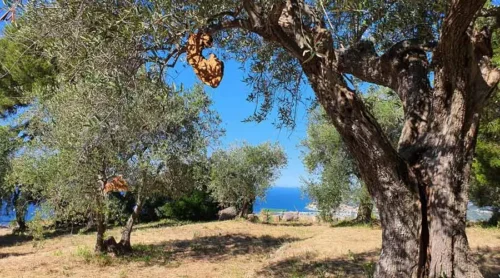
Once you have used a truly fresh extra virgin olive oil directly from Liguria in your Aglio e Olio, you will want nothing else. The pasta tastes brighter, fruitier, with a fine peppery finish. Our organic olive oil from Liguria is pressed specifically for such dishes – single-variety, first cold pressing only, fresh only.
Spaghetti Aglio e Olio belongs to the classic Cucina Povera – the “poor kitchen” of Southern Italy. Garlic, oil, salt, and pasta were present in almost every Southern Italian household, even when nothing else was available. From this necessity arose a dish that is served today in the finest restaurants – because its simplicity and purity are unbeatable.
Particularly in Naples and the Campania region, Pasta Aglio e Olio is a classic. It is often prepared as a spaghettata di mezzanotte – midnight spaghetti: when friends are still sitting together, getting hungry, but have no time or desire for elaborate cooking. In 15 minutes, a wonderful, satisfying meal is on the table. This ability to improvise is what makes the dish so Italian.
For authentic Spaghetti Aglio e Olio, the same applies to the pasta: quality pays off. Look for the following features when shopping:
Spaghetti are classic. Spaghettoni (thicker) or Linguine also work excellently. Short pasta like penne is unsuitable because the sauce does not adhere as well.
A good, fruity extra virgin olive oil is the most important ingredient here. A simple refined oil makes the entire pasta bland. Use an oil that you would also eat plain on bread – ideally directly from Italy, from the first cold pressing. Fold in about half of the oil cold after sautéing so that the aromas are fully preserved.
No, absolutely not. Brown garlic becomes bitter and destroys the entire dish. The garlic should infuse slowly in the oil over medium heat until it is just light golden and smells wonderful – this takes only 2 to 3 minutes. It is better to remove the pan from the heat too early than too late.
Classically in Italy, no. Aglio e Olio is one of the few pasta dishes traditionally served without cheese. If you like, you can add freshly grated Pecorino or Parmesan – but in the original recipe, cheese disturbs the delicate olive oil-garlic balance.
The secret is the emulsion of olive oil and starchy pasta water. Reserve a cup of the cooking water, add the spaghetti al dente to the pan with the flavored oil, and toss with 2 to 3 ladles of pasta water. The starch combines the oil and water into a silky, slightly creamy sauce.
Classically spaghetti or spaghettoni (slightly thicker). Linguine also work well. It is important to use high-quality pasta, preferably made from durum wheat semolina and bronze-cut – it holds the sauce better. Short pasta like penne is unsuitable, as the sauce adheres poorly there.
Yes, classic Spaghetti Aglio e Olio is naturally vegan. It consists only of pasta, olive oil, garlic, chili pepper, salt, and optional parsley – no animal ingredients. Also perfect for those with lactose intolerance and gluten-free with the appropriate pasta.
Only to a limited extent. The dish relies on the freshly prepared emulsion and the heat. What you can easily do in advance: cut the garlic into thin slices and chop the parsley. The actual cooking is so fast – about 10 minutes – that it is hardly worth pre-cooking. Reheated Aglio e Olio is never as good as fresh.
Aglio means garlic, olio means oil. Literally “garlic and oil” – a pasta dish cannot be described more simply. The full Italian name is often “Spaghetti Aglio, Olio e Peperoncino” when referring to the spicy version with chili.
The spiciness is optional and entirely up to you. Classically, one or two dried chili peppers or a pinch of chili flakes are infused with the garlic in the oil. This results in a pleasant, subtle heat. If you do not like spiciness, simply leave out the chili pepper.
Spaghetti Aglio e Olio originates from Southern Italy, specifically from Naples and the Campania region. It is considered a classic dish of Cucina Povera – the “cuisine of poverty” – because it uses only ingredients that were present in every Italian household. Today it is eaten throughout Italy, often spontaneously and also late at night as a “spaghettata di mezzanotte” – midnight spaghetti.
Cook 400 g of spaghetti in plenty of salted water until al dente. Meanwhile, cut 6 garlic cloves into thin slices and let them infuse in half of 8 tbsp of extra virgin olive oil over medium heat for 2–3 minutes until golden yellow (not brown!). Add 1–2 crumbled chili peppers. Reserve 1 cup of pasta water, add the spaghetti to the pan, and toss vigorously with 2–3 ladles of pasta water until a silky emulsion forms. Remove the pan from the heat, fold in the remaining olive oil, sprinkle with parsley, and serve immediately. Spaghetti Aglio e Olio – authentic Italian pasta doesn’t get any faster than this.
Once you have made Spaghetti Aglio e Olio correctly – with good oil, golden yellow garlic, and a beautiful emulsion – you will leave every instant meal behind. It is the most honest pasta Italy knows. Try it tonight and experience for yourself how six ingredients become a piece of Italy. Experience Ligurian olive oil directly from the farm with an olive tree adoption and become part of our small Italian family story. Follow us also on Facebook for ongoing insights from the olive grove.
{ “@context”: “https://schema.org”, “@type”: “FAQPage”, “mainEntity”: [ { “@type”: “Question”, “name”: “Welches Olivenöl eignet sich für Aglio e Olio?”, “acceptedAnswer”: { “@type”: “Answer”, “text”: “Ein gutes, fruchtiges natives Olivenöl extra ist hier die wichtigste Zutat. Ein einfaches Raffinat-Öl macht die ganze Pasta fade. Verwende ein Öl, das du auch pur auf Brot essen würdest – idealerweise direkt aus Italien, aus erster Kaltpressung. Etwa die Hälfte des Öls erst nach dem Anbraten kalt unterheben, damit die Aromen voll erhalten bleiben.” } }, { “@type”: “Question”, “name”: “Darf der Knoblauch braun werden?”, “acceptedAnswer”: { “@type”: “Answer”, “text”: “Nein, auf gar keinen Fall. Brauner Knoblauch wird bitter und zerstört das gesamte Gericht. Der Knoblauch soll bei mittlerer Hitze langsam im Öl ziehen, bis er gerade hellgolden ist und herrlich duftet – das dauert nur 2 bis 3 Minuten. Lieber Pfanne früher vom Herd ziehen als zu spät.” } }, { “@type”: “Question”, “name”: “Kommt Parmesan in Aglio e Olio?”, “acceptedAnswer”: { “@type”: “Answer”, “text”: “In Italien klassisch nein. Aglio e Olio ist eines der wenigen Pasta-Gerichte, die traditionell ohne Käse serviert werden. Wer mag, kann frisch geriebenen Pecorino oder Parmesan dazugeben – aber im Originalrezept stört Käse die feine Olivenöl-Knoblauch-Balance.” } }, { “@type”: “Question”, “name”: “Wie wird Aglio e Olio cremig?”, “acceptedAnswer”: { “@type”: “Answer”, “text”: “Das Geheimnis ist die Emulsion aus Olivenöl und stärkehaltigem Pastawasser. Vom Kochwasser eine Tasse abnehmen, die Spaghetti al dente in die Pfanne mit dem aromatisierten Öl geben und mit 2 bis 3 Schöpflöffeln Pastawasser durchschwenken. Die Stärke verbindet Öl und Wasser zu einer seidigen, leicht cremigen Sauce.” } }, { “@type”: “Question”, “name”: “Welche Pasta passt am besten?”, “acceptedAnswer”: { “@type”: “Answer”, “text”: “Klassisch Spaghetti oder Spaghettoni (etwas dicker). Auch Linguine funktionieren gut. Wichtig ist eine Pasta von guter Qualität, möglichst aus Hartweizengrieß und bronzegezogen – sie hält die Sauce besser. Kurze Pasta wie Penne ist ungeeignet, da die Sauce dort schlecht haftet.” } }, { “@type”: “Question”, “name”: “Ist Aglio e Olio vegan?”, “acceptedAnswer”: { “@type”: “Answer”, “text”: “Ja, klassische Spaghetti Aglio e Olio ist von Natur aus vegan. Sie besteht nur aus Pasta, Olivenöl, Knoblauch, Peperoncino, Salz und optional Petersilie – keine tierischen Zutaten. Auch perfekt für Laktoseintolerante und glutenfrei mit entsprechender Pasta.” } }, { “@type”: “Question”, “name”: “Kann man Aglio e Olio vorbereiten?”, “acceptedAnswer”: { “@type”: “Answer”, “text”: “Nur bedingt. Das Gericht lebt von der frisch zubereiteten Emulsion und der Hitze. Was du gut vorab erledigen kannst: Knoblauch in dünne Scheiben schneiden und Petersilie hacken. Das eigentliche Kochen geht so schnell – etwa 12 Minuten – dass es sich kaum lohnt, vorzukochen. Aufgewärmt ist Aglio e Olio nie so gut wie frisch.” } }, { “@type”: “Question”, “name”: “Was bedeutet Aglio e Olio?”, “acceptedAnswer”: { “@type”: “Answer”, “text”: “Aglio bedeutet Knoblauch, olio heißt Öl. Wörtlich also „Knoblauch und Öl\” – einfacher kann ein Pastagericht nicht beschrieben werden. Der vollständige italienische Name lautet oft „Spaghetti Aglio, Olio e Peperoncino\”, wenn die scharfe Variante mit Chili gemeint ist.” } }, { “@type”: “Question”, “name”: “Wie scharf ist Aglio e Olio?”, “acceptedAnswer”: { “@type”: “Answer”, “text”: “Die Schärfe ist optional und liegt komplett in deiner Hand. Klassisch wird ein bis zwei getrocknete Peperoncino oder eine Prise Chiliflocken mit dem Knoblauch im Öl gezogen. Das ergibt eine angenehme, dezente Schärfe. Wer keine Schärfe mag, lässt den Peperoncino einfach weg.” } }, { “@type”: “Question”, “name”: “Woher kommt das Gericht?”, “acceptedAnswer”: { “@type”: “Answer”, “text”: “Spaghetti Aglio e Olio stammt aus Süditalien, speziell aus Neapel und der Region Kampanien. Es gilt als klassisches Gericht der Cucina Povera – der „Küche der Armut\” – weil es nur Zutaten verwendet, die in jedem italienischen Haushalt vorhanden waren. Heute wird es in ganz Italien gegessen, oft spontan und gerne auch spät abends als „spaghettata di mezzanotte\” – Mitternachts-Spaghetti.” } } ] } { “@context”: “https://schema.org”, “@type”: “Recipe”, “name”: “Spaghetti Aglio e Olio original italienisch”, “description”: “Authentische Spaghetti Aglio e Olio mit nativem Olivenöl extra, Knoblauch, Peperoncino und Pastawasser – das klassische süditalienische Rezept aus der Cucina Povera, ohne Sahne, ohne Käse, in unter 15 Minuten fertig.”, “image”: [ “https://www.organicfarming-italy.com/wp-content/uploads/2026/05/spaghetti-aglio-e-olio-featured.webp” ], “author”: { “@type”: “Person”, “name”: “Signora Emilia” }, “datePublished”: “2026-05-17”, “recipeCategory”: “Pasta”, “recipeCuisine”: “Italienisch”, “recipeYield”: “4 Portionen”, “prepTime”: “PT5M”, “cookTime”: “PT10M”, “totalTime”: “PT15M”, “keywords”: “Spaghetti Aglio e Olio, Aglio e Olio Rezept, Pasta Aglio e Olio, italienische Pasta mit Knoblauch und Olivenöl, Aglio Olio Peperoncino”, “recipeIngredient”: [ “400 g Spaghetti (Hartweizengrieß, bronzegezogen)”, “8 Esslöffel natives Olivenöl extra”, “6 große Knoblauchzehen, in feine Scheiben geschnitten”, “1 bis 2 getrocknete Peperoncino oder 1 TL Chiliflocken”, “1 Bund frische glatte Petersilie, fein gehackt (optional)”, “Grobes Meersalz fürs Pastawasser”, “Schwarzer Pfeffer aus der Mühle (optional)”, “1 Tasse Pastawasser (vom Kochen aufgehoben)” ], “recipeInstructions”: [ { “@type”: “HowToStep”, “name”: “Pastawasser aufsetzen”, “text”: “Einen großen Topf mit reichlich Wasser zum Kochen bringen. Mit grobem Meersalz salzen – etwa 10 g Salz pro Liter Wasser. Das Wasser soll spürbar salzig schmecken, wie das Mittelmeer.”, “url”: “https://www.organicfarming-italy.com/spaghetti-aglio-e-olio-rezept/#schritt-1-pastawasser-aufsetzen-und-salzen”, “image”: “https://www.organicfarming-italy.com/wp-content/uploads/2026/05/spaghetti-aglio-e-olio-original.webp” }, { “@type”: “HowToStep”, “name”: “Knoblauch vorbereiten”, “text”: “Knoblauchzehen schälen und in möglichst dünne, gleichmäßige Scheiben schneiden. Je dünner, desto schneller und gleichmäßiger ziehen sie im Öl.”, “url”: “https://www.organicfarming-italy.com/spaghetti-aglio-e-olio-rezept/#schritt-2-knoblauch-vorbereiten”, “image”: “https://www.organicfarming-italy.com/wp-content/uploads/2026/05/spaghetti-aglio-e-olio-zutaten.webp” }, { “@type”: “HowToStep”, “name”: “Spaghetti kochen”, “text”: “Die Spaghetti ins kochende Salzwasser geben und etwa 2 Minuten weniger als auf der Packung angegeben kochen, damit sie al dente sind.”, “url”: “https://www.organicfarming-italy.com/spaghetti-aglio-e-olio-rezept/#schritt-3-spaghetti-kochen”, “image”: “https://www.organicfarming-italy.com/wp-content/uploads/2026/05/spaghetti-aglio-e-olio-pfanne.webp” }, { “@type”: “HowToStep”, “name”: “Öl mit Knoblauch erhitzen”, “text”: “Während die Pasta kocht: Eine große Pfanne auf mittlere Hitze stellen. Etwa die Hälfte des Olivenöls hineingeben, dann die Knoblauchscheiben dazu. Bei mittlerer Hitze 2 bis 3 Minuten ziehen lassen, bis der Knoblauch goldgelb ist und der Duft aufsteigt.”, “url”: “https://www.organicfarming-italy.com/spaghetti-aglio-e-olio-rezept/#schritt-4-knoblauch-im-olivenoel-ziehen-lassen”, “image”: “https://www.organicfarming-italy.com/wp-content/uploads/2026/05/spaghetti-aglio-e-olio-original.webp” }, { “@type”: “HowToStep”, “name”: “Peperoncino hinzufügen”, “text”: “Die zerkrümelten Peperoncino oder Chiliflocken dazugeben und kurz mitziehen lassen – nicht zu lange, sonst werden sie bitter. Pfanne vom Herd nehmen, falls der Knoblauch zu schnell bräunt.”, “url”: “https://www.organicfarming-italy.com/spaghetti-aglio-e-olio-rezept/#schritt-5-peperoncino-hinzufuegen”, “image”: “https://www.organicfarming-italy.com/wp-content/uploads/2026/05/spaghetti-aglio-e-olio-zutaten.webp” }, { “@type”: “HowToStep”, “name”: “Pastawasser auffangen”, “text”: “Bevor die Spaghetti abgegossen werden: Eine Tasse vom stärkehaltigen Kochwasser mit der Schöpfkelle abnehmen und beiseitestellen.”, “url”: “https://www.organicfarming-italy.com/spaghetti-aglio-e-olio-rezept/#schritt-6-pastawasser-auffangen”, “image”: “https://www.organicfarming-italy.com/wp-content/uploads/2026/05/spaghetti-aglio-e-olio-pfanne.webp” }, { “@type”: “HowToStep”, “name”: “Pasta in die Pfanne”, “text”: “Die al dente gekochten Spaghetti direkt aus dem Topf in die Pfanne mit dem Knoblauchöl heben oder kurz abgießen und sofort in die Pfanne geben. Pfanne wieder auf mittlere Hitze.”, “url”: “https://www.organicfarming-italy.com/spaghetti-aglio-e-olio-rezept/#schritt-7-spaghetti-in-die-pfanne”, “image”: “https://www.organicfarming-italy.com/wp-content/uploads/2026/05/spaghetti-aglio-e-olio-original.webp” }, { “@type”: “HowToStep”, “name”: “Emulsion herstellen”, “text”: “Zwei bis drei Schöpflöffel des heißen Pastawassers über die Spaghetti gießen und kräftig durchschwenken. Die Stärke verbindet das Öl mit dem Wasser zu einer seidigen, leicht cremigen Sauce.”, “url”: “https://www.organicfarming-italy.com/spaghetti-aglio-e-olio-rezept/#schritt-8-emulsion-herstellen-das-herzstueck”, “image”: “https://www.organicfarming-italy.com/wp-content/uploads/2026/05/spaghetti-aglio-e-olio-zutaten.webp” }, { “@type”: “HowToStep”, “name”: “Restliches Öl unterheben”, “text”: “Pfanne vom Herd nehmen, das restliche kalte Olivenöl unterheben. So bleiben die frischen Aromen des Öls erhalten und die Sauce wird seidig glänzend.”, “url”: “https://www.organicfarming-italy.com/spaghetti-aglio-e-olio-rezept/#schritt-9-restliches-olivenoel-kalt-unterheben”, “image”: “https://www.organicfarming-italy.com/wp-content/uploads/2026/05/spaghetti-aglio-e-olio-pfanne.webp” }, { “@type”: “HowToStep”, “name”: “Servieren”, “text”: “Mit gehackter Petersilie bestreuen, in vorgewärmten Tellern anrichten und sofort servieren. Wer mag, gibt etwas frisch gemahlenen schwarzen Pfeffer dazu.”, “url”: “https://www.organicfarming-italy.com/spaghetti-aglio-e-olio-rezept/#schritt-10-anrichten-und-sofort-servieren”, “image”: “https://www.organicfarming-italy.com/wp-content/uploads/2026/05/spaghetti-aglio-e-olio-original.webp” } ], “nutrition”: { “@type”: “NutritionInformation”, “servingSize”: “1 Portion”, “calories”: “560 kcal”, “proteinContent”: “13 g”, “fatContent”: “25 g”, “saturatedFatContent”: “4 g”, “carbohydrateContent”: “73 g”, “sugarContent”: “3 g”, “fiberContent”: “4 g”, “sodiumContent”: “780 mg” } }