Authentic Italian Pasta all’Amatriciana – The Real Recipe from Lazio
A true authentic Italian Pasta all’Amatriciana perfectly demonstrates why Italian cuisine can create so much flavor with so few ingredients. Guanciale, good tomatoes, Pecorino Romano, a little peperoncino, and pasta – this classic from Lazio doesn’t really need more.
Amatriciana originates from Amatrice and is now closely associated with Roman cuisine. Its sauce is rich, savory, slightly spicy, and surprisingly uncomplicated. The key is not many ingredients, but the right products and the correct order of preparation.
In this recipe, Signora Emilia shows you step-by-step how to make authentic Italian Pasta all’Amatriciana – without cream, without onions, and without unnecessary extras.
Table of Contents
- What is Pasta all’Amatriciana?
- Recipe Overview
- Ingredients for Pasta all’Amatriciana
- Why Guanciale is So Important
- Pecorino Romano Instead of Parmesan
- Step-by-Step Preparation
- Common Mistakes
- Tips from Signora Emilia
- Frequently Asked Questions
- The Perfect Organic Olive Oil
What is Pasta all’Amatriciana?
Pasta all’Amatriciana is a classic pasta dish from Lazio. It owes its name to the small town of Amatrice. There, an even simpler version without tomatoes first emerged: the Gricia. When tomatoes later became part of the regional cuisine, Amatriciana developed from it.
The dish became particularly popular in Rome. That’s why you can find it today in many traditional Roman trattorias. The sauce is often served with Bucatini, which are slightly thicker, hollow noodles. But spaghetti or rigatoni also pair excellently.
What distinguishes an authentic Italian Pasta all’Amatriciana from many modified versions is its clarity: Guanciale provides fat and seasoning, tomatoes provide fruitiness and acidity, Pecorino Romano provides salt and depth, and peperoncino provides a subtle spiciness.
Recipe Overview: Pasta all’Amatriciana
| Category | Pasta / Primo Piatto |
| Cuisine | Italian, Lazio / Amatrice / Rome |
| Prep Time | approx. 10 minutes |
| Cook Time | approx. 20 minutes |
| Total Time | approx. 30 minutes |
| Servings | 4 |
| Difficulty | easy |
| Special Feature | with guanciale and Pecorino Romano, no cream |
Ingredients for Authentic Italian Pasta all’Amatriciana
For 4 servings:
| Ingredient | Quantity |
|---|---|
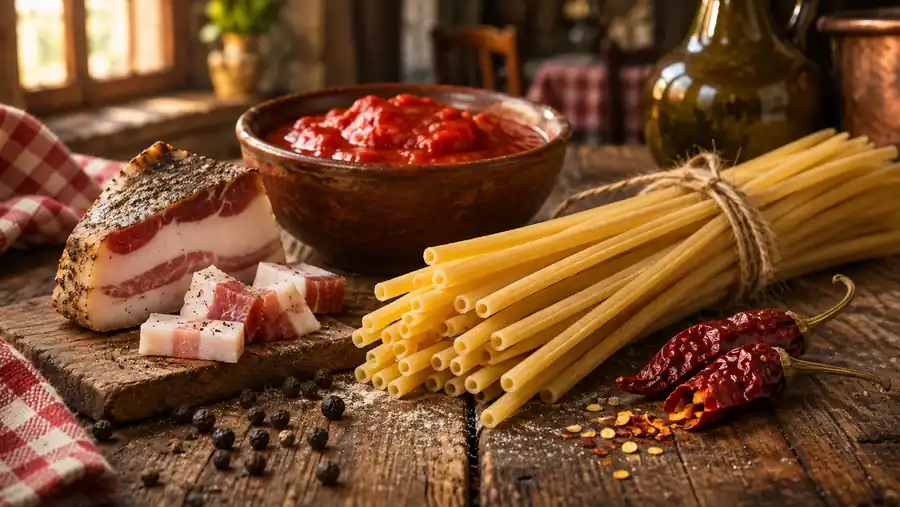
| Bucatini, Spaghetti, or Rigatoni | 400 g |
| Guanciale | 150 g |
| Peeled tomatoes, preferably high quality | 400 g |
| Pecorino Romano | 80–100 g |
| Dried peperoncino or chili flakes | to taste |
| Freshly ground black pepper | to taste |
| Salt for the pasta water | as needed |
Important: A classic Amatriciana does not contain cream, onions, or Parmesan. Additional olive oil is usually not necessary either, because the guanciale releases enough aromatic fat when slowly rendered.
Why Guanciale is So Important for Authentic Amatriciana
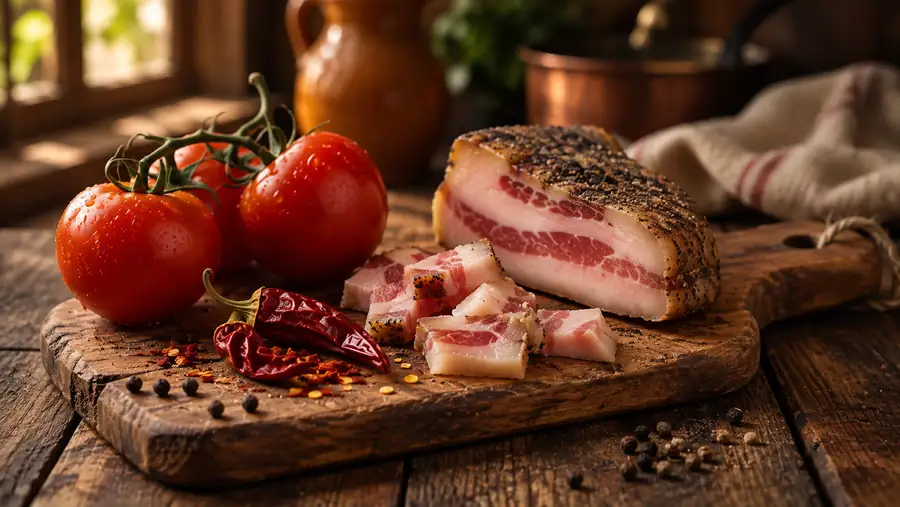
Guanciale is air-cured pork jowl and significantly more intense in flavor than regular bacon. Its high fat content is not a disadvantage in this dish, but the real secret. When slowly heated, the fat renders out and forms the aromatic base of the sauce.
That’s precisely why you shouldn’t fry the guanciale in an already very hot pan. Place it in a cold pan and slowly increase the temperature. This way, it will become golden brown and crispy on the outside, while enough fat can render out.
If you can’t find guanciale, you can use pancetta as a last resort. However, for an authentic Italian Pasta all’Amatriciana, it’s worth getting real guanciale. The same applies, by the way, to a good Spaghetti Carbonara.
Pecorino Romano Instead of Parmesan
Authentic Amatriciana calls for Pecorino Romano. This hard cheese made from sheep’s milk is stronger and saltier than Parmigiano Reggiano, making it particularly well-suited to the tomatoes and guanciale.
Grate the Pecorino as finely as possible. This way, it will combine well with the pasta and sauce at the end. Be conservative with salt, as guanciale and Pecorino already bring plenty of seasoning. You can find more about the cheese and its origin at the official Consorzio per la Tutela del Formaggio Pecorino Romano DOP.
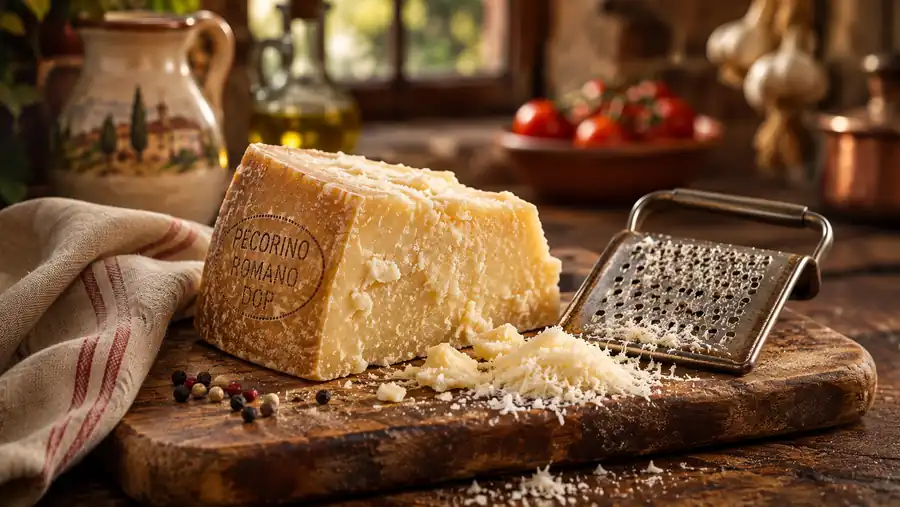
The cheese is only mixed into the pasta or freshly grated over it towards the end. Too much heat can cause it to clump. Therefore, do not add it to a vigorously boiling sauce.
Authentic Italian Pasta all’Amatriciana – Step by Step
Step 1: Prepare the Guanciale
If necessary, remove the rind and cut the guanciale into strips or cubes about half to one centimeter wide. The pieces should have some substance.
Step 2: Slowly Render the Guanciale
Place the guanciale in a cold pan without additional oil. Slowly heat it to medium temperature. After a few minutes, the fat will render out and the pieces will turn golden brown and crispy. Remove about half of the crispy guanciale and set it aside for later.
Step 3: Prepare the Tomato Sauce
Roughly crush the peeled tomatoes. Add the peperoncino to the rendered guanciale fat, then add the tomatoes to the pan. Let the sauce simmer gently for about 10 to 15 minutes until it has thickened slightly.
Step 4: Cook the Pasta al Dente
Cook the pasta in plenty of salted water. Remove it from the water about one to two minutes before the indicated cooking time. Be sure to save a cup of pasta water beforehand.
The starchy pasta water will later help to bind the sauce and pasta together. You know this principle from our Spaghetti Aglio e Olio recipe as well.
Step 5: Combine Pasta and Sauce
Add the pasta directly to the pan with the tomato sauce. First, add a small splash of pasta water and toss everything vigorously. The sauce should cling to the pasta and not just sit on top.
Step 6: Add Pecorino and Guanciale
Remove the pan from the heat. Add some of the finely grated Pecorino Romano and mix everything quickly. If the sauce becomes too thick, another small splash of pasta water will help.
Finally, add the reserved crispy guanciale, freshly ground black pepper, and some more Pecorino over the pasta. Serve immediately – a good Amatriciana doesn’t like to wait.
Common Mistakes with Pasta all’Amatriciana
Frying Guanciale Too Hot
If the heat is too high, the guanciale will darken on the outside before enough fat can render out. Always start in a cold pan and increase the temperature slowly.
Using Too Much Salt
Guanciale and Pecorino Romano are already salty. Therefore, salt the pasta water a little more sparingly than with other dishes and only season to taste at the end.
Adding Too Many Ingredients
Garlic, onions, cream, and herbs change the character of the dish. An authentic Italian Pasta all’Amatriciana thrives precisely on its simplicity.
Stirring Pecorino in at Too High Heat
Pecorino can clump at high heat. Therefore, remove the pan from the stove and incorporate the finely grated cheese with a little pasta water.
Tips from Signora Emilia for a Perfect Amatriciana
- Use real guanciale: Its fat and aroma are crucial for the original.
- Use good tomatoes: With so few ingredients, quality differences are immediately noticeable.
- Grate Pecorino Romano finely: This way, it combines better with the pasta.
- Save pasta water: It’s the easiest way to control the consistency of the sauce.
- Finish cooking pasta in the sauce: This way, it absorbs significantly more flavor.
- Serve immediately: The sauce is best straight from the pan.
Italy’s cuisine thrives on its regional differences. Besides Amatriciana from Lazio, our Risotto alla Milanese, Lasagne alla Bolognese, and Minestrone alla Nonna also show how diverse authentic Italian everyday cooking can be.
FAQ – Frequently Asked Questions about Pasta all’Amatriciana
Which pasta is used for Amatriciana?
Bucatini are very classic. Spaghetti, Rigatoni, or Mezze Maniche also work excellently because they absorb the rich sauce well.
What is the difference between Amatriciana and Carbonara?
Both dishes use guanciale and Pecorino Romano. In Carbonara, the sauce is made from egg, cheese, and pasta water. Amatriciana, on the other hand, is tomato-based.
What is the difference between Gricia and Amatriciana?
Gricia consists of pasta, guanciale, Pecorino, and pepper. Amatriciana adds tomatoes and usually some peperoncino to this basic idea.
Can I use pancetta instead of guanciale?
Yes, if you can’t find guanciale. However, the flavor and fat structure are different. For an authentic result, guanciale is the better choice.
Does garlic belong in Amatriciana?
The classic version does not include garlic. Cream and Parmesan are also not necessary for the traditional recipe.
Does olive oil belong in Pasta all’Amatriciana?
Traditionally, you don’t need extra olive oil. When slowly rendered, the guanciale releases enough fat to become the base of the sauce.
The Perfect Olive Oil for Your Italian Kitchen
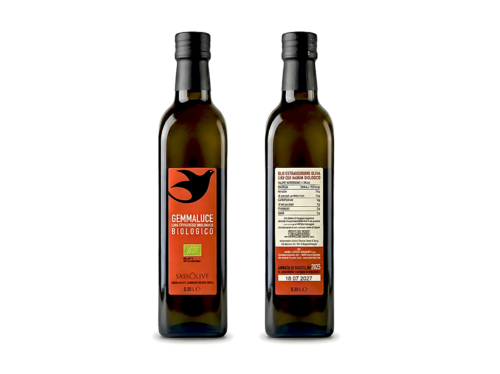
🫒 Premium Organic Extra Virgin Olive Oil 2026
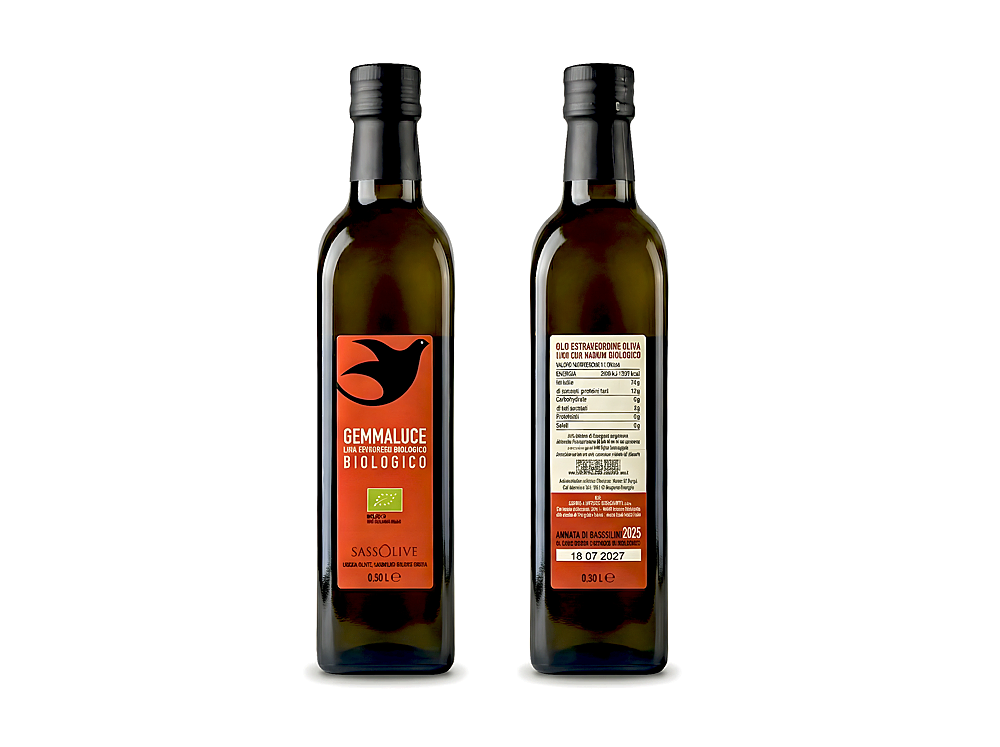
For the classic Amatriciana itself, you traditionally don’t need extra olive oil – the guanciale already provides the fat for the sauce. Nevertheless, a good organic olive oil belongs on the table for an Italian meal.
Our premium organic extra virgin olive oil 2026 from Sassolive is fruity and harmonious with notes of fresh olives, green grass, and almonds, as well as a delicate bitterness and slight pungency. Perfect with bread, bruschetta, antipasti, salads, and vegetables.
Buon appetito! 🇮🇹
Authentic Italian Pasta all’Amatriciana is one of those dishes where you immediately understand why Italian cuisine is so popular worldwide: a few good ingredients, a simple technique, and an incredible amount of flavor.
If you still have room for something sweet afterward, a classic like our authentic Italian Tiramisu is, of course, perfect.
Have you tried the recipe? We look forward to your feedback and your pictures with the hashtag #CucinaDellaNonna.